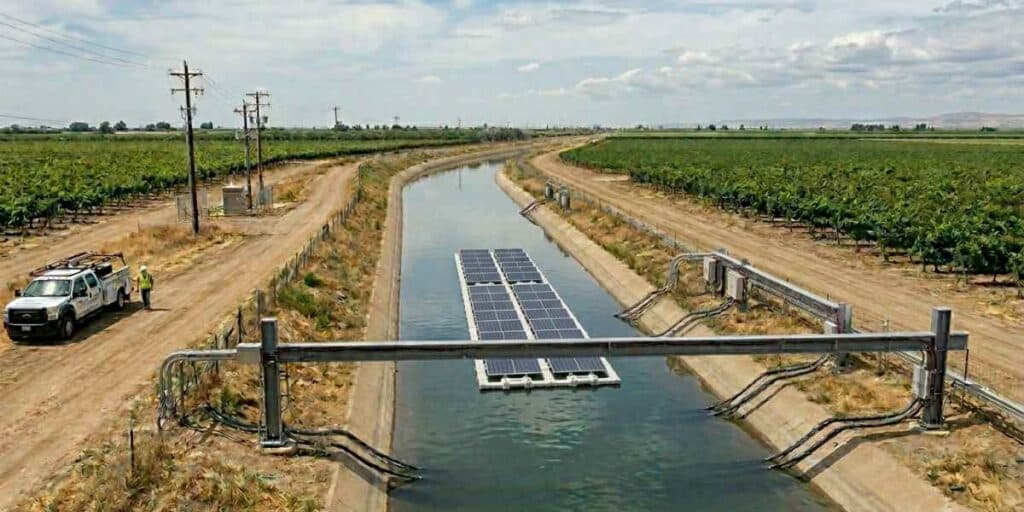
Across the world, irrigation canals quietly power agriculture, sustain communities, and move vast quantities of water every single day. As global energy demand rises alongside increasing pressure on land and water resources, these existing networks present a compelling and often overlooked opportunity for renewable energy generation through solar panels on canals.
This concept is not entirely new, while it has been explored in early solar canal projects, the broader potential remains largely untapped. Irrigation infrastructure offers a unique convergence of benefits, enabling clean energy production without competing for land, while simultaneously enhancing water conservation and operational efficiency.
Leveraging Existing Infrastructure for Scalable Solar
One of the most significant advantages of deploying solar panels on canals is the ability to utilize infrastructure that is already in place. Unlike traditional ground-mounted solar, which often requires large-scale land acquisition, complex permitting, and rigorous environmental review, canal-based systems leverage existing water corridors.
This approach minimizes land use conflicts. In regions where agricultural land is both valuable and limited, installing solar over canals avoids taking productive acreage out of commission. Instead, it transforms a passive asset into a dual-purpose system that generates both water and power.
For utilities, irrigation districts, and municipalities, this translates into faster project timelines, reduced upfront costs, and fewer regulatory hurdles. It’s a rare case where sustainability aligns seamlessly with practicality.
Enhancing Water Efficiency Through Solar Integration
In addition to generating electricity, canal-based solar systems contribute to improved water management. Open canals are highly susceptible to evaporation, especially in arid and high-temperature regions. Installing solar arrays over these waterways provides consistent shading, reducing evaporation losses and helping to conserve valuable water resources.
This is especially impactful in irrigation systems, where every drop counts. Reduced evaporation means more efficient water delivery, improved resilience during drought conditions, and better long-term resource management.
At the same time, the proximity of energy generation to agricultural operations creates a natural synergy. Solar systems installed over canals can directly power nearby pumps and distribution systems, reducing transmission losses and improving overall efficiency.
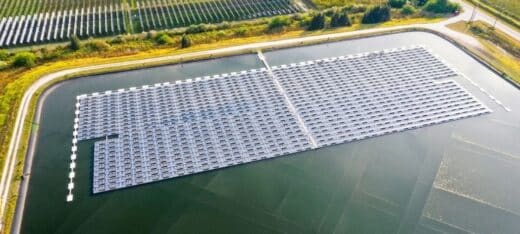
Why Solar Panels on Canals Are an Ideal Floating Solar Solution
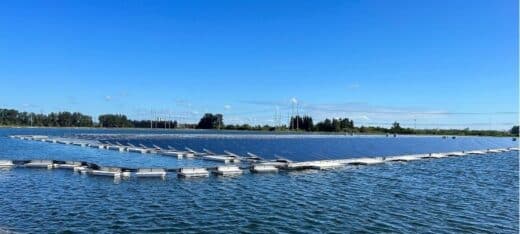
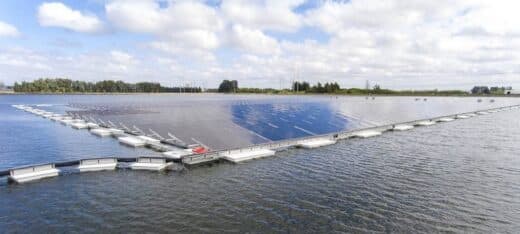
Irrigation canals are inherently dynamic environments. Water levels fluctuate, flow rates change, and structural conditions vary by region. Floating solar systems are uniquely suited to adapt to these variables, making them an ideal solution for canal deployment.
Key advantages include:
Adaptability: Floating systems naturally conform to changing water levels, maintaining performance without requiring constant structural adjustments.
No Land Acquisition: Because systems are installed directly on the water, there is no need to secure additional land or disrupt existing land use.
Reduced Evaporation: Floating arrays provide consistent surface coverage, maximizing water conservation benefits.
On-Site Energy Generation: Systems can be designed to power pumps and infrastructure directly, improving energy independence.
Design Matters More Than Anywhere Else
Installing solar on canals is not as simple as placing panels over water. These environments introduce unique engineering challenges that demand thoughtful, site-specific design.
Narrow Constraints: Many irrigation canals are relatively narrow, requiring systems that can adapt to constrained spaces. Flexible layouts, adjustable tilt angles, and modular configurations are essential to maximize energy output without compromising flow.
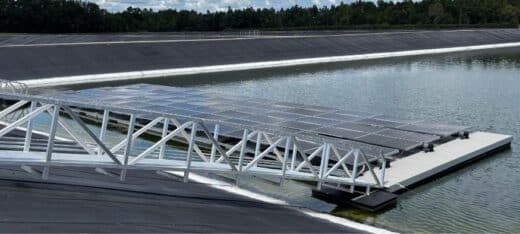
Access Limitations: Maintenance and servicing can be significantly more complex over water. Without proper access infrastructure, routine inspections and repairs become costly and time-consuming.
Moving Water Dynamics: Unlike static reservoirs, canals often feature continuous water movement. This introduces additional forces on floating systems, making stability and anchoring critical considerations.
Poorly designed systems can lead to higher operational costs, reduced performance, and increased risk over time.
Engineering Advantages for Scalable Deployment
To fully realize the potential of solar panels on canals, systems must be engineered with these challenges in mind. Advanced floating solar designs provide key advantages:
Perpendicular Service Walkways: By incorporating walkways that run perpendicular to the canal flow, systems allow for efficient access across the entire installation. This significantly reduces maintenance time and improves long-term operability.
High Buoyancy Platforms: Enhanced buoyancy ensures system stability even in fluctuating water levels, maintaining consistent performance and reducing structural stress.
Minimal Anchoring Footprint: Reducing the anchoring impact simplifies permitting processes and minimizes disruption to managed water systems, which is particularly important in regulated irrigation networks.
Unlocking a Scalable Renewable Energy Resource
Globally, irrigation canals span hundreds of thousands of miles, representing an immense and largely untapped renewable energy resource. By integrating solar into these networks, stakeholders can expand clean energy capacity while addressing water conservation and land use challenges.
This approach redefines how we think about infrastructure. Instead of building new systems from the ground up, we leverage what already exists, enhancing functionality without requiring additional space. As the energy transition accelerates, solutions like solar panels on canals will play an increasingly important role, offering a practical pathway to expand renewable capacity while delivering tangible environmental and operational benefits.
A Perspective from the Field
The real impact of canal-based solar becomes even clearer when viewed through the lens of those working directly with customers and projects on the ground.
This perspective underscores the value of practical, experience-driven solutions in accelerating adoption and ensuring long-term project success.
Rethinking What’s Possible
Irrigation networks have always been essential to agriculture and water management. Now, they have the potential to become a cornerstone of renewable energy infrastructure as well. By embracing innovative approaches like floating solar and reimagining how we use existing assets, we can unlock new value from familiar systems.
What has long been hidden in plain sight may soon become one of the most impactful solutions in the transition to a more sustainable future. Contact us to learn how tailored floating solar solutions can transform your canal network into a reliable, high-performing energy asset.