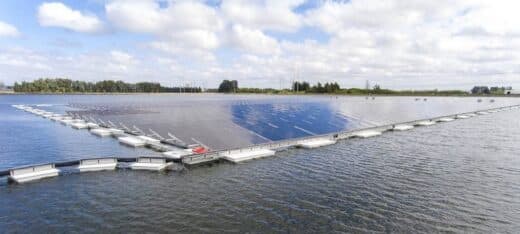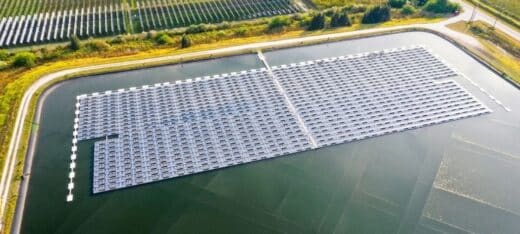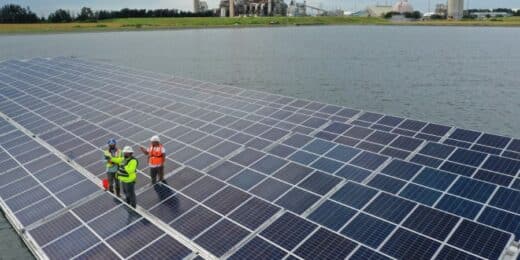

Municipalities across the United States are looking for practical ways to expand renewable energy while managing limited land, growing energy demands, infrastructure needs, and public budgets. At the same time, many cities, counties, utilities, and public agencies already manage water infrastructure that may provide an opportunity for solar development without requiring additional land. Reservoirs, retention ponds, stormwater facilities, wastewater treatment ponds, and other managed waterbodies can potentially support floating solar for municipalities. For municipalities with suitable sites, municipal solar projects built with AccuSolar can create a productive use for existing water infrastructure while helping offset electricity consumption and support long-term energy goals.
However, evaluating municipal solar projects requires more than comparing the initial prices submitted by technology providers. Public agencies often own and operate infrastructure for decades. A system that appears less expensive during procurement may ultimately require greater maintenance, component replacement, rehabilitation, or earlier replacement over its useful life. For this reason, municipalities should consider the full lifecycle of a floating solar investment. Expected system life, maintenance requirements, material durability, repowering potential, residual material value, energy production, and long-term levelized cost of energy (LCOE) can all influence the true financial value of a project. The goal should not simply be to identify the lowest initial cost provider. A more strategic approach is to determine which solution can provide the strongest combination of performance, reliability, and value throughout the life of the asset.
Why Floating Solar Can Make Sense for Municipal Sites
Municipalities often manage substantial infrastructure portfolios. In addition to administrative buildings, public safety facilities, parks, and treatment plants, many local governments operate water and wastewater systems that include significant areas of open water. Traditional solar development generally requires rooftops or available land. Each option can be valuable, but each also comes with limitations. Roofs may have restricted usable space or structural constraints. Available land may already be designated for recreation, conservation, future development, or other municipal uses.
Floating solar introduces another option. Instead of occupying additional land, floating photovoltaic systems place solar panels on engineered platforms located on the surface of a waterbody. Depending on the site, the electricity generated may be able to serve nearby municipal loads or connect with existing electrical infrastructure. This can make floating solar for municipalities particularly relevant at water and wastewater facilities, where substantial electricity demand may exist close to available water surfaces. Potential sites can include reservoirs, stormwater ponds, retention ponds, wastewater treatment ponds, and other managed waterbodies.
However, the availability of open water alone does not make a site suitable for floating solar. Ownership, water depth, water-level fluctuations, environmental requirements, shoreline conditions, existing uses, access, electrical infrastructure, wind exposure, and anchoring conditions can all influence feasibility. Early planning should therefore focus on identifying which municipal water assets have the characteristics needed to justify a more detailed technical and financial evaluation.
Start With Long-Term Municipal Objectives
Before comparing technologies or issuing an RFP, municipalities should establish what they want a floating solar project to accomplish. Reducing electricity costs may be one objective, but it is rarely the only consideration. A municipality may also want to increase renewable energy use at public facilities, make better use of existing infrastructure, avoid dedicating valuable land to energy generation, improve long-term energy cost predictability, support sustainability goals, or develop an energy asset capable of remaining useful for decades.
Defining those objectives early can create a better framework for evaluating competing technologies. For example, a procurement process focused primarily on initial construction cost may produce a very different result than one that also considers expected useful life, maintenance requirements, durability, energy production, repowering potential, and end-of-life value. Municipal infrastructure planning is inherently long term. Solar procurement should reflect that same perspective.
Move Beyond Initial CAPEX
Capital expenditure, or CAPEX, will always matter to municipalities. Public budgets are limited, projects compete for funding, and agencies have a responsibility to use public resources carefully, but initial CAPEX only tells part of the financial story. A system with a lower upfront cost may become more expensive over time if it requires additional maintenance, frequent component replacement, extensive labor, premature rehabilitation, or complete replacement earlier than anticipated.
This is where a Rigorous Lifecycle Cost Model becomes valuable. Instead of asking only: What will this project cost to purchase and install? Municipalities can ask: What will this asset cost to own, operate, maintain, repower, and eventually decommission over its full useful life? That change in perspective can significantly affect how competing proposals are evaluated. A lifecycle model gives procurement teams a more complete picture of the financial implications of a system and provides a stronger basis for comparing solutions that may have very different materials, designs, maintenance requirements, and expected service lives.
Building a Rigorous Lifecycle Cost Model
A meaningful lifecycle cost model should evaluate the floating solar installation as a long-term infrastructure asset rather than a one-time equipment purchase. At minimum, municipalities should consider five areas that may not be fully represented by an initial CAPEX comparison.
Expected System Life: The expected life of the floating platform matters because the supporting infrastructure may have a different useful life than the solar modules installed on it. Municipalities should ask technology providers to explain the anticipated service life of major structural components and the assumptions supporting those expectations.
Floating infrastructure is exposed to environmental conditions including UV radiation, temperature changes, wind, waves, humidity, water chemistry, repetitive movement, and severe weather. Material selection and engineering therefore have implications that extend far beyond initial installation. A municipality evaluating a project over several decades should understand which components are expected to remain in service, which may require replacement, and when those costs could occur. If portions of the underlying platform can remain useful beyond the life of the original solar modules, the municipality may also have an opportunity to extend the value of its initial infrastructure investment.
Repowering Potential: Solar technology will continue to evolve throughout the operating life of a project. Modules installed today will not necessarily be the same size, efficiency, or output as modules available years from now. Municipalities should therefore consider repowering potential during the original design and procurement process. Repowering generally involves replacing or upgrading energy-generating equipment while continuing to use infrastructure that remains serviceable. For a floating solar installation, a durable and adaptable platform may potentially support future generations of solar modules without requiring replacement of the entire floating structure.
Municipalities can ask providers how their platforms accommodate future module replacement, whether structural components are designed with future upgrades in mind, and what would be involved in replacing modules at the end of their original service period. This can turn a solar installation from a single-generation purchase into a longer-term infrastructure strategy.
Ongoing Maintenance Expense: Maintenance costs may appear relatively small when viewed annually, but they accumulate over decades. Floating solar also presents maintenance considerations that differ from conventional ground-mounted installations. Technicians need practical access to panels, electrical equipment, structural connections, anchoring or mooring components, and other equipment located on or around the water. Platform design can influence how efficiently those activities can be completed. Municipalities should evaluate inspection requirements, access pathways, structural connections, electrical cable management, component replacement procedures, and the labor expected for routine maintenance. Rather than assuming maintenance will be similar across competing systems, RFPs can ask providers to describe expected inspection schedules, routine maintenance requirements, replacement procedures, and estimated long-term maintenance needs. These expenses can then be incorporated into the lifecycle model.
Residual Material Value: Another consideration that can be overlooked during procurement is what happens to the system’s materials at the end of their useful life. Different materials can have different recycling, disposal, and residual-value characteristics. For example, structural aluminum may retain recyclable commodity value after its primary service life. Depending on market conditions at the time of decommissioning, that material may provide recoverable value that can partially offset end-of-life costs. Other materials may have limited recoverable economic value or may introduce additional recycling or disposal expenses. Future commodity values cannot be predicted precisely, so residual value should not be treated as a guaranteed financial return. However, it can still be incorporated into lifecycle modeling using reasonable and conservative assumptions. The important point is that end-of-life economics should not automatically be treated as identical across every proposed system.
LCOE Over an Appropriate Time Horizon: Levelized cost of energy provides another way to evaluate long-term project economics. LCOE estimates the average cost of producing electricity over the operating life of an energy project. Depending on the methodology used, the calculation can incorporate capital investment, operations and maintenance, system performance, financing assumptions, component replacement, and other lifecycle costs. For municipalities, this can provide a more complete comparison than installed cost per watt alone. Two systems with similar capacity do not necessarily produce the same financial outcome over time. If one system requires more maintenance, experiences additional downtime, has a shorter useful life, or requires substantial replacement, those factors can influence its long-term cost of energy even if its initial CAPEX is lower. The analysis period matters as well. Municipalities should consider a timeframe that reflects the realistic expected life of the infrastructure. If portions of a platform may remain serviceable through future module repowering, a short evaluation period may fail to capture some of that long-term value.
Why Lifecycle Planning Matters for Public Agencies
Municipalities frequently plan roads, utilities, water systems, treatment facilities, and other infrastructure over long operating periods. Renewable energy assets can benefit from the same approach. Public agencies are also accountable to taxpayers, ratepayers, elected officials, and future municipal administrations. A procurement decision made today may continue affecting operating and capital budgets decades from now. For that reason, municipal solar projects should be evaluated based not only on what an agency pays at installation, but also on the costs and value expected throughout the asset’s service life.
A lower initial price can still represent excellent value when the underlying technology performs well over time. The important point is that municipalities should have enough information to determine whether that is actually the case. A rigorous lifecycle analysis creates a more complete and transparent way to make that comparison.
Build Lifecycle Value Into the RFP
If a municipality wants proposals that emphasize long-term performance, its procurement documents should reflect that priority. An RFP that awards most of its evaluation weight to initial price will naturally encourage bidders to optimize around initial price. Instead, municipalities can develop evaluation criteria that consider both initial investment and long-term asset performance. Depending on the project, RFP criteria may ask bidders to address:
- Platform material specifications and anticipated design life
- Structural and anchoring or mooring warranties
- Expected inspection and maintenance schedules
- Estimated maintenance requirements and costs
- Procedures for replacing individual components
- Repowering capabilities
- Expected major component replacement schedules
- End-of-life and decommissioning considerations
- Residual or recyclable material value
- Long-term energy production assumptions
- LCOE over an established evaluation period
Municipalities can also ask bidders to clearly state the assumptions behind their calculations. For example, if providers submit lifecycle cost or LCOE projections, the agency should understand the assumed service life, annual maintenance expense, degradation rate, replacement schedule, discount rate, repowering assumptions, and end-of-life costs. Using consistent assumptions can make competing proposals easier to compare and reduce the risk of selecting a proposal based on financial models that are not directly equivalent.
Evaluate the Site Before Selecting the Technology
Financial modeling is only useful when the proposed technology is appropriate for the site. Site evaluation should therefore occur early enough to influence technology selection, engineering, project cost, and schedule. Important considerations can include waterbody size and geometry, water depth, water-level fluctuations, shoreline access, bathymetry, surrounding soil conditions, wind exposure, wave conditions, existing infrastructure, environmental restrictions, and electrical interconnection.
The waterbody’s primary function also matters. A drinking-water reservoir, stormwater facility, and wastewater treatment pond each have different operational considerations. A floating solar installation must be designed around the existing function of the waterbody rather than interfering with it. Municipal staff responsible for water operations, engineering, finance, environmental compliance, procurement, facility management, and sustainability should be involved early when appropriate. Bringing these perspectives into the planning process can help identify constraints before they become costly design changes later.
Consider Operations and Maintenance Before Construction
A floating solar project does not stop being a municipal asset once construction is complete. Operations teams may interact with the system for decades. Before finalizing a design, municipalities should understand how technicians will access the array, inspect equipment, perform routine maintenance, replace components, respond after severe weather, and coordinate solar maintenance with normal facility operations.
Training and documentation should also be part of the conversation. Clear inspection procedures, maintenance manuals, component documentation, emergency protocols, and replacement procedures can make long-term management more efficient. Design decisions that simplify routine inspection and maintenance can potentially reduce labor requirements and operating expenses throughout the project life. These considerations belong in technology evaluation, not just post-construction planning.
Plan for Environmental and Permitting Requirements
Public ownership does not eliminate permitting or environmental requirements. Depending on the project location, waterbody, project size, and jurisdiction, floating solar development may involve local, state, federal, utility, and environmental reviews. Potential considerations can include wetlands, protected species, water quality, stormwater requirements, electrical permitting, structural requirements, shoreline impacts, and interconnection.
The waterbody’s existing uses should also be evaluated. If a reservoir supports drinking-water operations, maintenance activities, recreation, emergency access, or other functions, the solar layout needs to preserve the areas necessary for those uses. Starting this coordination early can help municipalities identify potential constraints before significant engineering resources are committed.
Design for Site-Specific Conditions
Floating solar systems operate in environments that vary significantly from one location to another. Wind, storms, water-level changes, currents, waves, heat, ice, and other environmental conditions can influence system design. For that reason, municipalities should look for engineering that reflects actual site conditions rather than relying only on generalized system specifications.
Anchoring and mooring are particularly important because the array must remain secure while accommodating expected movement and water-level variation. Municipalities can request documentation explaining design criteria, anticipated loads, anchoring methodology, material selection, and applicable engineering standards. These considerations also connect directly to lifecycle cost. A system should be designed to meet the conditions it is expected to encounter throughout its operating life. Evaluating engineering quality alongside initial cost can help municipalities better understand the relationship between upfront investment and long-term risk.
Consider Financing and Incentives Early
Financing structure can have a significant effect on project feasibility. Municipalities may evaluate direct ownership, third-party development structures, power purchase agreements, grants, bonds, or other financing mechanisms depending on available programs and project requirements. Each approach creates different considerations around capital investment, maintenance responsibility, energy purchasing, asset ownership, and long-term value.
Regardless of financing structure, lifecycle questions still matter.
- Who owns the floating platform?
- Who is responsible for maintenance and repairs?
- What happens at the end of the agreement?
- Who benefits from residual material value?
- Can the system be repowered?
- Does the municipality have an option to purchase or retain the asset?
These questions can affect the long-term economics of the project even when the municipality is not responsible for the entire initial capital investment. Funding and incentive opportunities should also be evaluated early because eligibility requirements can affect ownership structure, project schedule, procurement, and overall economics.
Think Beyond the First Generation of Solar Panels
One of the most important long-term planning questions is what the project will look like decades after installation. Municipalities should consider whether major structural components could still be useful when the original solar modules reach the end of their planned service period. If so, the platform may provide an opportunity for repowering rather than complete replacement.
Future modules may produce more electricity from the same surface area, allowing the municipality to potentially increase generation while continuing to use portions of its original infrastructure. This is why platform longevity and adaptability deserve consideration during initial procurement. A floating solar project should not necessarily be viewed as a single set of panels installed for one operating cycle. Depending on system design and condition, portions of the infrastructure may continue supporting energy generation beyond the first module lifecycle. That potential can become an important component of long-term asset value.
Create a Long-Term Municipal Asset Strategy
A strong municipal floating solar plan should ultimately answer more than whether a project can be built. It should address how that project is expected to perform financially and operationally over time. Municipal decision-makers should be able to ask:
- How long are major components expected to remain in service?
- What maintenance will be required?
- Which components are likely to require replacement?
- Can the platform support future repowering?
- What assumptions are being used to calculate long-term energy production?
- What will decommissioning involve?
- Could materials retain residual value?
- What is the projected LCOE over the selected analysis period?
- What does the municipality expect to receive in return for its investment over the complete life of the asset?
These questions create a much stronger basis for procurement than initial cost alone.
Developing a Strategic Path Forward
For municipalities considering floating solar, planning can begin with an inventory of publicly controlled water assets and nearby electrical loads. Potential sites can then be screened for ownership, available water surface, operational restrictions, shoreline access, environmental considerations, electrical infrastructure, and basic engineering feasibility. Promising locations can move into more detailed site evaluation and financial analysis.
At that stage, municipalities can begin building a lifecycle cost model that reflects realistic project conditions. Rather than asking only which provider can deliver the lowest initial installed price, procurement teams can evaluate how competing solutions are expected to perform over the chosen analysis period. This encourages comparison around engineering, durability, maintenance, adaptability, energy production, and long-term economics in addition to upfront cost.
A Better Measure of Municipal Solar Value
Public infrastructure investments extend well beyond a single budget cycle. For that reason, floating solar for municipalities should be evaluated using the same long-term thinking applied to other infrastructure assets. Initial CAPEX remains an important part of the decision, but it should be considered alongside expected system life, maintenance expense, energy production, repowering opportunities, residual material value, and LCOE over an appropriate period.
A Rigorous Lifecycle Cost Model can give municipal leaders a clearer picture of what competing technologies may actually cost over time. The lowest initial price does not automatically represent the lowest long-term cost, just as a higher initial price does not automatically guarantee better performance. The objective is to evaluate the complete financial and operational picture. For municipal solar projects, that means identifying a solution capable of providing reliable energy, manageable operating costs, future adaptability, and lasting asset value throughout its useful life.
Frequently Asked Questions About Municipal Floating Solar
What types of municipal sites can be considered for floating solar?
Potential sites can include reservoirs, retention ponds, stormwater facilities, wastewater treatment ponds, and other managed waterbodies. Suitability depends on factors such as available surface area, water depth, water-level fluctuations, shoreline access, environmental requirements, existing uses, electrical infrastructure, and site-specific engineering conditions.
Why should municipalities evaluate lifecycle cost instead of only initial CAPEX?
Initial CAPEX represents what a project costs to develop and install, but it does not capture every expense or source of value over the project’s operating life. Lifecycle analysis can also consider maintenance, component replacement, energy production, expected system life, repowering, decommissioning, and potential residual material value.
What should be included in a Rigorous Lifecycle Cost Model?
A lifecycle model can include initial project costs, expected service life, operations and maintenance expenses, replacement schedules, projected energy production, repair requirements, repowering potential, decommissioning expenses, residual material value, and other costs expected during the analysis period.
What is LCOE, and why is it useful for municipalities?
Levelized cost of energy estimates the cost of producing electricity over a project’s operating period. Unlike a simple installed-cost comparison, LCOE can incorporate both upfront investment and ongoing costs while accounting for the energy a system is expected to generate. This can help municipalities compare the long-term economics of competing proposals.
When should lifecycle planning begin?
Lifecycle planning should begin during the earliest stages of project development. Decisions involving site selection, materials, platform design, access, anchoring, electrical infrastructure, financing, and procurement can all affect long-term project costs. Evaluating these considerations before selecting a technology gives municipalities more flexibility to make informed decisions.
Planning Municipal Floating Solar for Long-Term Value
Floating solar can give public agencies another way to incorporate renewable energy into existing infrastructure, particularly when suitable water assets are available and land is limited or needed for other purposes, but determining whether a project represents good value requires looking beyond the installation date. Municipalities should consider what they are purchasing as a long-term asset. Expected life, maintenance, energy production, repowering capability, residual material value, and long-term LCOE can all affect what that asset ultimately costs and the value it provides.
By combining careful site evaluation with a Rigorous Lifecycle Cost Model, public agencies can make procurement decisions based on the complete project lifecycle rather than initial price alone. For municipalities evaluating whether floating solar could be a practical fit for a reservoir, treatment facility, retention pond, or other public water asset, AccuSolar can help assess site conditions, engineering considerations, and long-term project requirements. Contact us to discuss a potential floating solar project.