Floating solar has moved from a niche concept to a practical option for utilities, water authorities, agricultural operations, and commercial property owners who want to generate renewable energy without giving up usable land. But not every reservoir is a strong candidate. Before a developer invests time in design or a property owner starts fielding proposals, it helps to understand which physical, ownership, and financial characteristics actually matter. Evaluating a reservoir starts with looking at the factors that can influence whether a floating solar project is practical, from waterbody type and shape to ownership status and available incentives. Understanding these floating solar site requirements early can save significant time and help owners and developers determine whether a reservoir is worth pursuing.
Why Reservoirs Are Attracting Floating Solar Interest
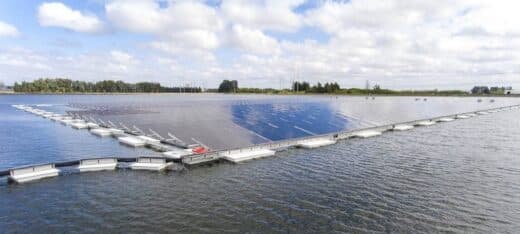
Floating solar can be a strong option for reservoirs that have available water surface and limited opportunities for traditional solar development. Instead of requiring additional land, the system makes use of an existing waterbody while allowing the reservoir to continue serving its primary function. The array is supported on the surface of the reservoir using floating platforms, without requiring the land area associated with a traditional ground-mounted system. For owners with limited open land but ample water surface, this can create a renewable energy opportunity that a rooftop or ground-mounted system may not provide. It also allows reservoir owners to make more complete use of an asset they are already responsible for maintaining.
However, having available water does not automatically make a reservoir suitable for floating solar. The size and shape of the waterbody, surrounding uses, ownership, shoreline access, electrical infrastructure, and energy demand can all influence whether a project is practical. Identifying these factors early can help determine which sites are worth advancing into more detailed evaluation.
Commercial Water Bodies Make the Strongest Candidates
Commercial water bodies, including reservoirs tied to a business, utility, agricultural operation, water authority, or industrial site, can be strong candidates for floating solar. These sites often have an established operational purpose and may have fewer competing recreational uses than residential or public water bodies. A commercial reservoir may also have a clear point of contact for decision-making and a direct relationship between the waterbody and the energy needs of the surrounding facility. This can make early conversations more straightforward and help establish who should be involved as the project is evaluated.
Why Reservoirs Over 1 Acre Stand Out
Surface area is one of the first characteristics worth evaluating. As an initial screening point, commercial reservoirs over 1 acre may provide enough surface area to warrant further evaluation for floating solar. Smaller water bodies may still be viable depending on available surface area, energy demand, system design, interconnection, and other site-specific conditions. The goal during initial screening is not to determine an exact system size, but to identify whether there appears to be enough usable water surface to justify further evaluation.
Larger reservoirs can also provide greater layout flexibility. Additional surface area may allow the system to be positioned away from sensitive shoreline areas, existing infrastructure, or sections that need to remain open for maintenance access, water intake structures, aeration equipment, or other operational needs. Total acreage, however, does not always represent usable acreage. The shape of the reservoir, existing uses, environmental conditions, setbacks, access requirements, and other site constraints can all influence how much of the water surface is realistically available.
Why Compact Reservoirs Can Be Easier to Develop
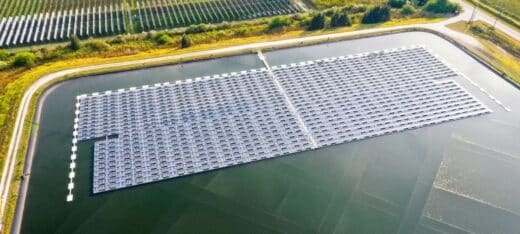
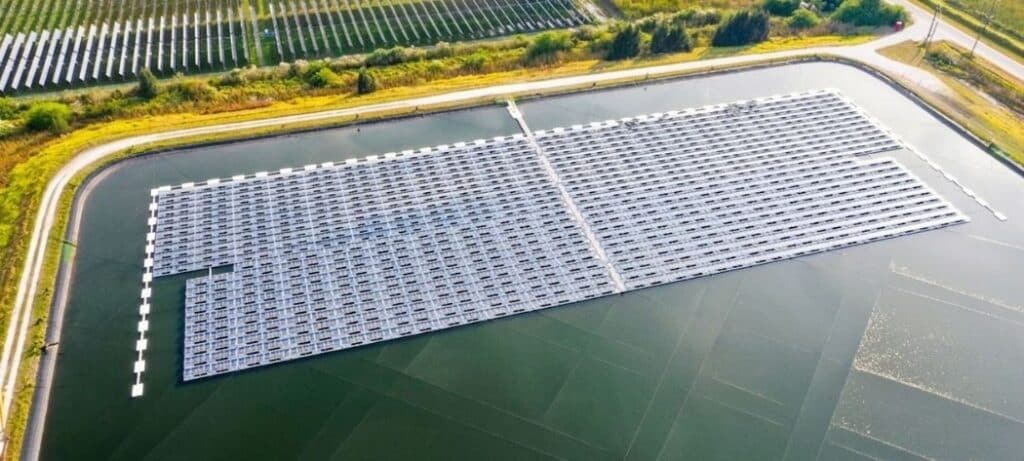
Surface area is only part of the picture. Shape is another important consideration. A reservoir that is relatively round or compact may provide more flexibility for floating solar than one that is long and narrow. Compact water bodies can provide opportunities for larger, more contiguous array layouts. Narrow, elongated, or highly irregular reservoirs may require the system to be divided into different sections or designed around portions of the waterbody that cannot be used.
The reservoir’s shape can also influence anchoring or mooring strategies, cable routing, access, and how efficiently the available surface can be incorporated into the overall layout. These conditions should be evaluated alongside total acreage rather than assuming that two reservoirs of the same size offer the same development potential. This is one of the clearer floating solar site requirements to evaluate early. A reservoir with a compact footprint and sufficient usable surface area may provide more design flexibility than one with a narrow, irregular, or stretched-out shape.
Evaporation and Algae Control: Important Considerations for Owners
Many reservoir owners are not only interested in renewable energy generation. They may also be managing operational challenges related to water quality and water loss, making evaporation and algae important considerations during site evaluation. For reservoirs used for irrigation, drinking water storage, industrial processes, or other operational purposes, evaporation may already be an area of concern. Covering a portion of the water surface can reduce direct sunlight reaching the covered area, which may contribute to reduced evaporation under certain site conditions.
Algae management may also be a priority. Reduced sunlight beneath the array may influence conditions associated with algae growth. The actual effect will depend on factors such as water quality, climate, reservoir conditions, nutrient levels, and the percentage of the water surface covered. Floating solar should not automatically be viewed as a replacement for existing water-quality or algae-management programs. However, for reservoir owners already focused on evaporation and algae, these goals can be part of the broader conversation when determining whether a floating solar project aligns with their operational priorities.
Bank Erosion Can Be Part of the Site Conversation
Bank erosion is an ongoing maintenance concern for some reservoir owners. Shoreline stability can be influenced by factors such as wind exposure, wave conditions, water-level changes, soil conditions, and existing reservoir operations. Owners already dealing with bank erosion may be interested in whether floating solar can complement their broader waterbody management goals.
Existing erosion and shoreline conditions should therefore be identified during site evaluation because they can influence system design, anchoring or mooring considerations, construction access, and long-term planning. Evaluating shoreline conditions early also gives the project team a clearer understanding of where equipment can be staged, where the array can be accessed, and whether particular areas of the bank should be avoided. Rather than treating erosion reduction as a guaranteed outcome of floating solar, it should be considered as part of the larger conversation about how the reservoir is currently managed and what the owner hopes to achieve.
Clear Ownership Simplifies the Path Forward
One of the most important site considerations has nothing to do with the physical characteristics of the water: ownership. A reservoir with a single, clearly identified owner, whether that is a utility, private business, water authority, municipality, or agricultural operation, may provide a more straightforward path than one with shared, disputed, or unclear ownership. Multiple owners, easements, unclear property boundaries, or shared rights to the water can introduce additional coordination before a project moves forward.
Confirming who owns or controls the waterbody, surrounding land, shoreline, and relevant access areas should happen early in the evaluation process. Clear ownership also helps establish who has the authority to approve site access, construction activities, electrical infrastructure, and long-term use of the reservoir. Understanding these relationships before significant time is invested in engineering can help project teams identify potential complications at an earlier stage.
High Onsite Energy Usage Is a Strong Signal
Not every attractive reservoir sits next to a facility that needs the power it could generate, and that relationship matters. A reservoir located near a facility with high onsite energy usage, such as a manufacturing plant, water treatment facility, agricultural operation, or large commercial property, can be a strong lead for floating solar development. When a facility already consumes a significant amount of electricity, the energy generated by a floating solar array may be able to serve a portion of that onsite demand, which can strengthen the potential economic case for the project.
Energy consumption should therefore be considered alongside the physical characteristics of the reservoir. A site with an appropriate waterbody and substantial nearby electricity demand may present a stronger opportunity than one where there is limited demand and no clear pathway for the generated energy. Historical electricity usage, operating schedules, peak demand, and future energy needs can all provide useful information when determining whether a site deserves further evaluation.
Nearby Electrical Infrastructure Matters
Energy demand is only part of the electrical equation. Project teams also need to consider where existing electrical infrastructure is located relative to the reservoir. A potential point of interconnection located near the waterbody may reduce the need for long electrical runs across the property. Existing utility corridors and accessible areas for electrical equipment can also influence the overall project layout.
Proximity alone does not guarantee a simple connection. Available capacity, utility requirements, system size, and potential upgrades still need to be evaluated. However, identifying electrical infrastructure during early site screening gives project teams a better understanding of how electricity could move from the floating array to the facility or grid. This information can also influence where the array is positioned and where supporting equipment may need to be located.
Construction Access and Shoreline Conditions
A reservoir may appear to be a strong candidate from an aerial view, but the surrounding property also needs to support construction. Floating solar components must be delivered to the site, staged, assembled, and launched from the shoreline. Existing roads, open staging areas, and accessible sections of shoreline can make a site more practical to develop. Steep banks, dense vegetation, wetlands, limited road access, or a lack of available staging space may require additional planning.
These conditions do not automatically make a reservoir unsuitable, but they should be understood before the project reaches detailed engineering. Shoreline access also needs to work with the reservoir’s existing operations. Water intake structures, drainage infrastructure, maintenance routes, and other equipment may need to remain accessible throughout construction and long-term operation. Including construction logistics in early solar site selection provides a more complete picture of whether a reservoir is practical to develop rather than evaluating the water surface alone.
Local Utility Programs and Incentives
Beyond the physical site, the surrounding utility landscape can influence whether a reservoir makes financial sense for development. Depending on the location, utilities may offer programs such as feed-in tariffs, community solar, net metering, or other renewable energy structures that could support project economics. These programs may provide different pathways for using, crediting, or compensating the electricity produced by a floating solar system.
Program availability, eligibility requirements, compensation structures, capacity limits, and application processes vary by utility. A program available in one service territory may not exist in another, and program requirements can change over time. Understanding current local utility programs should therefore be part of early project evaluation. For sites where the surrounding facility cannot consume all of the electricity generated onsite, available utility programs may become an especially important consideration.
State Incentives Can Improve Project Economics
In addition to utility-level programs, state incentives can influence the potential economics of a floating solar project. Depending on the location, available opportunities may include grants, tax programs, renewable energy credits, financing programs, or other state-level initiatives designed to support renewable energy development. Incentive availability and eligibility vary widely from state to state and can change over time.
Project owners and developers should confirm current programs, requirements, deadlines, and system eligibility during the early stages of evaluating a reservoir. In some cases, available incentives may strengthen the financial case for moving forward. However, they should be evaluated alongside the site’s physical characteristics, energy demand, interconnection requirements, and overall project costs rather than considered in isolation.
Key Solar Site Selection Criteria for Reservoirs
Potential floating solar candidates may share several favorable characteristics:
- A commercial waterbody rather than a residential or primarily recreational one
- Surface area over 1 acre
- A shape that is more round or compact than long and narrow
- An owner interested in evaporation reduction or algae management
- Existing concerns related to bank erosion or shoreline conditions
- Clear, confirmed ownership of the waterbody and surrounding land
- A nearby facility with high onsite energy usage
- Nearby electrical infrastructure
- Practical construction and shoreline access
- Access to local utility programs such as feed-in tariffs or community solar
- Available state incentives that may support project economics
No reservoir needs to check every box to be worth evaluating further. The purpose of initial screening is to determine whether enough favorable characteristics align to justify a closer technical, environmental, and financial assessment.
Putting the Criteria Into Practice
Effective solar site selection does not require a full engineering study at the initial screening stage. Much of the basic information, including waterbody type, approximate size and shape, shoreline uses, ownership status, construction access, and nearby energy demand, can be gathered before detailed design begins. An initial review can help determine whether there are obvious conflicts or constraints that make a site less practical. It can also identify the areas that require additional investigation.
Once a reservoir appears to be a strong candidate based on these initial factors, a more detailed technical and financial evaluation can follow. This may include interconnection review, environmental due diligence, site-specific engineering, anchoring or mooring analysis, and a closer look at available incentive programs. Starting with the fundamentals helps owners and developers focus resources on reservoirs that show realistic potential rather than advancing every available waterbody into detailed evaluation.
Frequently Asked Questions
What size reservoir is needed for floating solar?
As an initial screening point, commercial reservoirs over 1 acre may be worth evaluating because they can provide enough surface area to consider a meaningful floating solar layout. Smaller water bodies may also be viable depending on available surface area, energy demand, system design, and other site-specific factors. Total acreage should not be considered on its own. Reservoir shape, existing uses, access requirements, environmental conditions, and the amount of surface that needs to remain open can all influence usable area.
Does the shape of a reservoir matter for floating solar?
Yes! A reservoir that is relatively round or compact may provide greater flexibility for array layout than one that is long and narrow. Compact water bodies can make it easier to develop a contiguous layout, while narrow or irregular reservoirs may require the design to work around physical constraints or divide the array into different sections. Shape should be evaluated alongside overall acreage and usable surface area.
Can floating solar help with evaporation and algae issues?
Covering a portion of the water surface reduces direct sunlight reaching the covered area, which may contribute to reduced evaporation under certain conditions. Reduced sunlight beneath an array may also influence conditions associated with algae growth. The actual effects vary based on climate, water quality, reservoir conditions, coverage percentage, and other site-specific factors. These potential benefits should be evaluated in the context of the individual waterbody.
Does floating solar help with bank erosion?
Bank erosion should be considered as part of the overall site evaluation, particularly for reservoirs where shoreline stability is already a concern. Existing wind exposure, wave conditions, soil conditions, and erosion can influence system design, access, anchoring or mooring strategies, and long-term planning. Any potential relationship between the floating array and shoreline conditions should be evaluated on a site-specific basis rather than assumed.
Why does ownership matter for floating solar development?
Clear ownership helps establish who has authority over the waterbody, shoreline, access areas, and surrounding property. A reservoir with shared ownership, easements, unclear boundaries, or multiple parties with access rights may require additional coordination. Confirming ownership and control early can help identify these issues before the project moves into detailed design.
What makes a reservoir a strong lead for floating solar?
A reservoir located near a facility with high onsite energy usage can be a strong lead because there may be a direct opportunity to use a portion of the generated electricity onsite. Physical characteristics also matter. Sufficient usable surface area, a practical reservoir shape, clear ownership, limited competing uses, accessible shoreline, nearby electrical infrastructure, and available utility or state programs can all strengthen the case for further evaluation.
Are utility incentives always available for floating solar?
No. Availability varies by location and utility. Some areas may offer feed-in tariffs, community solar, net metering, or other renewable energy programs, while others may have limited options. Current utility and state programs should be reviewed during early project evaluation because eligibility requirements and program availability can change.
Choosing the Right Reservoir for Floating Solar
Solar site selection ultimately comes down to matching the right waterbody with the right set of physical, ownership, operational, and financial conditions. Commercial reservoirs over 1 acre with a relatively compact shape, limited competing shoreline uses, clear ownership, practical access, nearby electrical infrastructure, and strong onsite energy demand can provide promising opportunities for further evaluation.
Combining these characteristics with an understanding of local utility programs, state incentives, environmental conditions, and existing reservoir operations gives owners and developers a clearer picture of whether a site is worth pursuing. Taking the time to evaluate these factors upfront can help avoid unnecessary effort and establish a stronger foundation for design, permitting, engineering, and construction. Contact us to discuss your site and learn more about what a floating solar system could look like on your property.