
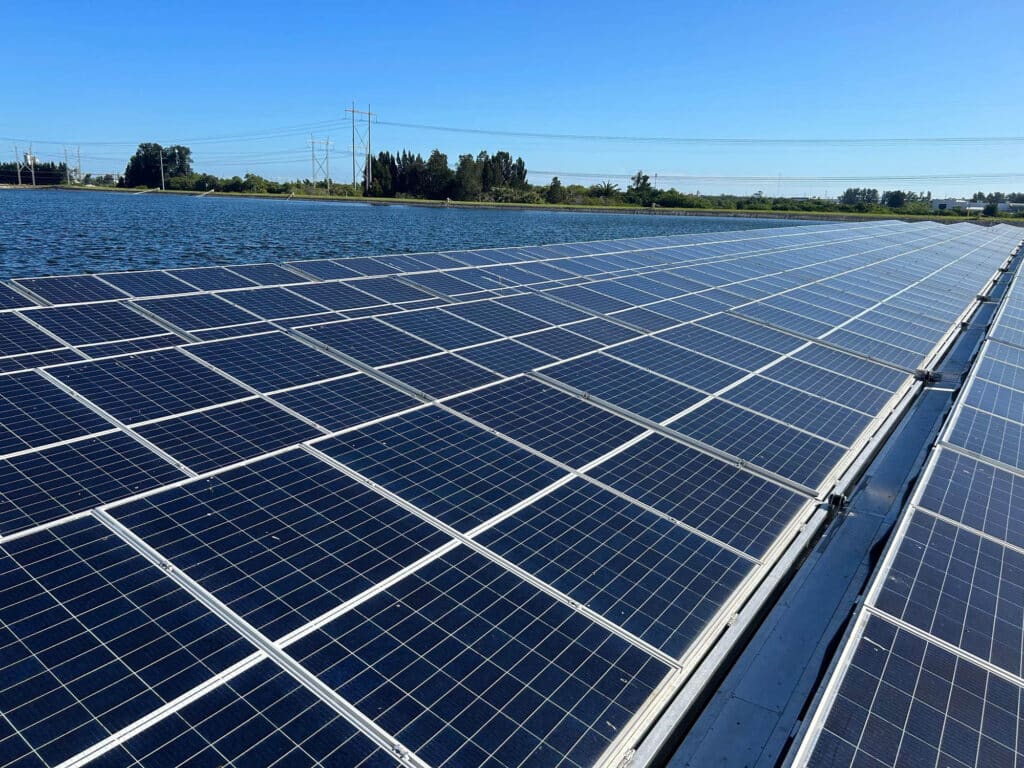
Advancing Floating Solar Through Research, Collaboration, and Hands-On Learning
Established in 2026, ASPIRE represents AccuSolar’s commitment to advancing the knowledge, collaboration, and workforce needed to support the growth of floating solar.
The future of floating solar depends on more than technology. It requires rigorous research, real-world performance data, practical education, and a new generation of engineers, researchers, and energy professionals prepared to address the opportunities and challenges of deploying solar on water.
ASPIRE provides a framework for collaboration among AccuSolar, universities, research institutions, students, and industry partners. The program is designed to support floating photovoltaic (FPV) research, create hands-on learning opportunities, and strengthen the knowledge base that informs system design, project development, and long-term operation.
Research That Moves Floating Solar Forward
Real-World Questions. Measurable Data. Practical Results.
Floating solar brings together disciplines that are often studied separately: electrical engineering, structural and marine engineering, environmental science, and energy economics. Understanding how these disciplines interact is essential to developing well-designed systems and evaluating their performance over time.
ASPIRE provides a framework for universities and research partners to investigate questions across the floating solar project lifecycle—from site assessment and system design to installation, operation, maintenance, and long-term durability.
Research opportunities may include controlled testing, field observations, modeling, comparative studies, and analysis of operating data. Each proposed project can be shaped around clearly defined objectives, appropriate research methods, and measurable outcomes.
Energy & System Performance
Evaluate how floating solar systems generate electricity and how design decisions, operating conditions, and site characteristics influence performance and project economics.
Potential areas of study: Energy yield • Levelized cost of energy (LCOE) • Electrical performance • Module temperature • Solar tracking • Hybrid energy systems
Water & Environmental Research
Investigate the relationship between floating solar installations and the water bodies that support them, with attention to site conditions, system coverage, and changes over time.
Potential areas of study: Water characteristics • Evaporation and water conservation • Water quality • Biofouling • Coverage ratios • Aquatic ecosystem interactions
Structural & Marine Engineering
Study how floating platforms, connections, mooring systems, and anchors respond to environmental forces and changing water conditions.
Potential areas of study: Mooring design • Dynamic anchoring loads • Structural durability • Hydrodynamics • Water-level fluctuations • Connection performance
Resilience & Long-Term Performance
Assess how systems perform under demanding conditions and identify opportunities to improve durability, maintainability, and service life.
Potential areas of study: Storm resilience • Extreme weather • Material longevity • Corrosion and weathering • Operations and maintenance (O&M) • Inspection methods
Deployment & Project Development
Examine the processes that influence how floating solar projects are planned, approved, installed, and connected to the electrical grid.
Potential areas of study: Installation efficiency • Deployment methods • Site assessment • Permitting • Utility interconnection • Project logistics
Emerging Technologies
Explore technologies and applications that could expand the capabilities of floating solar or improve system performance and maintenance.
Potential areas of study: Automated cleaning • Advanced monitoring • Energy storage integration • New FPV technologies • New applications and system configurations
Education Through Practical Experience
Connecting Classroom Learning With Real Engineering Questions
ASPIRE is designed to help students connect academic concepts with the practical considerations of floating solar development.
Potential educational collaborations may include student design projects, senior capstone projects, graduate research, interdisciplinary studies, and technical discussions with industry professionals. Depending on the scope of a collaboration, students may explore questions involving system design, materials, environmental monitoring, energy performance, or deployment planning.
The goal is to strengthen technical understanding, encourage problem-solving across disciplines, and help prepare students for careers in renewable energy, engineering, research, and related fields.
Collaboration Built Around Shared Goals
Your Expertise. Relevant Questions. A Defined Path Forward.
ASPIRE welcomes interest from universities, research institutions, faculty members, students, and industry partners whose work aligns with floating solar innovation, research, or education.
A proposed collaboration begins with identifying a research question or educational objective. From there, the scope can be developed around the institution’s expertise, available facilities, student involvement, project timeline, and data or testing requirements.
Specific activities, resources, responsibilities, and deliverables are determined for each collaboration.
Explore ASPIRE Research Opportunities
The ASPIRE research framework is a starting point. Additional topics and interdisciplinary approaches are welcome, and research objectives can be tailored to an institution’s expertise, facilities, students, and areas of interest.
Whether you have a defined research proposal, a student project concept, or an emerging question about floating solar, AccuSolar welcomes the opportunity to explore how it could fit within ASPIRE.
ASPIRE Research Network

Indiana University
Research Focus: Floating Solar vs. Ground-Mount Energy Yield
Side-by-side FPV and ground-mounted systems evaluating the effect of the water environment on module temperature and energy production.