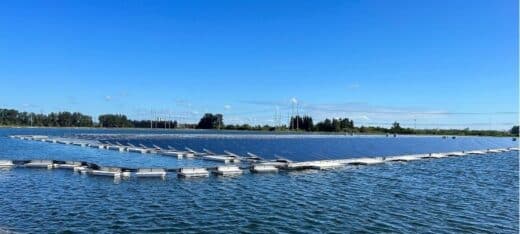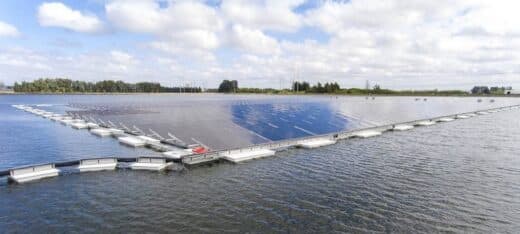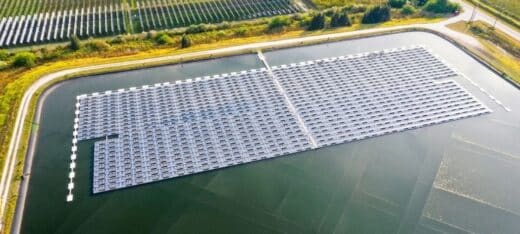
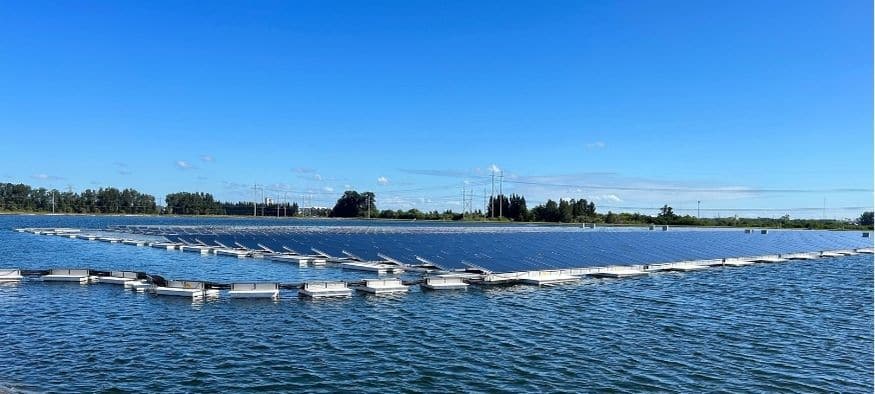
Hydropower reservoirs already generate renewable energy, but the water surface itself can offer another opportunity. By adding floating solar, these existing energy sites can support two renewable resources in one location, creating the potential for greater generation without requiring additional land.
Solar and hydropower also have operating characteristics that can complement each other. Floating solar generates electricity during daylight hours, while hydropower may provide greater flexibility over when electricity is produced. When conditions allow, solar generation can reduce the need for hydroelectric production during the day, helping conserve water that may be used for generation later when solar output declines.
This combination makes floating solar hydropower more than a strategy for maximizing available space. It can create a more flexible renewable energy site while taking advantage of existing reservoirs, electrical infrastructure, and grid connections.
The opportunity is highly site-specific; however, reservoir operations, water-level fluctuations, transmission capacity, environmental requirements, ownership, and regulatory considerations all influence whether floating solar and hydropower can successfully operate together.
The Potential of Floating Solar on Hydropower Reservoirs
Hydropower reservoirs already serve an energy-producing purpose, making them particularly interesting locations for FPV development. Unlike a new solar development that may require acquiring land and establishing entirely new site infrastructure, a hydropower facility typically has electrical equipment, grid connections, access roads, operations infrastructure, and other assets associated with power generation.
The reservoir itself also provides a large potential installation area without requiring additional land for the solar array. This can be especially valuable in locations where available land is limited, expensive, environmentally sensitive, or already committed to another use.
A floating solar array can occupy an appropriate portion of the water surface while leaving other areas available for existing reservoir functions. Depending on the site, these functions may include hydropower production, water supply, irrigation, flood control, recreation, navigation, or environmental management. This ability to add renewable generation to an existing energy site is one of the primary reasons hydropower reservoirs are being evaluated for FPV.
Floating Solar Hydropower: Coordinating Solar and Hydro Generation
Solar and hydropower have different generation characteristics, and those differences can make them complementary. Solar production is strongest when sunlight is available. Generation rises during the day, changes with weather and irradiance, and declines as the sun sets. Hydroelectric generation, depending on the type of facility and its operating restrictions, may offer greater control over when electricity is produced.
Bringing the two resources together creates opportunities for coordinated operation.During periods of strong solar production, electricity generated by the floating array can contribute power while hydroelectric generation may potentially be reduced when reservoir requirements allow. Instead of immediately releasing water through turbines to generate electricity, some water can remain available for later use.
As solar production decreases later in the day or changes because of weather conditions, hydroelectric output may be adjusted to provide additional generation. This complementary relationship can help broaden the overall generation profile of the site. Solar contributes electricity when sunlight is available, while hydropower may provide additional flexibility when solar output decreases.
A solar and hydro hybrid power plant can therefore offer more than two independent renewable resources located next to each other. With the appropriate controls, infrastructure, and operating strategy, the two resources can be coordinated as part of a broader energy system.
The amount of flexibility available will depend heavily on the individual reservoir. Hydropower facilities may have obligations related to water supply, minimum downstream flows, flood control, irrigation, recreation, environmental protection, and other uses that take priority over electricity-generation schedules. For that reason, the operating capabilities of the hydropower facility should be evaluated early in project development.
Evaporation Benefits
Covering a portion of the water surface with floating solar panels helps reduce evaporation by limiting direct solar exposure and changing wind interaction at the covered surface.
For reservoirs in areas where water conservation is especially important, reducing evaporation can add another benefit to the project. Retained water may support multiple reservoir functions, including water supply, irrigation, environmental needs, or hydroelectric generation.
However, evaporation reduction varies considerably by site. Climate, temperature, wind, humidity, reservoir shape, array coverage, panel configuration, and other conditions influence how much water may be retained. Project owners should therefore avoid treating evaporation reduction as a universal or fixed benefit. Site-specific analysis is necessary to estimate its value.
Designing FPV Around Changing Reservoir Conditions
Hydropower reservoirs can present more complex operating conditions than relatively stable ponds or basins. Water elevations may change seasonally, daily, or in response to rainfall, drought, flood-control requirements, electricity demand, and reservoir operations. A floating solar system must be designed with these variations in mind.
Mooring and anchoring systems need to accommodate expected changes in water level while maintaining the array’s position and structural stability. Designers must also evaluate wind, waves, water depth, shoreline characteristics, bathymetry, extreme weather, and potential changes in reservoir operations. Access is another important consideration.
Hydroelectric operators must retain appropriate access to dams, spillways, intake structures, monitoring equipment, navigation areas, and emergency facilities. FPV arrays should be positioned so they do not interfere with essential reservoir operations.
These factors make early site evaluation and engineering particularly important for floating solar hydropower projects. The objective is not simply to identify open water and cover it with solar panels. The FPV system must function as part of an active reservoir environment.
Reservoir Ownership and Regulatory Considerations
One of the first questions developers should ask when considering FPV at a hydropower reservoir is: Who actually controls the water body? The answer may be more complicated than expected.
The entity operating the hydroelectric plant may not own the reservoir, shoreline, dam, underlying land, or all associated water rights. Ownership and operational authority may involve utilities, municipalities, state agencies, federal agencies, irrigation districts, water authorities, or private entities.
In the United States, some hydropower facilities also operate under federal licenses or other regulatory frameworks. Depending on the project, adding FPV may require evaluation of existing authorizations, reservoir uses, project boundaries, environmental requirements, and land or water rights.
Developers should identify ownership, operational authority, permitting responsibilities, and relevant regulatory agencies early in the feasibility process. A technically attractive reservoir does not automatically translate into a developable solar site. Understanding who has the authority to approve a project can prevent significant delays later in development.
Protecting Existing Reservoir Uses
Most reservoirs serve more than one purpose. In addition to generating electricity, a reservoir may provide drinking water, irrigation, recreation, fisheries, wildlife habitat, flood management, navigation, or other public and environmental benefits. FPV development must work around those existing uses rather than interfere with them.
Array placement may need to maintain clear areas around boat traffic, water intakes, dam infrastructure, spillways, recreational zones, navigation routes, shoreline access, and environmentally sensitive areas. Reservoir coverage should also be evaluated carefully.
Using a limited, strategically selected portion of the water surface may allow a project to generate meaningful solar power while maintaining the reservoir’s primary functions. Environmental review may examine potential effects on water temperature, dissolved oxygen, aquatic habitat, light penetration, water quality, and other ecological conditions. These considerations reinforce why FPV development should begin with comprehensive site analysis rather than a simple assessment of available water surface.
What Makes a Hydropower Reservoir a Good Candidate?
Large surface area alone does not determine whether a reservoir is suitable for floating solar. A strong candidate combines several favorable characteristics.
Sufficient surface area: Usable water surface in locations that do not conflict with dam operations, navigation, recreation, water intakes, or environmental resources.
Understood site conditions: Manageable water-level fluctuations, wind, waves, water depth, bathymetry, shoreline conditions, and extreme weather risks.
Electrical infrastructure: Favorable existing generation equipment, interconnection capacity, transmission infrastructure, and minimal required upgrades.
Operational flexibility: Hydropower operations with meaningful control over water release schedules to maximize co-generation synergy with solar output.
Aligned stakeholders: Supportive ownership, permitting frameworks, environmental requirements, water rights, and local community interests.
Ultimately, a smaller reservoir where these factors align may present a stronger opportunity for a solar and hydro hybrid power plant than a much larger reservoir with substantial operational or regulatory limitations.
Planning for Long-Term Operations and Maintenance
Hydropower facilities are long-term infrastructure assets, and floating solar systems installed on their reservoirs should be approached with the same long-term mindset. System design should provide safe access for inspection, maintenance, and repair throughout the life of the project.
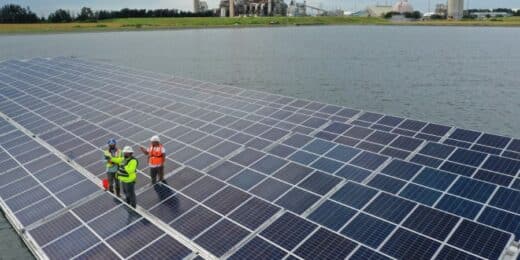
Integrated walkways can allow technicians to reach solar panels, electrical equipment, and other components without relying entirely on boats or temporary access solutions. Materials must also be selected for continuous exposure to water, sunlight, wind, humidity, temperature changes, and site-specific environmental conditions.
For reservoir operators, maintenance planning should consider how FPV activities will interact with existing hydroelectric operations. Maintenance schedules, emergency access, reservoir drawdowns, equipment replacement, and changing water elevations should all be incorporated into the long-term operating strategy.
Designing these considerations into the project from the beginning can make the system easier to manage throughout its service life.
Two Renewable Resources, One Energy Site
Pairing floating solar with hydropower demonstrates how renewable energy technologies can be integrated rather than developed entirely independently. Floating solar can add electricity generation without requiring significant additional land. Hydropower can provide operational flexibility that solar alone does not offer. Solar production may allow some water to remain available for later hydroelectric generation, while existing energy infrastructure may provide opportunities for efficient integration.
Floating solar arrays may also contribute additional site benefits, including potential evaporation reduction and more productive use of reservoir surface area. The opportunity is not the same at every hydropower facility.
Reservoir operations, water rights, environmental requirements, grid capacity, ownership, water-level fluctuations, regulatory authority, infrastructure, and stakeholder needs all influence project feasibility. Successful projects begin by looking at the reservoir as an interconnected system rather than simply an available body of water.
With careful site evaluation, engineering, and coordination, floating solar hydropower can provide a pathway for adding renewable generation while making greater use of an existing energy site.
Frequently Asked Questions
Can floating solar panels be installed on hydropower reservoirs?
Yes! Hydropower reservoirs can be potential locations for floating photovoltaic systems when site conditions, reservoir operations, ownership, permitting, environmental requirements, and other factors support development. Each reservoir requires an individual feasibility assessment.
What happens when the water level in a hydropower reservoir changes?
Floating solar systems can be designed to accommodate changing water levels through properly engineered mooring and anchoring systems. Designers must understand the reservoir’s expected water-level range, water depth, bathymetry, wind, waves, shoreline conditions, and operating patterns.
Can floating solar reduce evaporation from a hydropower reservoir?
FPV can potentially reduce evaporation from the portion of the water surface covered by the array. The actual amount depends on local climate, wind, temperature, system design, reservoir conditions, and percentage of surface coverage.
Does floating solar interfere with dam operations?
A properly planned system should be designed around existing dam and reservoir operations. Array placement should preserve necessary access to spillways, intakes, navigation areas, monitoring equipment, shoreline infrastructure, and emergency facilities.
Are all hydropower reservoirs good candidates for a floating solar and hydro hybrid power plant?
Reservoir size is only one consideration. Water-level fluctuations, hydropower operating flexibility, solar resource, transmission capacity, ownership, permitting, environmental requirements, reservoir uses, and site conditions all influence overall project feasibility.
Explore Floating Solar Opportunities With AccuSolar
Hydropower reservoirs offer an opportunity to bring two renewable resources together while making greater use of existing energy infrastructure and available water surface. Realizing that opportunity requires an FPV system designed around the unique operating and environmental conditions of the reservoir.
AccuSolar brings decades of experience in floating platform construction to the development of durable floating solar solutions. Our systems feature marine-grade aluminum frames, stainless steel hardware, high-capacity floats, integrated walkways, and engineered mooring solutions designed to support long-term performance, stability, and access.
Whether evaluating a hydropower reservoir, municipal water body, industrial pond, or other potential FPV site, early engineering and site assessment can help determine the best path forward. Contact us to discuss your site and explore how floating solar can become part of your renewable energy strategy.