Modern water systems depend on far more than just pipes, pumps, and reservoirs. Behind every gallon stored for drinking, agriculture, or hydropower lies a constant, silent challenge: preventing water from disappearing back into the atmosphere. One of the most persistent threats to stored water is evaporation, a natural process accelerated by direct sunlight, ambient heat, and wind. Understanding evaporation examples from real-world water systems helps illustrate the scale of this challenge and why innovative solutions like floating solar technology are becoming critical tools for water conservation.
While evaporation is a fundamental driver of Earth’s water cycle, it presents a logistical crisis for communities reliant on open-air storage like lakes, reservoirs, and ponds. In arid regions, these invisible losses can often exceed the amount of water actually consumed by the population.
As global temperatures rise and drought conditions become more common, water managers are searching for advanced conservation tools. One emerging solution is floating solar technology, which provides energy while simultaneously reducing water loss. To fully understand how this works, it is important to first examine what evaporation is and how it happens in nature, review evaporation examples that affect everyday water resources, and then explore how floating solar systems help reduce evaporation while offering additional environmental and energy benefits.
What Is Evaporation?
Evaporation happens when the most energetic molecules at the surface of a liquid gain enough energy to escape into the air as vapor, leaving the remaining liquid slightly cooler. It differs from boiling because it can happen at any temperature below the boiling point and does not require bubbles to form throughout the liquid.
In the context of the water cycle, evaporation from oceans, lakes, soils, and vegetation returns vast amounts of water to the atmosphere every day, helping regulate climate and weather patterns. This same process, when uncontrolled over reservoirs and lakes, can lead to substantial water losses, especially in hot and arid regions.
Why Evaporation Happens
At any given moment, water molecules are moving at different speeds. The fastest-moving molecules near the surface can sometimes break free into the air. Heat increases movement, so warm water evaporates more quickly. Dry air and wind also encourage evaporation by removing vapor as soon as it forms, making space for more molecules to escape.
Evaporation in the Water Cycle
Evaporation is essential to Earth’s water cycle. It helps move water from oceans, soils, lakes, and vegetation into the atmosphere, later returning as rain or snow. This constant recycling influences climate, weather, agriculture, and even ecosystem health. However, when evaporation takes water away from reservoirs or lakes used by people, it becomes a problem for water security rather than a benefit to nature.
What Temperature Does Water Evaporate?
A commonly asked question is what temperature does water evaporate, but evaporation does not begin at just one specific temperature. Liquid water starts evaporating as soon as it exists above freezing. Even at temperatures near 0°C, a tiny fraction of molecules escape into the air. The colder it is, the slower the process becomes.
Why Heat Matters More Than a Threshold
Instead of a single temperature, it’s more accurate to think of evaporation as a process that speeds up with higher temperature (more energy for molecules to escape), lower humidity (dry air absorbs more vapor), strong wind (removes vapor quickly), and strong sunlight (warms the water surface).
That means evaporation is fastest in hot, dry, sunny, and windy climates, exactly the conditions where reservoirs and lakes are most critical for storing limited water.
Real-World Evaporation Examples
Evaporation affects countless water systems around the world. In regions with drought, limited rainfall, or high heat, evaporation can remove millions of gallons from waterways every year. Below are four real-world evaporation examples that demonstrate the scale of the issue.
Drinking Water and Hydropower Reservoirs
Reservoirs are engineered to store massive volumes of water for municipalities, farms, and electricity generation. They are often wide and shallow, exposing large surfaces directly to sunlight and wind. When temperatures rise, evaporation can remove a measurable portion of this water before it ever reaches a pipe or hydropower turbine.
In arid and semi-arid regions, these losses can exceed millions or even billions of gallons annually. Evaporation threatens systems that millions of people depend on, forcing utilities to draw more water from rivers, aquifers, or desalination systems. As droughts intensify worldwide, preserving the stored water inside reservoirs has become just as important as building new sources of supply.
Communities worldwide are recognizing that comprehensive water conservation strategies must address evaporation alongside consumption patterns.
Natural and Man-Made Lakes Supporting Wildlife and Recreation
Lakes store water not only for people but also for ecosystems. Fish populations, migratory birds, recreation industries, and farms depend on stable lake levels. However, when evaporation intensifies, water levels drop, remaining water warms, oxygen levels decline, and pollutants concentrate.
These changes impact biodiversity and limit water availability for nearby towns and farms. Even lakes that are replenished by rivers can suffer when evaporation increases faster than inflow, particularly during warm seasons.
Agricultural Irrigation Ponds and Farm Storage Basins
Farmers rely heavily on irrigation reservoirs and ponds, critical water reserves that must last throughout the growing season. However, these storage systems are among the most vulnerable to evaporation because they are typically shallow in depth, completely exposed to the elements, located in open sun-drenched farmland, and utilized during the peak heat of the summer months.
As evaporated water escapes into the atmosphere, farmers are forced to replenish their supply through mechanical pumping, groundwater extraction, or purchasing external resources. This not only drives up operational costs but also intensifies competition for water among agricultural, industrial, and residential users.
Industrial Cooling Ponds and Wastewater Lagoons
Industries that generate significant thermal energy such as power plants, refineries, and factories frequently utilize cooling ponds to dissipate excess heat. Despite its effectiveness, this process triggers a costly evaporative cycle. Warmer water evaporates rapidly, leading to the continuous depletion of a valuable resource. As water volume decreases through evaporation, dissolved solids and contaminants become more concentrated, often necessitating expensive chemical treatment or freshwater dilution.
This creates a burdensome feedback loop: industries must constantly replace evaporated water while simultaneously managing the increasingly complex chemistry of the remaining supply.
The Growing Challenge of Evaporation in a Warming Climate
Climate change is accelerating the drivers of evaporation across the globe: higher average temperatures and more frequent heat waves, extended droughts and lower humidity, and increased wind speeds in some key regions.
As these factors intensify, traditional water management is becoming increasingly unreliable. Evaporation losses that were once manageable now pose a direct threat to long-term storage. To combat this, we must look to innovative solutions, most notably the dual-purpose potential of floating solar.
Floating Solar Panels and Evaporation Reduction
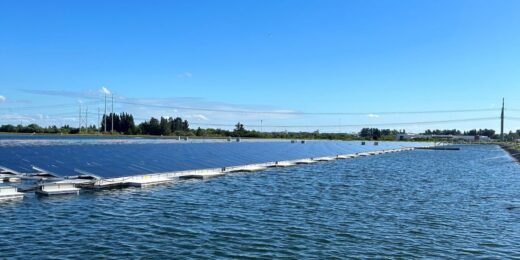
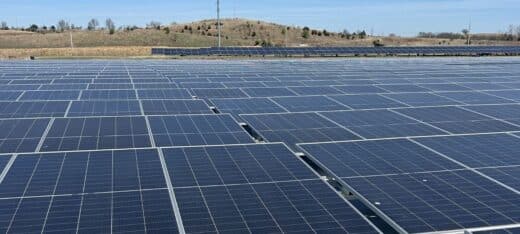
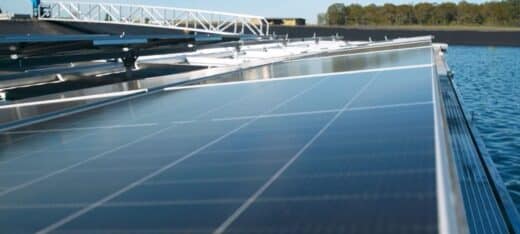
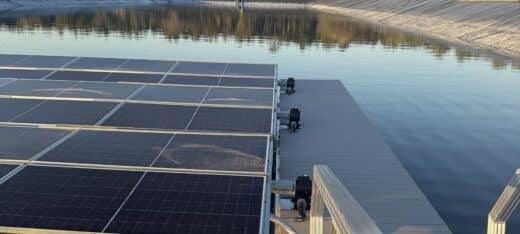
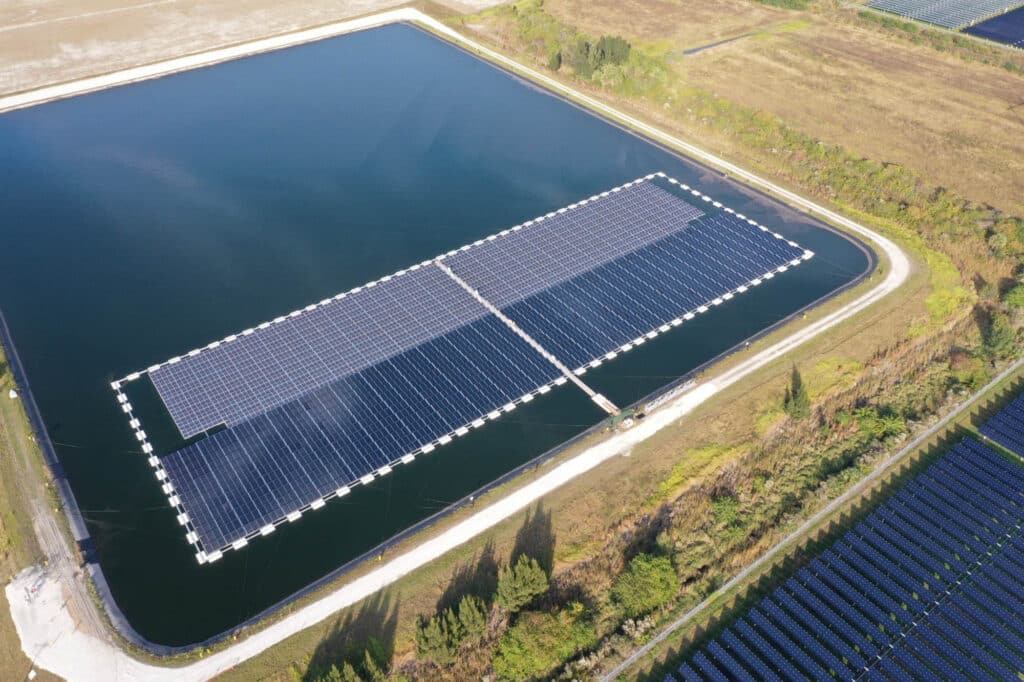
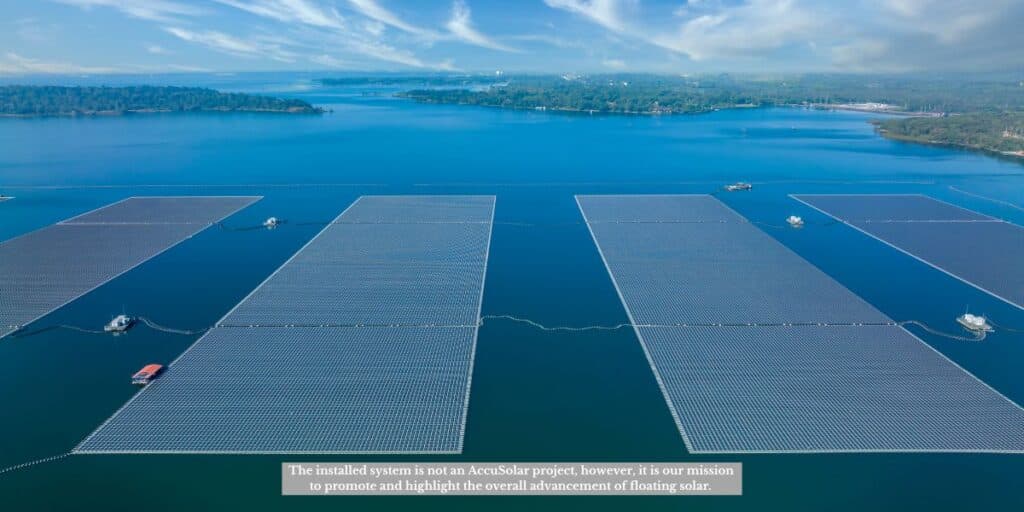
Floating solar technology, often called floatovoltaics, places photovoltaic panels on buoyant platforms anchored on the surface of water bodies. These installations transform underutilized water surfaces into productive energy systems while fundamentally altering the microclimate beneath them.
How Floating Solar Works
Floating solar systems are typically deployed on reservoirs (drinking water and municipal), lakes (natural and man-made), irrigation ponds, industrial basins (tailing ponds or wastewater treatment), and hydropower dams.
By shading portions of the water surface, these panels decrease sunlight penetration and lower the surface temperature. This physical barrier protects the water from direct wind exposure and solar radiation, two primary drivers of water loss. Consequently, evaporation rates are slowed dramatically, preserving water levels for agriculture, consumption, and power generation.
These installations transform underutilized water surfaces into productive dual-purpose energy and conservation systems while fundamentally altering the microclimate beneath them.
How Floating Solar Reduces Evaporation
Floating solar combats evaporation through two main mechanisms.
Shading Reduces Solar Warming
Solar panels act like large umbrellas above the water. Less direct sunlight means lower surface temperature, reduced energy in surface molecules, and less water escaping into the air. Even partial coverage over a reservoir can save substantial volumes annually.
Wind Protection Limits Moisture Loss
The structure supporting floating panels creates a barrier against wind. Since wind accelerates evaporation by removing vapor, blocking it helps keep moisture where it belongs inside the reservoir.
Together, shading and wind reduction can significantly reduce evaporation, offering both environmental and economic benefits to water providers, farmers, and industries.
Where Floating Solar Provides the Greatest Benefit
Drinking Water and Utility Reservoirs
Floating solar helps utilities conserve water by reducing evaporation and extending reservoir life during droughts, lower water treatment costs by shading the water to limit algae growth, and generate renewable electricity to power facility operations.
This dual purpose is what makes floating solar a powerful conservation strategy.
Agricultural Water Storage and Irrigation Basins
In farm settings, floating solar helps secure irrigation supplies during peak months when both crops and evaporation intensify demand. Water conserved remains available longer, helping stabilize regional agriculture systems.
Hydropower Dams and Renewable Energy Synergy
Floating solar is especially effective when installed on hydropower reservoirs. These dual-purpose systems preserve stored water behind dams, provide extra electricity capacity, and reduce strain during low-water years. They create an integrated clean-energy network with fewer environmental trade-offs.
The structural integrity of these systems relies on advanced platform materials engineered for decades of exposure to UV radiation and thermal cycling.
Multi-Use Lakes
Multi-use lakes require careful planning for recreation, wildlife, and navigation. Floating solar can be placed away from shorelines, outside boating lanes, and clear of bird nesting zones. When planned responsibly, floating solar can coexist with recreation and conservation goals.
Real-World Case Studies: Evaporation Examples With Floating Solar
Several countries have already tested floating solar specifically to conserve water, revealing measurable results. These evaporation examples show the technology’s real-world effectiveness.
California, USA
Reservoirs in drought-prone regions have tested floating solar to prevent water loss. During early studies, shading from pilot projects showed that evaporation dropped significantly during peak summer and surface temperatures remained cooler throughout the season. These findings have influenced expansion discussions on larger reservoirs serving millions of residents.
India: Banasura Sagar Reservoir
India’s high temperatures and dry climate place pressure on hydroelectric reservoirs. Floating solar installed on Banasura Sagar helped reduce evaporation during heat waves, supplement power generation during peak demand, and protect water levels crucial to local irrigation and tourism.
Japan: Yamakura Dam
Japan pioneered commercial-scale floating solar to address limited land and protect freshwater supplies. Monitoring revealed lower algae growth, noticeable reduction in seasonal evaporation, and increased energy production due to cooler panel temperatures. These results helped accelerate Japan’s floating solar market growth.
Case studies reinforce that floating solar offers both measurable water conservation and reliable power generation.
The Economics of Evaporation: Why Water Loss Is Expensive
Evaporation may seem like a natural side effect of storing water, but it has hidden financial consequences for utilities, farmers, and industries.
Municipal Utilities
As reservoir levels drop, utilities must treat a higher concentration of pollutants. Shrinking water volumes also encourage algae blooms, which require expensive chemical intervention. Utilities must often pay a premium to pump or purchase supplemental water to replace what was lost to the atmosphere.
Agriculture
As evaporation reduces the available supply, heightened competition between cities and growers drives water prices higher for everyone. Replacing evaporated water increases irrigation demands. Extracting additional groundwater requires significant energy, driving up fuel and electricity bills.
Industrial Facilities
Cooling ponds must be replenished constantly to maintain thermal regulation. As water evaporates, leftover minerals become more concentrated, requiring additional chemical treatment to prevent equipment scaling.
Floating solar arrays mitigate these expenses by physically shielding water from the sun, keeping it in the system. By simultaneously generating electricity to offset operational costs, these installations often provide a clear path to a full return on investment.
Environmental Impact: What Happens If Evaporation Continues Uncontrolled?
If evaporation continues to accelerate due to rising temperatures, several environmental impacts become more severe. Habitat shrinkage threatens fish, plants, and migratory birds that depend on stable water levels. Hotter water temperatures decrease oxygen and increase algae, stressing aquatic food webs. Rivers fed by reservoirs weaken, affecting downstream ecosystems. Soil around shrinking lakes dries out, damaging shoreline vegetation. Higher concentration of pollutants harms wildlife and reduces water quality.
Floating solar helps counteract these impacts by stabilizing water conditions, reducing warming, and moderating algae growth.
Additional Environmental and Energy Benefits
Floating solar panels provide further advantages beyond reducing evaporation.
Reduced Algae Growth
Less sunlight reaching the water surface can inhibit algae blooms, improving water clarity and potentially reducing treatment costs for drinking water utilities.
Higher Solar Panel Efficiency
Solar panels operate more efficiently at cooler temperatures. Because the water beneath floating arrays helps cool the panels, they often generate more electricity than land-based systems.
Dual Use of Space
Floating solar produces energy without occupying valuable land, ideal for dense cities, farmland, or protected ecosystems.
Why Floating Solar Stands Out
Floating solar conserves water and produces clean energy, reduces harm from heat and wind, offers long-term economic value, can be integrated into existing energy infrastructure, and creates revenue or reduces electricity costs for utilities. It is not merely a conservation device. It is an energy investment that pays for itself while protecting essential water resources.
Evaporation and Floating Solar: Key Takeaways
Understanding what temperature does water evaporate and examining real-world evaporation examples reveals why water conservation has become so critical. Evaporation happens when liquid water changes to vapor from the surface below boiling temperature. The main evaporation drivers are heat, low humidity, and wind, which increase the rate of water loss from open surfaces. Affected water bodies include reservoirs, lakes, ponds, and canals, which can lose large volumes annually through evaporation.
Floating solar addresses this challenge through a simple mechanism: panels shade and shelter the surface, keeping water cooler and slowing evaporation. Added benefits include improved panel efficiency, potential algae control, and dual use of water surfaces.
Together, these factors show how understanding and managing evaporation in reservoirs, lakes, and other water bodies is essential for long-term water security, and how floating solar panels offer a practical tool to conserve water while expanding renewable energy.
Future Outlook: Floating Solar as a Water Security Solution
As climate change accelerates evaporation risks, floating solar is poised to become a cornerstone of water strategy. Urban water utilities will utilize floating solar to stabilize drinking water supplies. Agricultural regions will install systems to protect seasonal irrigation storage. Hydropower plants will increasingly integrate solar and hydro technologies to produce more consistent renewable energy. Developing nations in arid climates may rely on floating solar to preserve scarce freshwater while expanding access to electricity.
As costs decrease and designs become more efficient, floating solar will expand not just as an energy technology but as a water conservation asset. Communities worldwide are recognizing that managing evaporation is no longer optional. It is essential to protecting the water that households, farms, industries, and ecosystems rely on every day.
As temperatures rise and droughts intensify, even small improvements in water storage can have meaningful effects on long-term supply and sustainability. Floating solar stands out as a practical solution because it does more than slow evaporation. It also generates clean energy, helps reduce algae growth, supports efficient utility operations, and makes better use of space that might otherwise go unused.
By combining water preservation with renewable electricity generation, floating solar offers a dual benefit that other methods cannot match. It transforms reservoirs, lakes, ponds, and industrial basins into high-value assets capable of producing electricity while safeguarding essential water stores. Real-world evaporation examples from California, India, and Japan demonstrate the technology’s effectiveness. As more regions adopt this technology, floating solar will play a larger role in powering communities and preserving the resources that keep them thriving.
Contact us to learn more about floating solar and how it can help protect your water resources.
This article has been updated on December 29, 2025 to provide the most accurate and relevant information.