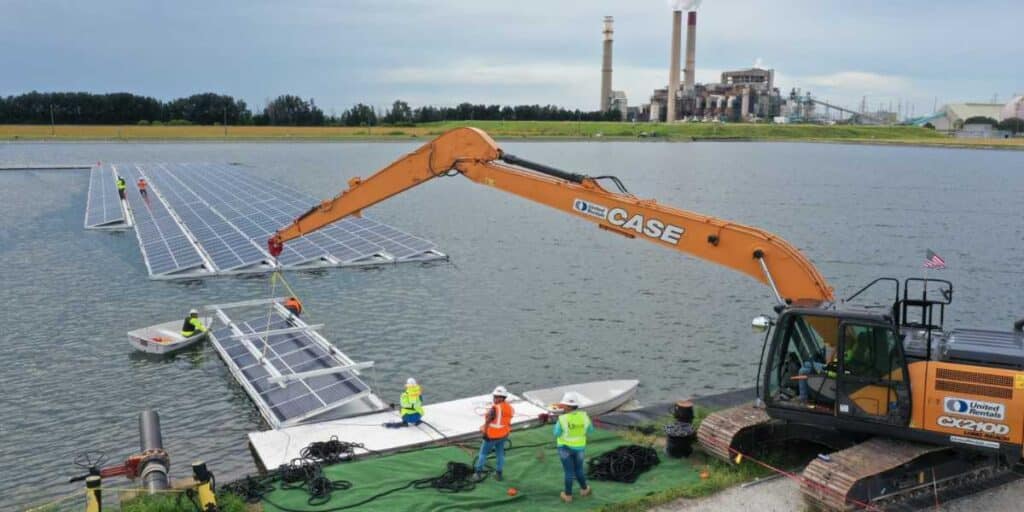
In solar development, selecting the lowest bid can appear to be a cost-effective decision. Lower upfront pricing, faster approvals, and simplified procurement often make these proposals appealing.
However, the lowest bid rarely delivers the lowest cost over time. The difference between price and value becomes evident in system performance, operational efficiency, and long-term return on investment. What appears to be an initial saving can quickly translate into higher maintenance costs, reduced energy output, and increased operational risk.
Solar Installation Cost vs. Long-Term Performance
Solar installation cost is often the first metric evaluated in a proposal. While it plays an important role in budgeting, it is only one part of a much larger value equation.
A well-designed floating solar system delivers benefits that extend far beyond initial pricing, including:
- Strong lifetime energy production
- Efficient and streamlined maintenance
- Long-term durability in real-world conditions
When evaluating solar investments, it is important to consider performance over the full system lifecycle rather than upfront cost alone. Long-term energy output and operational efficiency are what ultimately define value.
LCOE vs CAPEX
To properly evaluate a solar investment, it is essential to distinguish between CAPEX and LCOE.
- CAPEX (Capital Expenditure): The upfront cost to design and install the system
- LCOE (Levelized Cost of Energy): The total cost of generating electricity over the system’s lifetime, expressed per kWh
LCOE includes:
- Total energy production
- Operations and maintenance costs
- System degradation and downtime
Systems that generate more energy and require less maintenance achieve a lower cost per kWh over time. This is where true value is created, a system that performs better over its lifetime is not more expensive, it is more financially efficient.
Hidden Costs of Low-Bid Floating Solar Systems
Floating solar systems operate in dynamic environments where structural integrity and accessibility are critical. Design decisions directly impact long-term performance, maintenance requirements, and system reliability.
| Potential Issue | Impact of Low-Cost Systems |
| Weak Anchoring | Increased failure risk during storms |
| Poor Access | Higher O&M costs due to labor-intensive service |
| Lower Buoyancy | Safety issues, system instability, and increased downtime |
The AccuSolar Design Advantage
A high-performing floating solar system begins with engineering. At AccuSolar, our systems are designed to perform for 30+ years using customizable structures rather than fixed molds.
Key design advantages include:
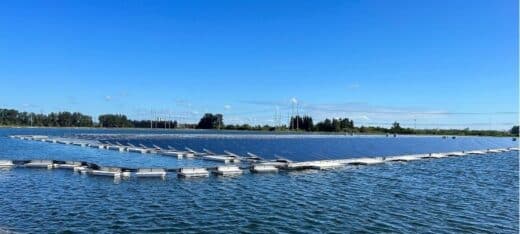
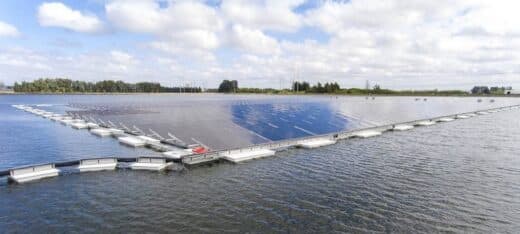
Enhanced Buoyancy: Large Floats that provide superior stability and safety
Closed- Cell foam Filled: Engineered to ensure the system will not sink
Marine-Grade Aluminum: Built for durability in harsh environments
Flexible Configurations: Tailored to match specific panel sizes and project requirements
Reduced O&M Risk: Designed to minimize long-term maintenance issues
Additionally, the natural cooling effect of water improves panel efficiency contributing to increased energy output throughout the life of the project.
Performance Driven Design Features
We’ve optimized every detail of our systems to ensure they’ll work harder for you.
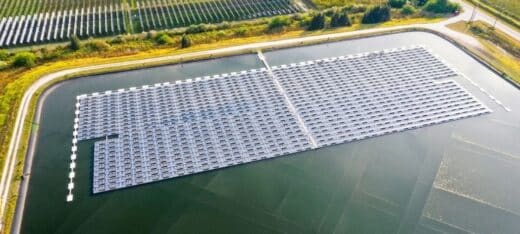
Fewer, Stronger Anchors: By engineering better stability with fewer anchor pints, we reduce installation complexity and enhance the structural reliability of your entire site.
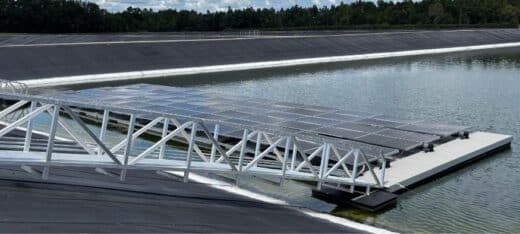
Integrated Service Walkways: We prioritize your team’s safety and efficiency. Our wide, dry walkways allow for fast, easy access turning maintenance into a simple, nondisruptive task.
Elevated Panels: By enhancing airflow and cooling, we boost energy ouput, ensuring your panels operate at peak efficiency.
Seasonal Tilt: Our systems adapt to the changing sun, providing continuous optimization that static systems simply cannot match.
Commercial Solar Project Cost vs True Value
Stakeholders often focus on commercial solar project costs. However, a comprehensive evaluation must include total energy production, maintenance requirements, system reliability and the long term cost per kWh. A system that produces more energy, requires less maintenance, and operates reliably will deliver greater financial value over time.
A Perspective from the Field
In real-world applications, the difference between price and value becomes most apparent as systems are exposed to environmental conditions and long-term operational demands.
“In this industry, we see the difference between “installed” and “engineered” every single day. Clients choose AccuSolar because they want a system that doesn’t just sit on the water, it performs. We design our floating solar systems to be the backbone of your energy strategy for the next 30+ years. When you have integrated walkways, optimal buoyancy and a structure that adapts to the environment, you aren’t just saving on maintenance you’re capturing more energy. That is the peace of mind that comes with a quality investment.”
Thomas Lang
CTO, Business Development, AccuSolar
This reflects a consistent reality in solar development. Systems designed for long-term performance deliver stronger returns than those optimized solely for upfront cost.
Invest in Performance
The goal of every AccuSolar project is simple: generate more energy, require less maintenance, and deliver a stronger return. Budget-focused systems are designed primarily for the installation phase, AccuSolar systems are engineered to perform for decades. If a system generates more energy, lasts longer and costs less to maintain, it is the superior financial choice. Solutions prioritized solely by low upfront costs often carry hidden long-term expenses whereas an investment in quality pays for itself over the life of the project. Partner with us to build a floating solar solution that prioritizes long-term reliability and measurable, industry leading value.