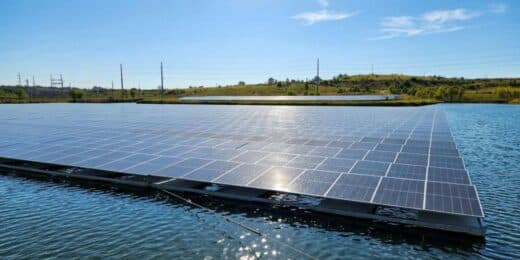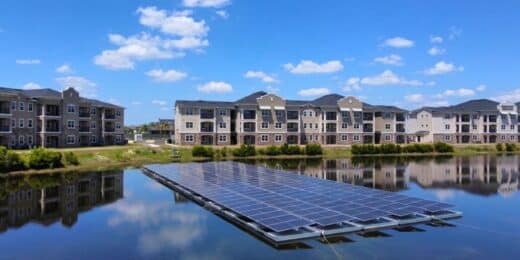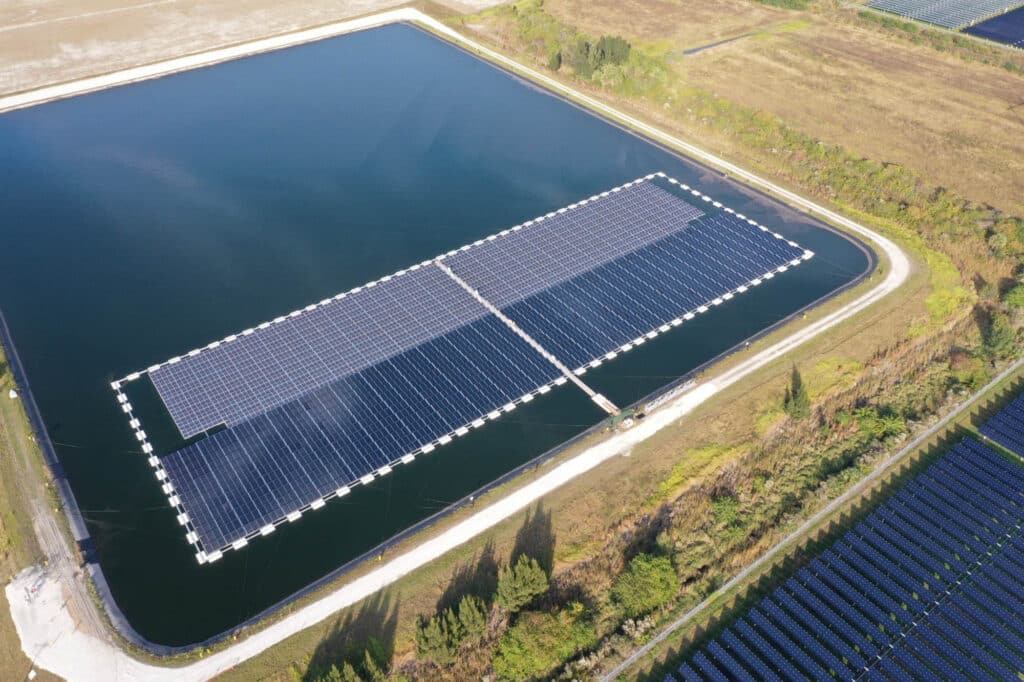
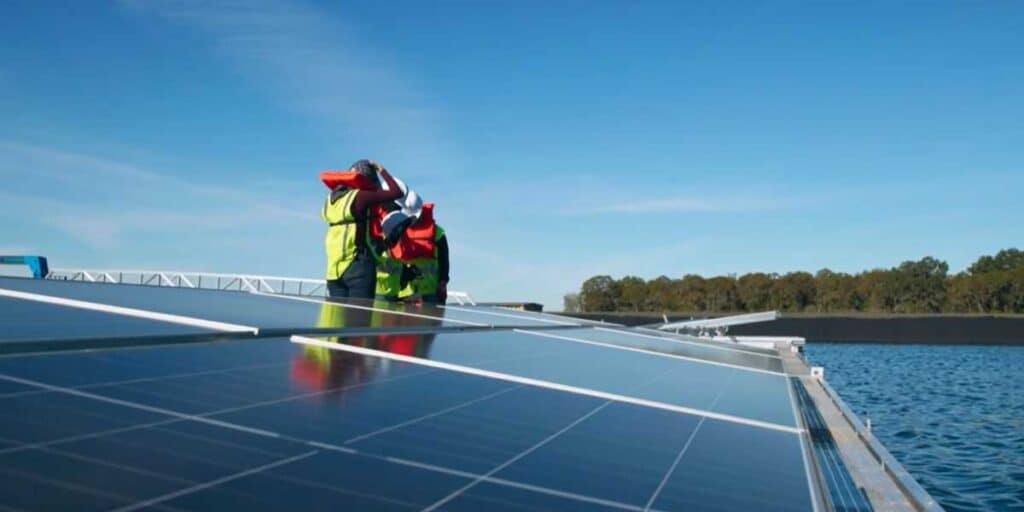
As global floating photovoltaic (FPV) adoption accelerates, project developers, EPCs, utilities, and asset owners are placing greater emphasis on long-term quality, structural reliability, and bankability. Moving beyond early-stage pilot projects and small municipal installations, today’s utility-scale floating solar deployments demand rigorous engineering methodologies capable of withstanding complex aquatic environments.
To meet this demand, independent global energy risk bodies have established structured technical guidelines. Prominent among these are the DNV floating solar standards, specifically DNV-ST-C108 and DNV-ST-E309. These publications establish clear technical expectations for how floating solar systems should be designed, analyzed, installed, and maintained.
By defining standardized requirements for structural integrity, environmental loading, electrical interfaces, and dynamic mooring analysis, these comprehensive floating solar engineering standards reduce uncertainty during project planning, streamline engineering reviews, and protect long-term capital investments. AccuSolar didn’t just adopt these standards we contributed to them, participating directly in the DNV-led Joint Industry Projects that shaped both DNV-ST-C108 and DNV-ST-E309.
What Is DNV and Why Are Standards Essential for FPV?
DNV (Det Norske Veritas) is an independent, internationally recognized assurance and risk management organization operating across the energy, maritime, and infrastructure sectors. For decades, DNV has authored benchmark safety and engineering standards for offshore wind, oil and gas, and marine structures.
As solar energy expanded from land to water, the industry encountered unique engineering challenges that land-based PV codes such as standard building codes or ground-mount IEEE/IEC frameworks could not adequately address. Installing solar arrays on bodies of water introduces dynamic physical forces:
Hydrodynamic Forces: Continuous motion from wind-generated waves, currents, and water level fluctuations.
Corrosive & Humid Environments: High moisture, humidity, biogrowth, and potentially saline ambient conditions.
Complex Mooring & Anchoring Dynamics: Varying geotechnical lakebed conditions combined with thermal expansion and water depth variations.
Without clear, water-specific benchmarks, early floating solar projects often suffered from inconsistent structural assumptions, under-engineered mooring attachments, or electrical insulation failures due to constant flexure. The introduction of standardized DNV floating solar standards provides developers, lenders, independent engineers (IEs), and insurers with a unified reference framework to evaluate floating solar assets objectively.
The Key Pillars of Modern Floating Solar Engineering Standards
The comprehensive scope of floating solar engineering standards spans multiple engineering disciplines, bridging civil, mechanical, and marine engineering. The standards framework is primarily divided into two main governing documents: DNV-ST-C108, which addresses the structural design and hydrodynamic integrity of floating photovoltaic systems, and DNV-ST-E309, which addresses station keeping.
Together, these two complementary publications provide guidance for the floating structure and the systems responsible for keeping the array securely in position. DNV-ST-C108 focuses on the physical platform, including buoyancy, environmental loading, and structural performance, while DNV-ST-E309 addresses station-keeping principles and the mooring equipment used to maintain the position of floating photovoltaic systems.
Understanding DNV-ST-C108: Structural Design Standards for Floating Solar
DNV-ST-C108 focuses explicitly on the structural design framework for floating solar support platforms. It provides the methodology needed to verify that a floating platform, its structural connectors, and its anchoring systems can safely endure site-specific environmental loads throughout an intended operational lifespan of 25 to 30 years.
Rather than dictating a single rigid manufacturing approach (such as pure HDPE floating platform, hybrid metal-float structures, or textile membrane systems), DNV-ST-C108 offers a performance-based design framework.
The primary load path managed by DNV-ST-C108 begins with environmental forces (wind drag, wave action, and water currents) striking the inclined solar PV modules and racking assembly. These forces transfer dynamic mechanical loads down into the floating dock structure. From the floats, these physical stresses travel through structural connection joints and line tethers into the dynamic mooring assembly, which ultimately distributes the load safely into the lakebed or reservoir floor anchors.
Key Technical Focus Areas of DNV-ST-C108
1. Environmental Loading & Metocean Analysis
DNV-ST-C108 requires thorough evaluation of site-specific meteorological and oceanographic (metocean) conditions. Structural calculations must account for combined load cases, including:
Extreme Wind Speeds: Calculating aerodynamic drag and uplift across tilted module surfaces, taking into account localized wind-burst turbulence and sheltering effects across large arrays.
Wave Dynamics: Assessing wave height, period, and wave-induced bending moments across the raft structure.
Currents and Water Level Variations: Accounting for hydrodynamic drag caused by underwater currents, as well as extreme seasonal water level drawdowns in hydro reservoirs or quarry lakes.
Ice and Snow Loading: Evaluating structural capacity under ice formation, snow accumulation, and thermal expansion forces caused by freezing water surfaces.
2. Buoyancy, Reserve Buoyancy, and Stability
A floating solar platform must maintain stable flotation under all operational and environmental conditions. DNV-ST-C108 establishes requirements for:
Reserve Buoyancy Ratios: Ensuring sufficient excess buoyancy is built into the floating dock design to account for biofouling, sediment accumulation, maintenance personnel weight, and potential localized float damage.
Intact and Damaged Flotation Analysis: Verifying that if one or multiple float compartments lose integrity, the broader array will not experience catastrophic tipping or submersions.
3. Material Durability and Corrosion Resistance
Water-based environments accelerate material degradation. DNV-ST-C108 provides clear guidance on:
UV Degradation: Requiring long-term UV stabilization testing (e.g., carbon black formulation or specialized additive packages) for High-Density Polyethylene (HDPE) and polymer components.
Corrosion Resistance: Specifying protective coatings or marine-grade stainless steel/aluminum alloys for all structural fasteners, framing, and racking hardware exposed to moisture and atmospheric humidity.
Environmental Stress Cracking Resistance (ESCR): Ensuring polymer materials do not fail prematurely under constant mechanical stress while in contact with water chemistry variations or cleaning detergents.
4. Anchoring and Mooring System Integrity
The mooring system is the critical link tethering the floating solar island to the shore or lakebed. DNV-ST-C108 mandates dynamic tension analysis to evaluate:
Peak and Cyclic Tension: Modeling shock loads on synthetic lines, steel chains, and connection lugs during peak storm events.
Anchor Holding Capacity: Evaluating deadweight, helical screw, or driven pile anchors based on geotechnical soil samples from the water body floor.
Fatigue Life: Ensuring that continuous low-amplitude motion (wave action over 25+ years) does not cause fatigue failure in marine shackles, tethers, or structural connection points.
What DNV-ST-E309 Covers: Station Keeping for Floating Solar
While DNV-ST-C108 concentrates on structural design and hydrodynamic stability, DNV-ST-E309 focuses on station keeping for floating photovoltaic systems.
A floating solar array must remain securely positioned while accommodating movement caused by environmental forces and changing water levels. DNV-ST-E309 provides principles, methods, requirements, and recommendations related to the mooring equipment used to maintain the position of floating photovoltaic systems.
Within the DNV floating solar standards portfolio, DNV-ST-E309 provides a framework for evaluating how the floating structure, mooring system, and anchoring approach work together to maintain the array’s position.
Key Focus Areas of DNV-ST-E309
1. Station-Keeping Design
Station keeping must account for the site-specific conditions affecting the floating array, including wind, waves, currents, water depth, water-level fluctuations, and expected array movement.
The objective is to develop a system capable of maintaining the intended position of the array while accommodating the environmental conditions applicable to the project.
2. Mooring System Analysis
The mooring system should be evaluated as part of the overall floating solar structure rather than as an independent component.
Analysis may consider mooring line loads, load distribution, array movement, environmental loading, and the interaction between the floating structure and its station-keeping system.
3. Mooring and Anchoring Integration
The floating platform, mooring attachment points, lines, connectors, and anchors must work together to transfer loads safely through the complete system.
The appropriate station-keeping configuration depends on site-specific conditions such as water depth, water-level variations, environmental loading, bathymetry, and anchoring conditions.
4. Long-Term Reliability and Maintainability
Station-keeping design should consider long-term exposure to cyclic loading, environmental conditions, and expected movement throughout the operating life of the project.
Inspection access, component durability, potential failure modes, and maintenance requirements should be considered as part of the overall station-keeping approach.
Comparative Breakdown: DNV-ST-C108 vs. DNV-ST-E309
To understand how these two floating solar engineering standards complement one another, consider their core focus areas across distinct engineering parameters:
Primary Domain: DNV-ST-C108 focuses exclusively on structural engineering, hydrodynamics, buoyancy, and the floating structure. DNV-ST-E309 focuses on station keeping and the mooring systems used to maintain the array’s position.
Key Physical Elements: DNV-ST-C108 evaluates floats, metal racking, structural fasteners, mooring lines, and lakebed anchors. DNV-ST-E309 addresses mooring equipment, attachment points, mooring lines, connectors, and anchoring interfaces.
Primary Risks Mitigated: DNV-ST-C108 addresses structural failure, float submergence, and structural fatigue. DNV-ST-E309 addresses risks associated with excessive array movement, station-keeping component loads, and loss of position.
Primary Load Analysis: DNV-ST-C108 evaluates environmental loads acting on the floating structure, including wind, waves, currents, snow, and changing water levels. DNV-ST-E309 evaluates how applicable loads are transferred through and managed by the station-keeping system..
Target Audience: DNV-ST-C108 is utilized primarily by structural engineers, marine architects, and floating platform manufacturers. DNV-ST-E309 is particularly relevant to engineers and specialists responsible for station-keeping, mooring, and anchoring design.
How Industry Standards Elevate Platform Quality
Prior to the formalization of recognized floating solar engineering standards, the market featured a wide variety of unverified float designs and improvised anchoring setups. Different FPV technologies have different structural philosophies. AccuSolar deliberately approaches FPV as long-life marine infrastructure.
In this unstandardized early era, developers faced varying manufacturer claims, minimal dynamic wave analysis, adapted ground-mount racking, and a significantly higher risk of dynamic fatigue failure over time. The transition into the modern DNV-standardized era has established standardized load calculations, dynamic 3D metocean modeling, purpose-built marine components, and proven 25-plus-year asset longevity.
1. Consistent Engineering Evaluations during RFP Reviews
When developers issue Requests for Proposals (RFPs) for utility-scale floating solar projects, comparing competing platform designs can be challenging. By requiring compliance with DNV floating solar standards, procurement teams can evaluate proposals against an objective, common baseline rather than deciphering marketing claims.
2. Encouraging Purpose-Built Marine Racking Innovation
Standards shift the competitive focus away from low upfront material costs toward long-term lifecycle performance. Manufacturers are encouraged to invest in:
- High-grade marine aluminum alloys (e.g., 6005-T6 or 5052-H32).
- Advanced structural bracing designed to absorb dynamic shear forces.
- Optimized aerodynamic tilt angles that balance power density with reduced wind drag.
3. Mitigating System-Wide Fatigue Failures
Unlike fixed ground-mount arrays that remain stationary, a floating solar array experiences millions of dynamic movement cycles over its operational lifetime. DNV standards ensure that fatigue analysis is integrated directly into the structural design process, preventing unexpected pin-connection, bracket, or hinge failures 5 to 10 years into operation.
Why DNV Standards Matter for Project Financing, Insurance, and Approvals
For utility-scale solar projects, obtaining competitive debt financing and affordable insurance coverage is essential. Capital providers view aquatic installations through a risk-averse lens. Without recognized standards, non-recourse project financing can be difficult to secure.
Key Takeaway for Developers: Adherence to recognized floating solar engineering standards acts as a stamp of technical quality. It reassures risk managers, independent engineers, and underwriters that the project’s physical assets have been designed using proven marine engineering principles.
Adhering to DNV standards directly unlocks three major commercial advantages:
Lower Cost of Capital & Debt Securitization: Financial institutions offer better loan terms and lower interest rates when project risks are mitigated through verified marine engineering frameworks.
Reduced Insurance Premiums & Claims: Insurance underwriters evaluate asset risk based on environmental exposure. Demonstrating that a floating array has undergone dynamic wave tank testing or computer-simulated computational fluid dynamics (CFD) in accordance with DNV guidelines reduces risk premiums.
Faster Utility Permitting & Independent Engineering (IE) Approvals: Third-party technical advisors and public water authorities reviewing a project can verify compliance faster when calculations align with standard DNV-ST-C108 and DNV-ST-E309 criteria, simplifying environmental impact sign-offs.
AccuSolar’s Engineering Approach: Building Beyond Minimum Compliance
At AccuSolar, we welcome the continued adoption and refinement of modern DNV floating solar standards. Durable, engineered infrastructure is the foundational pillar supporting the future of floating solar energy across North America and global markets.
As projects scale up in capacity and transition to harsher inland lakes, coastal impoundments, water treatment facilities, and hydroelectric reservoirs, floating solar platforms must deliver uncompromising durability. AccuSolar views code and standards compliance as a starting point for engineering long-life FPV infrastructure.
Engineered Structural Precision: AccuSolar floating support systems can be engineered for project-specific wind, wave, current, water-level and snow loading conditions
Corrosion-Resistant Marine Materials: Utilizing robust structural aluminum framing and heavy-duty, high-density polyethylene floats, AccuSolar structures resist corrosion, UV exposure, and water chemical degradation.
Dynamic Mooring Integration: AccuSolar works closely with marine engineering specialists to design site-specific mooring and anchoring systems tailored to lakebed geotechnical profiles and extreme water level fluctuations.
Bankable, Scalable Performance: We believe compliance with industry standards is a baseline. Our engineering team builds beyond minimum requirements to deliver long-term value, high system availability, and reliable power generation for asset owners.
Step-by-Step Developer Checklist: Navigating DNV Compliance from Concept to O&M
To successfully implement these guidelines across a project’s lifecycle, project developers can follow a structured 5-phase engineering workflow:
Phase 1: Site Metocean & Geotechnical Assessment
- Establish site-specific environmental design conditions using the applicable DNV return periods and load combinations, including extreme and robustness cases where required.
- Conduct bathymetric surveys and lakebed soil sampling. Needed to support an engineered anchoring design.
- Consider project specific conditions such as water level fluctuations, extreme weather exposure, debris, and access requirements for O&M
Phase 2: Platform Selection & Structural Verification (DNV-ST-C108)
- Review manufacturer reserve buoyancy ratios and polymer UV stabilization specifications.
- Evaluate structural framing, floatation, connections, and PV support components as an integrated load path
- Consider longevity associated with connections, and float replacement potential
Phase 3: Mooring & Anchoring Integration
- Develop the station-keeping system together with the floating platform rather than treating anchoring as an independent component.
- Account for site-specific water-level changes, environmental loading, anchor conditions, and expected array movement.
- Evaluate elastic or other load-management elements where appropriate to reduce peak loading and accommodate water-level variation.
- Design attachment points to safely transfer mooring loads into the floating structure.
Phase 4: Electrical & System Interface Design (DNV-ST-E309)
- Verify with certified electrical engineers on dynamic movement of array and connection to static shore conditions.
- Evaluate floating structure for cable management and grounding requirements.
Phase 5: Independent Engineering (IE) Review & Project Bankability or Financing
- Provide a clearly documented design basis, including environmental criteria, structural calculations, material specifications, and station-keeping assumptions.
- Use recognized engineering standards and site-specific calculations to support independent engineering and technical due diligence.
- Document the complete structural load path—from PV modules and racking through the floating structure and ultimately into the station-keeping system.
- Consider structural redundancy and potential component failures as part of the overall design approach.
Phase 6: Manufacturing Quality Assurance & Long Term Operations / Maintenance (O&M)
- Prioritize materials and components selected for long-term exposure to aquatic environments, UV, cyclic loading, and site-specific environmental conditions.
- Establish manufacturing quality-control procedures and maintain material and component traceability.
- Design the platform for practical installation, inspection, maintenance, component replacement, and long-term access.
- Incorporate inspection and maintenance considerations into the original design rather than addressing them after installation.
Frequently Asked Questions (FAQs)
1. Are DNV floating solar standards mandatory for all floating PV projects?
DNV standards are increasingly recognized as important technical references for floating solar projects and may be requested by lenders, insurers, independent engineers, developers, or asset owners depending on the project. While local authorities having jurisdiction (AHJs) may enforce standard national electrical codes (such as NEC/NFPA 70 in the U.S.), adherence to DNV floating solar standards (specifically DNV-ST-C108 and DNV-ST-E309) is often required by financial institutions to secure non-recourse project financing and obtain commercial property/casualty insurance.
2. How do DNV-ST-C108 and DNV-ST-E309 differ from land-based solar engineering codes?
Land-based solar codes focus primarily on static building loads, fixed soil foundations, and standard terrestrial electrical grounding. In contrast, floating solar structures operate in dynamic aquatic environments. DNV-ST-C108 introduces marine structural concepts such as hydrodynamic wave loads, dynamic fatigue from constant surface motion, reserve buoyancy ratios, and lakebed mooring tension analysis. DNV-ST-E309 expands on electrical safety for water environments, covering dynamic flexural cabling, high-humidity ingress protection (IP) ratings, and specialized equipotential grounding across moving floating arrays.
3. How do these standards address extreme weather events like hurricanes or freezing water bodies?
DNV floating solar standards emphasize evaluating the overall environmental conditions that may affect a floating solar system throughout its intended service life. While wind speed is an important design consideration, it is only one component of the overall site environment.
Depending on the project location and water body, relevant conditions may include wind, wave height and period, available fetch, currents, water depth and water-level variations, snow and ice, temperature, and other site-specific environmental factors. These conditions should be considered together because the loads experienced by a floating solar system are influenced by both the severity of individual environmental events and the characteristics of the water body itself.
The appropriate design criteria and engineering methodology therefore depend on the specific project. A protected inland pond with limited fetch and minimal wave action presents a significantly different operating environment than a large exposed reservoir, even where similar design wind speeds may apply.
For developers, the objective is to establish appropriate site-specific design conditions and verify that the floating platform, structural connections, and mooring and anchoring systems are capable of accommodating the environmental loads applicable to that site.
4. How does DNV compliance affect the bankability and financing of a floating solar project?
Bankability refers to the willingness of financial institutions to invest in or lend against a renewable energy project. Because floating solar is a relatively young asset class compared to ground-mounted PV, lenders view unstandardized projects as higher risk. Demonstrating compliance with recognized floating solar engineering standards provides third-party verification that the platform’s structural frame, buoyancy, grounding, cabling, and mooring systems meet marine-grade safety margins. Alignment with recognized engineering standards can support independent engineering review, lender technical due diligence, insurance evaluation, and overall project bankability.
5. What role does the mooring and anchoring system play under DNV-ST-C108 design criteria?
Under DNV-ST-C108, the mooring and anchoring system is considered a critical primary load-bearing assembly. The floating platform relies entirely on its mooring lines (elastic synthetic ropes, stainless chains, or hybrid tethers) and lakebed anchors (deadweight concrete blocks, helical screws, or driven piles) to stay in position. The standard requires dynamic load modeling to ensure that peak shock loads from storm waves do not exceed anchor holding capacities or cause fatigue failure at tether connection points over a 25-to-30-year operational life.
The Future of Floating Solar Starts with Better Engineering
The publication and adoption of DNV floating solar standards mark a major milestone in the commercial maturation of floating photovoltaic technology. By establishing clear expectations for structural integrity, environmental load calculations, station keeping, and system-wide risk management, these frameworks reduce developer uncertainty while elevating overall industry quality.
As utility-scale floating solar projects continue expanding across reservoirs, water treatment facilities, industrial impoundments, and hydroelectric facilities nationwide, engineered reliability remains the key to long-term performance. Partnering with experienced structural providers who prioritize robust marine engineering ensures that your project achieves non-recourse bankability, regulatory approval, and reliable clean energy production for decades to come.
Ready to Plan Your Floating Solar Asset?
At AccuSolar, we specialize in designing and delivering heavy-duty, marine-grade floating solar platforms built to withstand demanding aquatic conditions. Contact our team to discuss your project requirements, request a structural consultation, or review site-specific metocean design criteria.