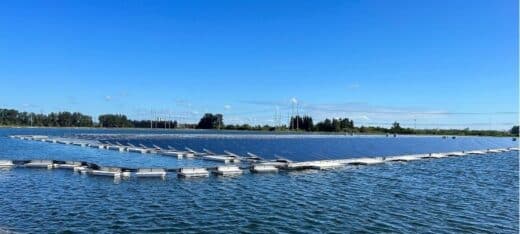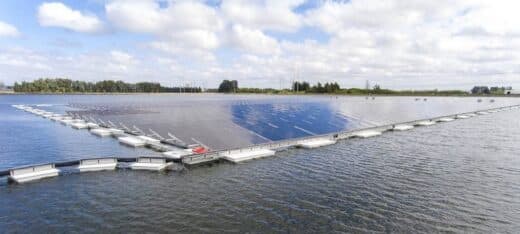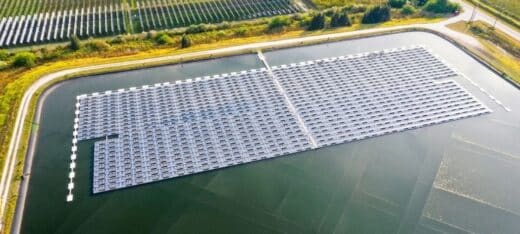
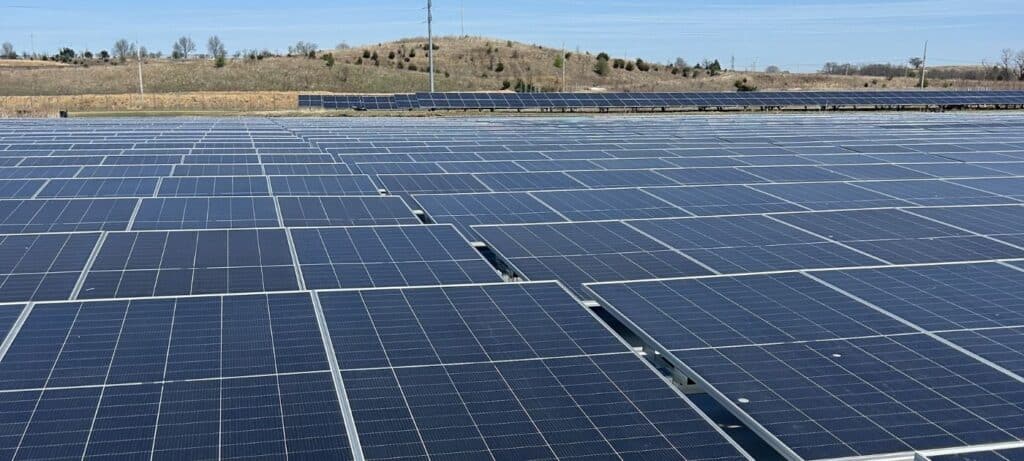
Floating solar is no longer a futuristic concept reserved for innovation showcases. Around the world, developers, utilities, and private investors are increasingly turning toward floating photovoltaic systems as land becomes scarce, energy demand rises, and pressure mounts to build cleaner infrastructure faster.
While floating solar projects generate excitement, they also raise a critical question: What does a floating solar project actually cost, and how do you know if the investment will pay off long term?
The answer is more nuanced than simply calculating equipment pricing or installation expenses. Smart developers understand that evaluating solar project cost requires looking beyond initial CAPEX and focusing on long-term performance, operational efficiency, and total lifecycle value. In other words, the cheapest system upfront is not always the most profitable one over 25 years.
Why Solar Project Cost Goes Beyond Upfront Pricing
Traditional ground-mounted solar faces a significant challenge regarding land availability. Large-scale solar developments often compete with agriculture, urban expansion and conservation zones. Floating solar addresses this issue by utilizing underused water surfaces such as:
- Reservoirs and mining pits
- Industrial ponds and irrigation basins
- Hydroelectric dams and wastewater treatment facilities
The advantages extend far beyond land conservation. Floating solar systems naturally operate in cooler environments, and water reflection can enhance irradiance. For developers, this means greater production from the same installed capacity, creating a major advantage when calculating the overall commercial solar cost and long-term profitability.
Lifecycle Value vs. Upfront Price
A lower upfront price may look attractive during procurement, but if the system underperforms or suffers structural failures, the project quickly becomes more expensive. This is why experienced developers evaluate solar project cost through the lens of Levelized Cost of Energy (LCOE), which considers:
- Initial installation and material costs
- Energy production and downtime risks
- Operations and maintenance expenses
- System lifespan and replacement costs
Higher Energy Yield Creates Stronger Revenue
Floating solar systems have a major advantage over traditional ground-mounted arrays.
Three key factors contribute to higher energy yield:
1. Water Cooling Effect: Panels stay cooler and operate more efficiently
2. Albedo Enhancement: Water reflects sunlight back toward the panels, boosting irradiance
3. Optimized Tilt Angles: Modern floating solar designs maximize solar capture while maintaining system stability.
For project owners, higher generation means higher revenue without needing additional land. This extra production becomes a vital offset to the total commercial solar cost over a 30-year asset lifespan.
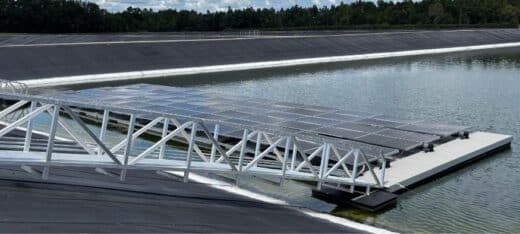
Efficiency in Design: Anchoring and Walkways
Anchoring is often an underestimated component of FPV engineering. Poor design leads to longer schedules and higher labor costs. Efficient systems minimize the number of required anchors which leads to:
- Faster deployment and reduced material costs
- Lower risk of anchor-line failures and easier inspections
Similarly, integrated walkways improve worker safety and issue resolution. When maintenance is streamlined, over reliability improves, significantly lowering the solar project cost associated with long-term O&M.
Commercial Solar Cost: Why System Design Impacts Profitability
When developers discuss commercial solar cost, the conversation often centers on hardware. In reality, project profitability depends heavily on engineering. For instance, floating solar systems frequently generate more energy than expected. If inverter capacity is not properly matched to this enhanced production, clipping occurs resulting in lost energy and revenue.
Thoughtful design also considers:
- Hydrodynamic behavior and structural load distribution
- Cable routing efficiency and thermal management
Investors Should Think Beyond the First-Year Budget
Floating solar is still a relatively young sector compared to traditional ground-mounted PV, which means design quality varies significantly between providers. Smart developers know that evaluating solar project cost isn’t just about the initial quote it’s about the decades of performance that follow.
Instead of simply asking “How much does the system cost?” developers should be asking deeper, more strategic questions:
- How will this system perform over a 25-year lifespan?
- How easily can crews access the array for repairs?
- What are the likely failure points and how much downtime risk exists?
- Will the inverter sizing capture full production potential or will we lose revenue to clipping?
- How do these factors ultimately impact the long-term LCOE?
The answers to these questions determine whether a project becomes a high-performing energy asset or an expensive operational challenge. Evaluating commercial solar cost through a long-term strategic lens allows developers to make smarter investment decisions that protect profitability over the entire asset lifecycle.
The Future of Floating Solar Belongs to Efficient Engineering
Floating solar is rapidly evolving from an emerging technology into a mainstream infrastructure solution. As adoption grows, industry competition will shift away from simple hardware pricing and toward performance optimization. Developers who prioritize the following will be better positioned to maximize long-term returns.
- Higher generation efficiency and optimized electrical layout
- Smarter, more resilient anchoring systems
- Enhance structural stability and maintenance-friendly layouts
- Optimized electrical design
- Long-term lifecycle economics over short-term CAPEX savings.
The most successful projects are those designed for resilience. Developers who prioritize intelligent engineering achieve better ROI and higher investor confidence. When evaluating your next project, look being the first-year budget. Ask how the anchoring is optimized, how easy the system is to maintain and how the design impacts the longer-term solar project cost.
The future of floating solar belongs to efficient engineering. Success depends on decisions that support reliability and lower the total commercial solar cost throughout the life of the asset. Contact us to learn how our floating solar solutions can support your next project.