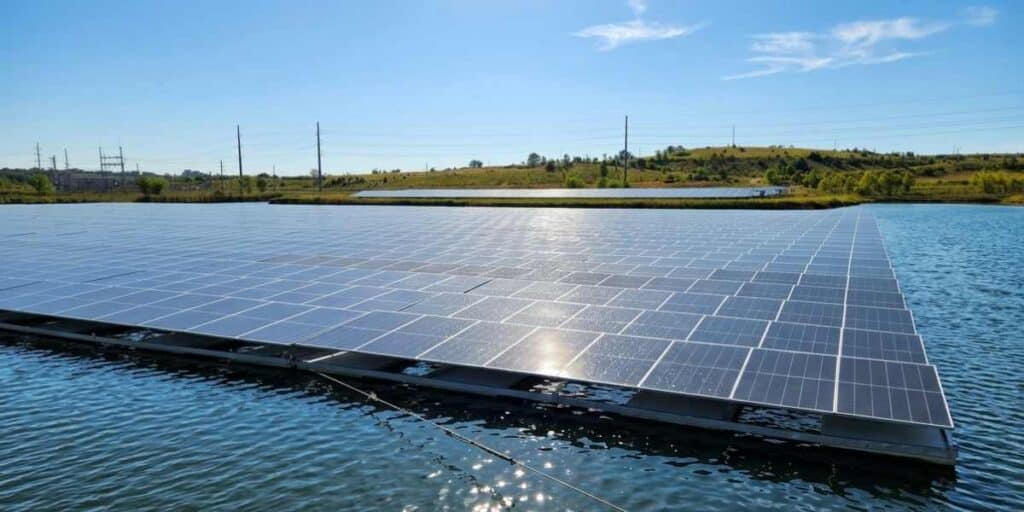
Many floating solar requests for proposals (RFPs) prioritize equipment cost per watt as the primary evaluation metric. While capital expenditure (CAPEX) is vital consideration, it fails to reflect the full, true cost of building, commissioning, and operating a floating solar asset. A lower-priced platform can quickly transform into the most expensive option on the table if it demands excessive field labor, high anchor density, complex electrical interconnections, and extended construction timelines, or elevated maintenance costs across its 25-to-30-year operational lifecycle.
The fundamental goal of a successful floating solar project isn’t simply purchasing the least expensive floats or mounting hardware. It is selecting an integrated system that yields the lowest total installed cost, minimizes construction risk, and optimizes the lowest levelized cost of energy (LCOE). By steering clear of widespread floating solar RFP mistakes and evaluating total lifecycle project economics rather than upfront material pricing alone, developers, independent power producers and EPCs can execute smarter, far more profitable long-term energy investments.
What Are RFPs and CAPEX?
Before examining where procurement processes go awry, it is important to clearly frame the core procurement mechanisms involved:
Request for Proposal (RFP): A formal document issued by project developers, utilities, or asset owners to invite vendors, original equipment manufacturers (OEMs), and EPCs to submit engineered solutions, execution plans, and binding commercial pricing for a floating solar project. A well-structured RFP details site conditions, mechanical requirements, electrical specifications, interconnections, risk allocations, and evaluation criteria, enabling developers to objectively compare proposals.
Capital Expenditures (CAPEX): The upfront capital allocated to purchase equipment (floats, racking, anchors, mooring lines, inverters, cables) and execute civil, structural, and electrical construction. While CAPEX dominates initial board-level budgets, focusing exclusively on hardware line items obscures vital factors like assembly throughput, operational accessibility, long-term durability, and overall project yield.
Critical Floating Solar RFP Mistakes Developers Make
Navigating floating solar procurement presents structural, environmental, and logistical challenges distinct from conventional ground-mounted or rooftop solar systems. Failing to account for dynamic aquatic environments during procurement leads to critical mistakes that stall progress and inflate costs.
1. Fixating on $/Watt Racking Costs over Total Balance of System (BOS)
The single most pervasive error in floating solar procurement is evaluating platform proposals based almost entirely on unit hardware pricing (e.g., dollars per watt or dollars per float).
A floating platform that appears 15% cheaper on paper can easily end up costing 30% more in total capital outlay. If a lightweight float design lacks structural rigidity, it may demand double the mooring points, specialized underwater anchor driven piles, or additional perimeter ballast. The money saved on plastic floats is immediately erased by heavy civil marine engineering, specialized dive teams, and expanded mooring hardware.
2. Disregarding Site-Specific Aquatic Geotechnical & Hydrodynamic Loads
Standard ground-mount PV engineering relies on predictable soil mechanics and wind tables. Floating PV operates in dynamic hydro-meteorological regimes: water level fluctuations (drawdown), wind shear over open water, wave action (fetch length), ice formation, dynamic current velocity, and bathymetric soil strength.
A common RFP mistake is issuing a boilerplate equipment request without providing vendors with complete bathymetric maps, soil core samples, or 50-to-100-year wind/wave return period data. When vendors bid on generic assumptions, developers face massive change orders during detailed engineering or, worse, risk catastrophic structural anchor pull-outs and frame twisting during severe storm events.
3. Overlooking On-Water Assembly Throughput and Labor Efficiency
On-water labor is significantly more expensive, slower, and risk-prone than terrestrial construction. RFPs that evaluate racking systems strictly as static hardware components fail to account for site logistics:
- How many fasteners or pin connections are required per module?
- Can the platform modules be assembled sequentially on shore and launched via a standard slipway?
- Does the design require heavy cranes or specialized floating pontoon barges for deployment?
A platform with high component counts or complex mechanical hardware throttles assembly speed, driving up daily site management fees, equipment rentals, and labor costs.
4. Underestimating Long-Term O&M Accessibility and Safety
An RFP that neglects operational access creates severe financial penalties across the asset’s lifespan. Floating arrays require routine thermal imaging, inverter servicing, string monitoring, panel washing, and structural inspections.
If an RFP permits ultra-dense array designs that lack wide, stable maintenance walkways, technicians will struggle to safely traverse the island. Carrying replacement PV modules or heavy electrical equipment across flimsy, narrow floats creates acute safety hazards, violates OSHA/safety protocols, and vastly inflates daily Operation and Maintenance (O&M) expenses.
5. Neglecting Cable Management and Submerged/Floating DC Electrical Logistics
Direct Current (DC) cable routing over water is fundamentally different from trenching cable in dirt. Floating platforms undergo continuous micro-movements caused by wind, wave, and water level changes. When RFPs lack rigorous standards for electrical containment—such as UV-resistant, heavy-duty cable trays, flexible strain-relief drop loops, and elevated dry-junction box mountings—cables chafe against structural edges or sit submerged in water. This leads to insulation breakdown, ground faults, nuisance inverter trips, and catastrophic fire hazards.
Looking Beyond Equipment Pricing During Floating Solar Procurement
Successful floating solar procurement requires shifting the focus from initial material costs to total cost of ownership (TCO) and levelized risk. To extract maximum commercial value, developers must evaluate every vendor bid through a comprehensive, multi-dimensional matrix.
1. Installation Logistics and Shoreline Staging
Before a single float touches the water, it must be shipped, offloaded, stored, and assembled. Floating solar platforms occupy immense volume during transport. RFPs should assess the shipping density of nestable or stackable floats. Furthermore, procurement teams must evaluate staging footprint requirements:
- Can the system be put together on a tight shore bank, or does it require acres of flat laydown area?
- Is the launching process manual, or does it require continuous crane operations?
Platforms designed for high-density transport and streamlined bankside launching dramatically lower freight fees and civil land preparation costs.
2. Mooring and Anchoring Integration
The floating platform and its mooring/anchoring system act as a unified structural unit. An over-engineered platform paired with an under-engineered mooring system will fail; conversely, a flexible platform that works with environmental wave forces can significantly reduce anchoring loads.
When evaluating bids, developers should review how well the vendor’s platform dampens wave action and distributes tension across anchoring points. Systems requiring fewer high-capacity anchors (such as helical piles or self-sinking concrete deadweights) cut expensive underwater construction work and simplify sub-surface survey requirements.
3. Electrical Integration and Inverter Topology
Procurement decisions must align platform selection with electrical topology:
Central Inverters on Land: Requires longer DC runs floating across water, necessitating robust, low-loss, floating cable conduits.
String Inverters on Water: Demands dedicated, heavy-duty inverter floats or central transformer islands with enhanced buoyancy, vibration isolation, and thermal heat dissipation.
Procurement guidelines must specify high IP-rated enclosures (minimum IP67/IP68 for submerged connectors), closed-cable management channels that protect wires from dynamic flex fatigue, and accessible isolation switches.
Why Total Project Economics Drive True LCOE
The underlying objective of any commercial utility solar asset is producing clean kilowatt hours at the lowest possible cost over a 25-to-30-year operational life. When you analyze floating solar through the lens of LCOE, minor savings in upfront equipment pricing fade in comparison to factors that boost lifetime energy output or lower ongoing operating costs.
FACTORS DRIVING DOWN FLOATING SOLAR LCOE
| Lower Capital Risk Rapid Assembly Speed Reduce Anchor Density Streamlined Logistics | Higher Energy Yield Water Cooling Efficiency Optimized Tilt Angles Zero-Shading Array Layouts | Reduced O&M Expenses Integrated Walkways Durable Marine Materials Strain-Relived Cabling |
The Financial Impact of Construction Speed
Time is money in utility project development. Floating solar installations that leverage simplified pin-locking mechanisms, pre-assembled structural trusses, or minimal hardware requirements achieve higher daily megawatt deployment rates.
Completing construction weeks or months ahead of schedule provides clear financial advantages:
- Reduces total interest paid on construction financing.
- Decreases site management, security, and equipment rental overhead.
- Accelerates Commercial Operation Date (COD), allowing power generation and revenue collection to start sooner.
Unlocking the Aquatic Cooling Advantage
Floating PV offers a distinct operational advantage over land-based systems: the natural cooling effect of water. PV module efficiency declines as cell temperature rises. The proximity of floating modules to the water surface reduces operating temperatures, yielding a 5% to 15% increase in annual energy production compared to ground-mounted arrays in similar climates.
However, poorly engineered RFPs can compromise this performance benefit. Platforms with tilt angles that are too flat (to minimize wind lift) suffer from severe soiling, dust accumulation, and bird drop build-up, requiring frequent washing. Platforms that position modules too close to the water surface without adequate ventilation trap heat and humidity, degrading panel junction boxes and reducing cooling performance.
Optimizing system tilt, ventilation, and module elevation maximizes lifetime power output, directly reducing LCOE.
Best Practices: Structuring a High-Performance Floating Solar RFP
To eliminate costly floating solar RFP mistakes, project developers, consultants, and procurement managers should update their tender documents with clear, modern engineering standards.
1. Require Integrated Engineering Submittals
Do not accept unvalidated hardware claims. Demand that vendors submit independent third-party laboratory reports, finite element analysis (FEA) modeling, and boundary-layer wind tunnel testing results. Ensure wind testing accounts for full-array dynamics, open-water turbulence, and uplift forces rather than isolated single-module tests.
2. Standardize Structural and Material Specifications
Floating solar hardware operates in harsh, corrosive marine or freshwater conditions. Mandate high-grade materials throughout the platform:
Polymeric Floats: High-Density Polyethylene (HDPE) with heavy UV stabilization (e.g., UV-20+ rating) to prevent brittleness, cracking, and environmental stress cracking (ESCR).
Structural Racking: Anodized aluminum alloys (6005-T6/6063-T6) or high-grade magnesium-aluminum-zinc coated steel.
Hardware & Fasteners: Stainless steel (316 grade for marine/brackish environments, 304 for pure freshwater).
3. Shift Evaluation Metrics to Installed $/Watt and Lifecycle LCOE
Reconfigure evaluation scoring models:
- Reduce the weighting of pure equipment supply costs from 50%+ down to 20–25%.
- Allocate significant scoring weight (40%) to total installed BOS costs, including anchoring, mooring, staging civil work, and electrical labor.
- Allocate the remaining weight (35%) to long-term performance criteria, structural warranties, fatigue testing validation, O&M walkability, and guaranteed degradation rates.
Build for Lifetime Value, Not Lowest Purchase Price
Avoiding common procurement traps starts with evaluating every dollar spent through a holistic, long-term financial lens. The ideal floating solar system is rarely the one with the cheapest purchase price on day one. It is the system engineered to streamline installation, minimize civil anchoring complexities withstand severe environmental stress, and deliver safe, uninterrupted energy production for decades.
By prioritizing total project value over initial material costs, developers significantly reduce operational risk, improve project performance, and achieve the lowest true cost per kilowatt-hour over the assets lifespan.
Frequently Asked Questions (FAQs)
1. Why is evaluating floating solar procurement based solely on $/watt equipment cost risky?
Evaluating floating solar procurement strictly on equipment price per watt ignores critical balance of system (BOS) costs, including civil shoreline staging, mooring lines, underwater anchoring, and field assembly labor. A cheaper floating platform often lacks structural integrity, requiring more anchor points, complex cable routing, and higher labor inputs. These hidden expenses frequently wipe out initial material savings, resulting in a higher total installed cost and elevated long-term operational risk.
2. How do environmental site conditions impact floating solar RFP evaluations?
Site-specific conditions such as wind shear, wave height (fetch length), water drawdown, ice formation, and underwater soil mechanics determine the structural engineering requirements of a floating solar system. If an RFP fails to provide thorough bathymetric and geotechnical data, vendors bid based on generic assumptions. This leads to costly scope changes, project delays, or structural failures if the platform and mooring system cannot withstand real-world aquatic forces.
3. How does floating platform design influence ongoing O&M expenses?
Platform design directly impacts maintenance efficiency and technician safety. Systems designed with wide, stable, slip-resistant walkways and clear cable pathways allow O&M crews to move around safely, perform routine cleaning, inspect string boxes, and replace modules efficiently. Platforms that lack proper access walkways force technicians to use specialized marine equipment or work in unsafe conditions, significantly increasing annual operating costs over the project’s life.
4. What critical structural and material standards should be included in a floating solar RFP?
A comprehensive RFP should mandate high-grade, corrosion-resistant materials engineered for long-term water exposure. Key standards include High-Density Polyethylene (HDPE) floats with UV-20+ stabilization to prevent brittleness, marine-grade aluminum or high-coated steel racking, and 316 stainless steel hardware. RFPs should require third-party wind tunnel testing, dynamic wave fatigue analysis, and IP67/IP68 electrical enclosures to ensure dynamic structural durability over a 25-to-30-year operational life.
5. What are the most common floating solar RFP mistakes that lead to construction delays?
The most frequent delays stem from underestimating shoreline assembly logistics, selecting platforms with high component counts, and failing to plan for aquatic electrical integration. Complex platform designs require extensive field labor and specialized launch equipment, slowing down daily megawatt deployment rates. Late-stage engineering changes caused by incomplete bathymetric data or undersized staging areas frequently disrupt construction timelines, pushing back the Commercial Operation Date (COD).
Ready to Optimize Your Next Floating Solar Project?
Avoiding floating solar RFP mistakes requires an experienced partner focused on engineering excellence and true lifecycle value. Contact us to learn how AccuSolar’s floating solar solutions help developers simplify construction, reduce balance systems costs and maximize long-term project yields.