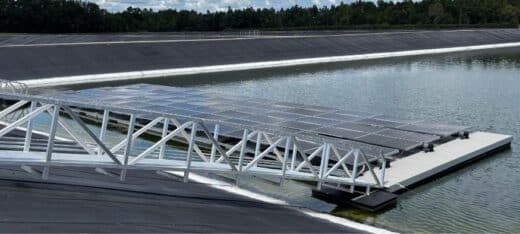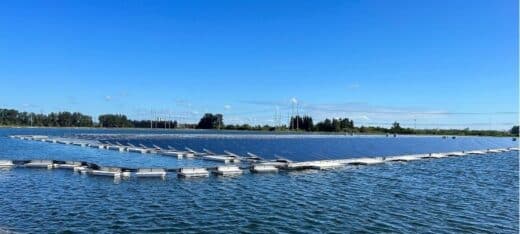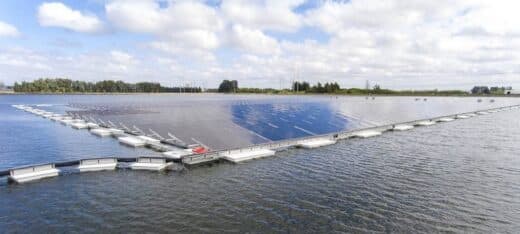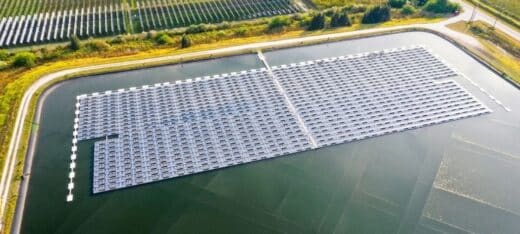
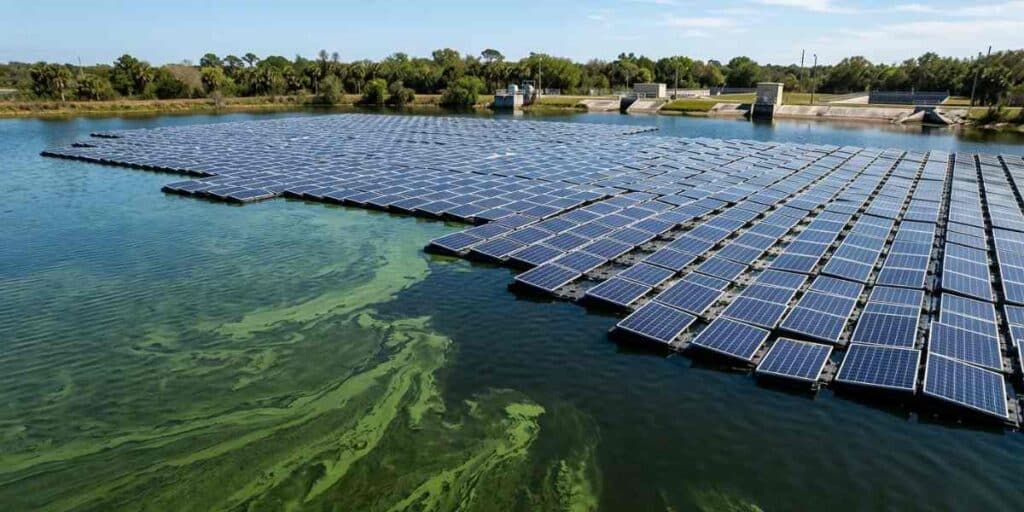
At first glance, floating solar looks like a simple clean energy solution. Panels sit quietly on the surface of a reservoir, generating electricity while reflecting sunlight across the water. What is less obvious however is what happens beneath those panels.
Below the surface, a different kind of transformation takes shape one that has nothing to do with kilowatts and everything to do with biology, water quality, and ecosystem balance.
Floating solar systems do more than produce renewable energy, they actively improve the health of the water they inhabit. From natural algae control to long-term quality improvements, these systems introduce a powerful environmental advantage that often goes unrecognized. This is where floating solar transcends energy infrastructure to become a solution for one of today’s most persistent water challenges.
Understanding the Challenges of Algae Growth
Algae might seem harmless in small amounts playing a vital role in aquatic ecosystems. The problem begins when conditions allow it to grow uncontrollably.
Excess nutrients, warm temperatures, and abundant sunlight create a “perfect storm” for rapid growth. When these factors combine, water bodies experience algal blooms that spread quickly, turning clear water into dense, green layers. The effects go far beyond aesthetics:
Deoxygenation: Harmful blooms reduce oxygen levels, stressing or killing aquatic life.
Toxicity: Certain blooms release toxins that compromise water safety.
Operational Strain: For industrial users and utilities, this leads to increased filtration requirements, frequent chemical treatments, and higher operational costs.
The Role of Sunlight in Algae Formation
Algae depend on photosynthesis. The more sunlight that reaches the water, the more energy algae have to multiply. In sun-drenched regions like Florida, open water receives constant, direct light, creating ideal conditions for persistent algae growth.
Traditional approaches focus on reactive treatment chemical dosing, mechanical removal, and filtration upgrades. While these play a role, they do not eliminate the core driver, constant sunlight. This is where floating solar changes the equation.
Floating Solar as an Effective Shading Solution
Floating solar systems act as a large-scale shading solution. By covering portions of the surface, floating solar installations reduce the amount of sunlight that penetrates the water, directly limiting the photosynthesis essential for algae. The result is natural algae reduction.
Instead of relying solely on reactive chemicals, floating solar introduces a passive, continuous form of algae control. It works throughout the day without additional input, quietly neutralizing the conditions that allow blooms to form. Over time, this leads to fewer bloom events and improved overall water clarity.
Maximizing Impact Through Surface Coverage
The effectiveness of floating solar in controlling algae is closely tied to how much of the water surface is covered.
Greater coverage means more shading, which directly reduces the sunlight available for photosynthesis. As the percentage of surface coverage increases, the benefits compound:
- Stronger algae reduction due to limited light penetration
- More stable water temperatures across the pond or reservoir
- Greater evaporation control and improved water retention
- Enhanced overall water quality consistency
Even partial coverage can deliver noticeable improvements, but larger, well-designed arrays maximize these biological and operational advantages. This makes system design and layout a critical factor in achieving long-term algae control.
Lowering Costs for Industrial Clients
For industrial facilities, algae is more than a nuisance, it is an operational drain. Algae buildup can clog intake systems, reduce heat exchange efficiency, and require frequent chemical dosing to maintain compliance and performance. In facilities that rely on consistent water quality, such as power plants, wastewater treatment facilities, and utility operations, these challenges quickly translate into rising costs.
Floating solar introduces a cost-saving advantage by addressing algae at its source. By reducing sunlight exposure and limiting bloom formation, FPV systems help minimize the following:
Reduced Chemical Usage: Lower dependency on recurring algaecides and treatment. programs.
Lower Maintenance: Fewer cleanings, dredging efforts, and filter replacements.
Improved Equipment Efficiency: Reduced fouling in pumps, pipes, and cooling systems.
Operational Stability: More stable water conditions reduce variability in treatment costs.
Instead of continuously reacting to algae outbreaks, facilities can reduce both the frequency and severity of these events, leading to measurable cost improvements over time.
Temperature, Evaporation, and Nutrient Balance
Sunlight does more than fuel growth, it raises water temperature. Warmer water favors harmful species and holds less dissolved oxygen. By shading the surface, floating solar installations reduce heat absorption and maintain more stable, cooler temperatures.
Floating solar combats evaporation. As water evaporates, nutrients become concentrated, effectively over feeding algae. By covering the surface, these systems maintain water levels and prevent nutrient spikes, creating another layer of defense against blooms.
Floating solar also reduces evaporation. As water evaporates, nutrients become more concentrated and effectively overfeed algae. By covering the surface, these systems help maintain water levels and prevent nutrient spikes, adding another layer of protection against excessive growth.
Supporting a Balanced Aquatic Ecosystem
When algae growth is reduced, the entire ecosystem benefits.
Oxygen levels remain more stable, aquatic life experiences less stress, and water clarity improves. These changes contribute to a healthier and more resilient environment.
Floating solar supports this balance by addressing multiple drivers of water quality at once:
- Reduced sunlight exposure
- Lower water temperatures
- Decreased evaporation
- Stabilized nutrient levels
Each of these factors plays a role in effective algae control. Together, they create conditions where excessive algae growth is less likely to occur.
As part of our commitment to data-driven performance and real-world validation, AccuSolar is currently engaged in an ongoing case study with the City of Tallahassee, Florida. This project involves a floating solar installation designed to evaluate the practical impact of our technology within an active operational environment. By monitoring this site, we are gathering critical insights into the system’s ability to improve water quality and naturally mitigate algae growth, ensuring our solutions provide measurable ecological benefits alongside their primary functional applications.
Transitioning from Reactive to Preventative Algae Control
Traditional algae management is a cycle of reaction: treat the bloom, clear the water, and wait for its return. Floating solar shifts the focus to proactive prevention.
What looks like a solar array on the surface is actually a multi-level management tool. Above the water, it generates clean energy; below the surface, it stabilizes the environment.
Transform your water infrastructure with AccuSolar. Facilities with warm, nutrient-rich water such as cooling ponds, wastewater lagoons, retention basins, and irrigation reservoirs often see the highest impact from floating solar.
If you are looking for a smarter way to manage water resources while producing energy, floating solar offers a proven, dual-purpose solution. Contact us to explore how FPV can reduce algae and lower your treatment costs.