Floating solar solutions offer a practical way to expand renewable energy generation without competing for valuable land. However, many projects never reach construction, not because the technology fails, but because critical development risks were overlooked during the planning phase. Understanding floating solar project risks early can save developers, utilities, and investors significant time and expense.
Many cases of floating solar project failure occur long before equipment is manufactured or permits are issued. Site selection, interconnection, stakeholder alignment, permitting, engineering expertise, and financing all influence whether a project moves forward successfully. By addressing these factors early, project teams can reduce uncertainty and improve the likelihood of a successful deployment.
Choosing the Right Water Body to Avoid Floating Solar Project Risk
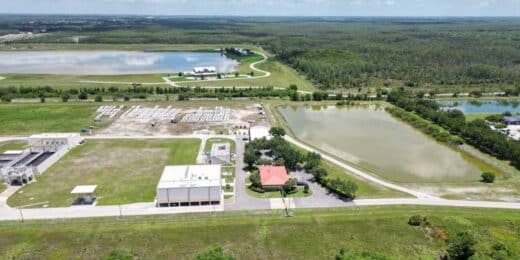
Not every reservoir, quarry, pond, or lake is suitable for floating solar. A site may appear ideal at first glance but present hidden challenges that make development impractical or uneconomical.
Some of the most common warning signs include:
- Excessive water level fluctuations
- Poor bathymetry or unfavorable shoreline conditions
- Recreational activity or nearby residential conflicts
- Difficult construction and maintenance access
- Limited electrical infrastructure nearby
A thorough feasibility assessment should be completed before significant investments are made in engineering or permitting. To solve this, AccuSolar partners with Noria Energy to offer comprehensive project readiness evaluations. By combining AccuSolar’s floating platform design and engineering expertise with Noria’s development and site-assessment experience, we help partners identify viable water bodies and navigate technical constraints while there is still flexibility to pursue alternative locations. This upfront collaboration ensures your project is structurally, environmentally, and financially viable before costly commitments are made.
Evaluate Grid Capacity Before Moving Forward
Even an excellent site can become unworkable if the generated power cannot be delivered efficiently. Potential grid challenges include:
- Long distances to the point of interconnection
- Costly grid upgrades
- Lengthy interconnection queues
- Limited substation capacity
- Utility uncertainty regarding project timelines
Interconnection studies should begin alongside site suitability evaluations rather than after design work has already started. Understanding available grid capacity early helps prevent expensive redesigns and unnecessary project delays.
Align Stakeholders Early in Development
Floating solar projects often involve more stakeholders than traditional ground-mounted systems. Municipal agencies, utilities, industrial operators, environmental organizations, and property owners may all have interests tied to the same water body.
Common development challenges include:
- Multiple agencies with overlapping jurisdiction
- Unclear ownership or water rights
- Community pushback or concerns
- Competing priorities among municipal, industrial, or utility users
Successful projects establish stakeholder alignment before major development expenditures occur. Early communication reduces uncertainty, minimizes permitting delays, and builds stronger support throughout the approval process.
Plan for Environmental Reviews and Permitting
Floating solar permitting can differ significantly from the process for land-based solar installations. Environmental reviews frequently require additional studies that can disrupt project schedules if they are not anticipated.
Areas that commonly require evaluation include:
- Protected species and local wildlife habitats
- Water quality impacts and shading effects
- Wetland and shoreline considerations
- Overlapping state and federal permitting requirements
Rather than treating permitting as a later milestone, developers should integrate their permitting strategy into the overall project development process from the very beginning. Doing so helps avoid unexpected delays that can contribute to floating solar project failure.
Choose a Floating Solar Partner with Proven Experience
Floating solar requires specialized engineering that extends well beyond conventional ground-mounted solar design. Anchoring systems, mooring design, hydrodynamic analysis, and long-term operations all require experience specific to water-based installations.
Warning signs of an underprepared team may include:
- EPCs without floating solar project experience
- Limited anchoring and mooring expertise
- Inadequate hydrodynamic analysis for wind and wave loads
- Little understanding of water-based operations and maintenance
Choosing experienced floating solar partners helps reduce design uncertainty while improving long-term system performance and reliability. Although floating solar requires specialized expertise, AccuSolar’s floating platform is intentionally designed to provide a familiar installation experience for EPCs transitioning from traditional ground-mounted systems.
Engage Financing Partners Early
Technical success alone does not guarantee financial success. Many investors and lenders evaluate floating solar differently than conventional solar projects, particularly when projects represent new market opportunities.
Financing concerns often include:
- First-of-kind project structures
- A limited track record of comparable regional projects
- Performance assumptions that require additional validation
Developers can strengthen financing opportunities by engaging lenders early and supporting projects with detailed technical analysis, operational data, robust engineering documentation, and realistic performance expectations.
The Path to a Successful Floating Solar Project
The most successful floating solar developments address project challenges long before construction begins. Early feasibility studies, grid evaluations, stakeholder coordination, permitting strategies, experienced engineering teams, and proactive financing discussions all help reduce risk and improve project outcomes.
Understanding floating solar project risks during the earliest planning stages allows developers to make informed decisions before significant resources are committed. Projects that invest in early due diligence are far better positioned to move efficiently from concept to construction while avoiding unnecessary delays and costly redesigns. Contact AccuSolar to discuss site feasibility, engineering support, and early-stage project planning that helps move your project forward with confidence.