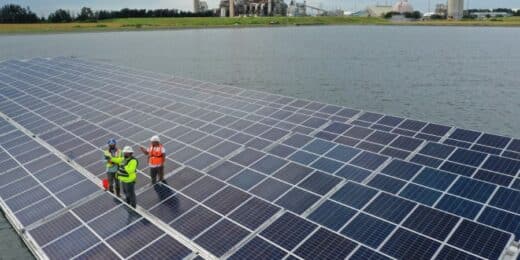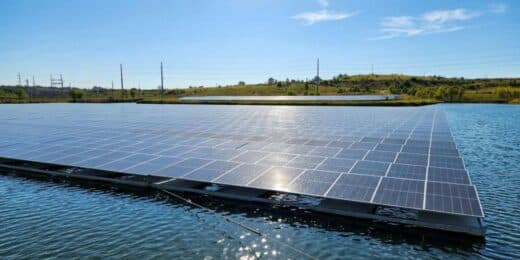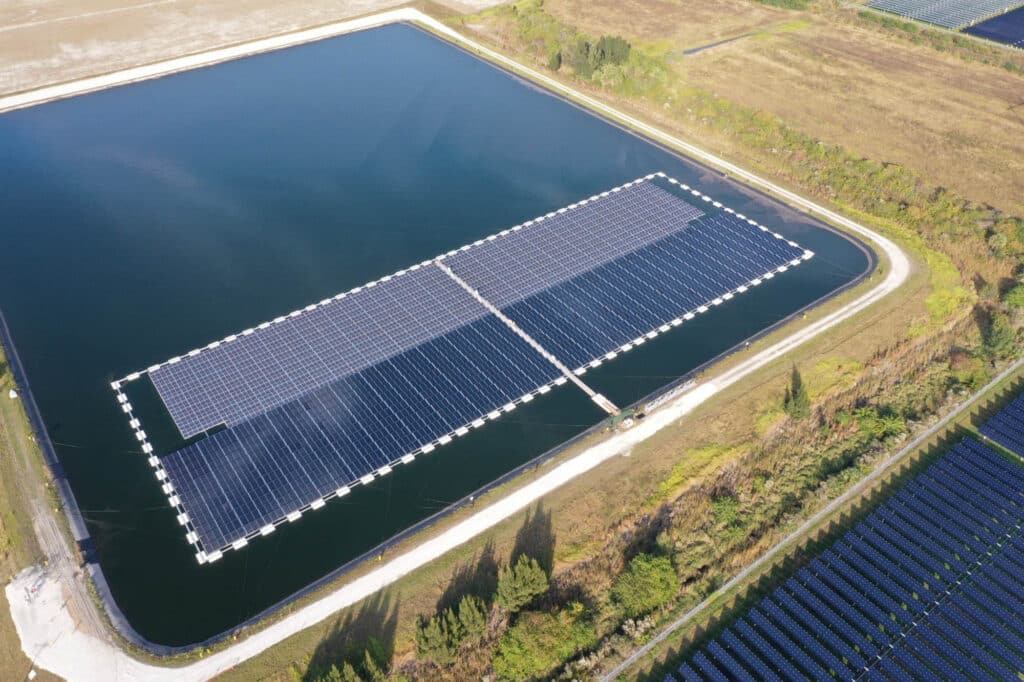
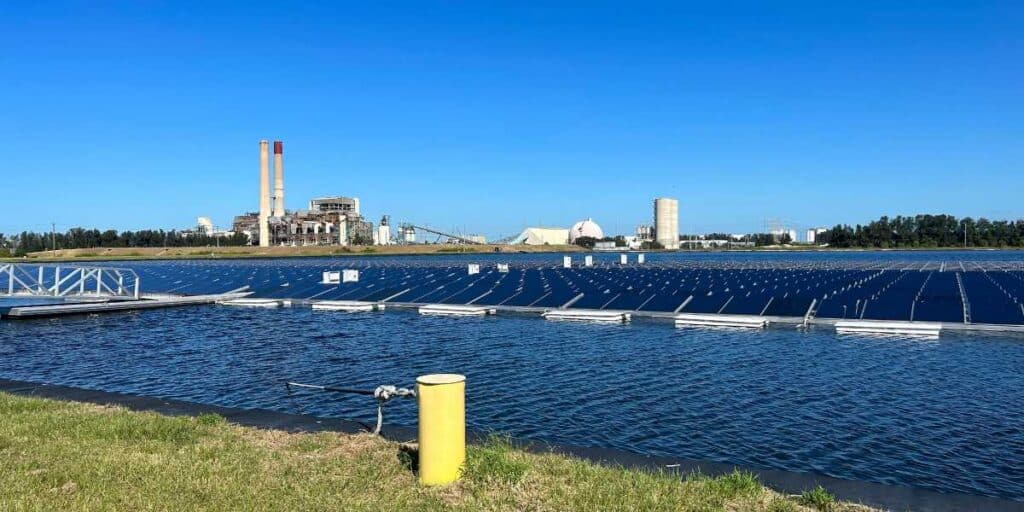
At first glance, a floating solar array can look almost effortless. Rows of solar panels stretch across the water’s surface, quietly generating renewable energy while reflecting sunlight off the surrounding reservoir. However, beneath that calm appearance is an intricate engineering system working constantly behind the scenes.
Floating solar platforms are exposed to shifting water levels, strong winds, wave movement, and changing weather patterns throughout the year. Unlike land-based solar installations that remain fixed to the ground, floating solar must adapt to a dynamic environment while staying precisely positioned on the water.
The secret to making this possible lies below the surface.
Anchoring and mooring engineering act as the hidden foundation of floating solar arrays, keeping entire islands of solar panels secure while allowing them to move naturally with the water. These systems must balance strength with flexibility, resisting environmental forces without placing unnecessary stress on the structure. When designed correctly, the anchoring system ensures that floating solar arrays remain stable, safe, and productive for decades.
As floating solar expands across reservoirs, industrial ponds, irrigation canals, and water treatment facilities worldwide, the engineering behind these systems has become a critical element of project design. When it comes to floating solar, what holds the system in place is just as important as the energy it produces.
Why Anchoring Matters in Floating Solar
Unlike ground-mounted solar installations secured to the earth, floating solar systems operate in a fluid environment. Water levels rise and fall, wind pushes against the array surface, and storms create lateral forces that stress the system.
Anchoring systems ensure the floating array remains secure while still allowing the system to move naturally with changing conditions.
The purpose of anchoring is not to hold the platform rigidly in place. Instead, it provides controlled movement that absorbs environmental forces while maintaining structural stability. Well-designed anchoring systems perform several essential functions:
• Maintain the array’s position and orientation
• Prevent drift across the water body
• Absorb wind and wave forces
• Accommodate changing water levels
• Protecting electrical connections and structural components
Without thoughtful anchoring design, the performance and long-term safety of a floating solar installation can quickly be compromised.
As floating solar systems scale, anchoring requirements grow in complexity. Larger footprints increase wind exposure and cumulative structural forces, shifting the mooring strategy from a simple positioning task to a demanding engineering exercise. At commercial scale, the system must do more than resist drift; it must dynamically distribute loads and ensure structural stability against unpredictable environmental stressors.
Understanding Mooring Engineering vs Anchoring
In floating solar engineering, the terms anchoring and mooring engineering are often used together but serve distinct roles. Anchoring refers to the points where the system is secured to land, the reservoir bottom, or other structural supports. Mooring engineering refers to the cables, lines, or tension systems that connect the floating platform to those anchor points.
Several anchoring strategies are commonly used depending on site conditions.
Shore anchoring connects the floating system to anchor points along the surrounding land or embankments.
Bottom anchoring uses weighted anchors or piles installed on the reservoir floor.
Hybrid systems combine shoreline and bottom anchors for larger arrays or complex environments.
Factors such as water depth, shoreline accessibility, and seasonal fluctuations all influence the final tailored design.
Environmental Forces That Shape Anchoring Design
Wind typically drives the largest loads on the system. Solar panels create a broad surface area that can catch strong gusts, generating significant horizontal forces. As installations grow in size, these forces increase accordingly.
This scaling effect is one of the most important considerations in floating solar anchoring design. As the overall footprint increases, wind loading is no longer isolated to a small section of the platform. The force is accumulated across the array, transferred through the structure, and ultimately resolved through the mooring and anchoring system. That is why anchoring design must be approached as a system-level engineering challenge rather than a simple attachment detail.
Water movement also plays a major role. Reservoirs that appear calm during normal conditions can experience significant wave action during storms. Seasonal water level changes introduce another layer of complexity. Irrigation ponds and industrial water bodies frequently fluctuate as rainfall patterns and water demand shift. Anchoring systems must accommodate these movements while maintaining consistent tension across mooring lines.
As floating solar projects continue to grow, developers are also placing greater emphasis on designing structural systems around defined wind performance targets. At AccuSolar, this includes the direction of building a standard engineered structural system to meet 120 MPH applied winds, which differs from simply referencing a registered wind speed. That distinction matters because applied wind forces are what the structure and anchoring system must actually resist in real-world design conditions.
Material Strength and Structural Integration
From an engineering standpoint, anchoring system design is fundamentally a force balance and load distribution problem. Wind loading is typically calculated as a function of projected surface area and wind pressure, generating lateral forces that must be resolved through the mooring system. These forces translate into line tension that varies with geometry, pretension, and water level conditions. Engineers evaluate worst-case scenarios, such as high wind events coinciding with low water levels, where steeper line angles can significantly increase tension. System configurations, including catenary and taut-line designs, are selected based on how they absorb and redistribute these loads over time, with careful consideration given to fatigue and long-term material performance.

A critical variable in this system is the stiffness of the floating platform. AccuSolar’s rigid, marine-grade aluminum frame enables efficient load transfer across the structure, minimizing localized stress concentrations and limiting deflection under tension. This allows the system to accommodate higher anchoring forces with greater predictability, often reducing the need for excessive anchoring points compared to more flexible, float-dependent designs.


Long Term Reliability and Maintenance
Anchoring systems are designed to last as long as the floating solar array itself typically 25 years or more. Marine environments can be harsh, even freshwater reservoirs contain minerals and biological activity that can degrade materials.
High-quality systems rely on corrosion resistant components and robust connection points. By integrating anchoring engineering directly into the floating platform design, long term reliability is significantly improved and maintenance requirements are minimized.
Strong anchoring design also supports reliability at scale. As projects grow larger, accumulated loads can create greater stress on lines, anchors, and connection points if the system is not engineered correctly from the start. A well-designed mooring system helps reduce uneven loading, limits avoidable wear, and improves confidence that the array will continue performing as intended over the long term.
Building Stable Foundations for Water Based Solar
Floating solar may appear simple from above the waterline, but its success depends on the strength and stability of the engineering below. By combining strong structural platforms with efficient anchoring strategies, developers can deploy floating solar systems that perform safely, install quickly, and generate clean energy for decades.
Every floating solar project begins with a strong foundation. AccuSolar designs floating solar systems built with marine-grade aluminum structures, durable floats, and efficient anchoring strategies that simplify installation while ensuring performance.
Looking to transform your water surface into a source of renewable energy? Our team can help evaluate your site and design a system engineered for performance. Contact us to get started on your next project.