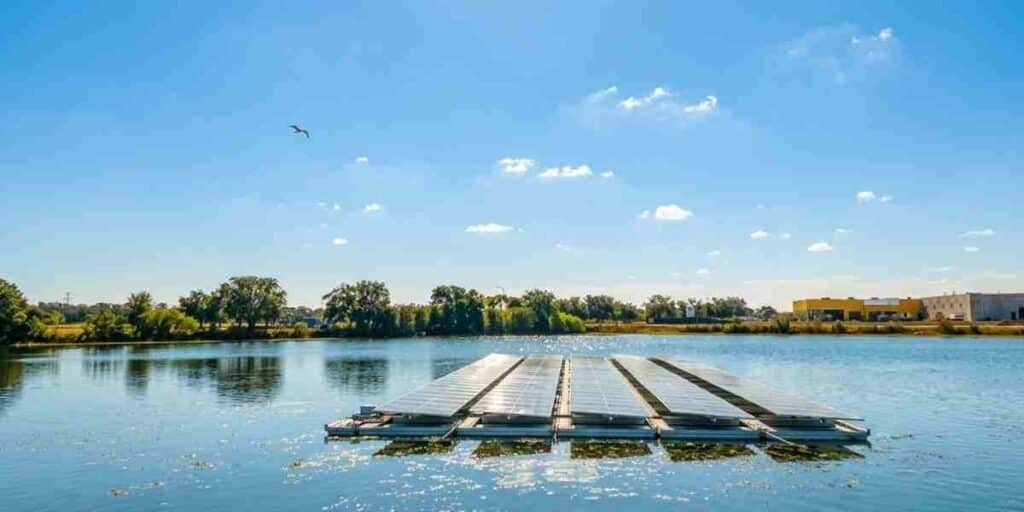
The United States has reached a turning point in renewable energy development. As electricity demand continues to rise, available land becomes more difficult to secure, and utilities search for practical ways to expand generation capacity, floating solar solutions are becoming more compelling than ever before.
For years, floating solar was viewed as an emerging technology. That perception is changing. Successful installations across the U.S. and around the world have demonstrated that floating photovoltaic systems are reliable, scalable, and capable of supporting long-term energy goals. The conversation is no longer about whether floating solar works, it is about what needs to happen for floating solar adoption to accelerate nationwide.
Floating Solar Has Proven Its Value
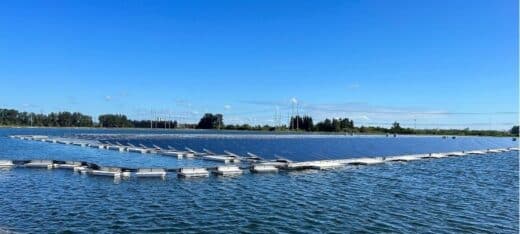
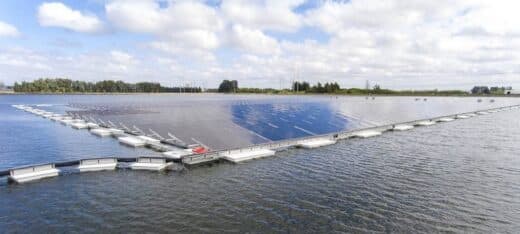
One of the biggest barriers to new technologies is uncertainty. Floating solar has moved well beyond that stage. Thousands of megawatts of floating solar are operating successfully across Europe and Asia, with projects delivering dependable clean energy on reservoirs, irrigation ponds, industrial water bodies, and drinking water reservoirs. In the United States, more floating solar systems are being installed each year, providing valuable operational data that developers, utilities, and regulators can rely on.
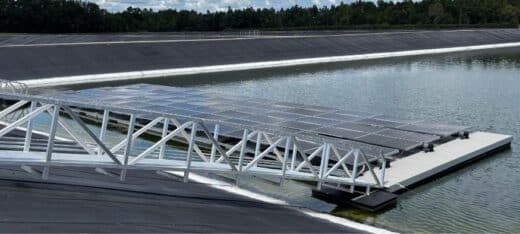
Modern floating solar platforms are engineered to withstand changing water levels, heavy wind loads, and long-term environmental exposure. Advanced anchoring systems, corrosion-resistant materials, and proven installation methods have made floating solar a mature technology ready for larger deployment.
Why Floating Solar Adoption Is Accelerating
Several market conditions are aligning at the same time, creating a strong foundation for increased floating solar adoption throughout the United States. Unlike many renewable energy technologies that require significant changes in infrastructure or policy, floating solar solves multiple challenges simultaneously. It creates new opportunities for clean energy generation without competing for valuable land while utilizing water surfaces that already exist.
As more successful projects are completed, confidence continues to grow among developers, utilities, investors, and public agencies.
The Growing Challenge of Land Availability
One of the biggest challenges facing utility-scale solar development is land availability. Suitable parcels are becoming more expensive, permitting timelines continue to lengthen, and competition for developable land is increasing. Agricultural production, housing, commercial development, and conservation efforts all compete for the same space.
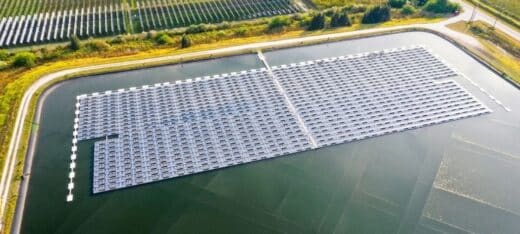
Floating solar offers an alternative by utilizing reservoirs, retention ponds, water treatment facilities, quarries, irrigation canals, and industrial water bodies that already serve other purposes. Instead of replacing productive land uses, floating solar expands where renewable energy can be deployed. This flexibility gives project developers additional options while helping communities preserve valuable land resources.
Energy Demand Is Growing Faster Than Expected
The rapid expansion of artificial intelligence, cloud computing, advanced manufacturing, and electrification is creating unprecedented electricity demand across the United States. Large data centers require enormous amounts of reliable power, and utilities are facing increasing pressure to add new generation capacity quickly. Traditional development timelines alone may not be sufficient to meet this growing demand.
Floating solar helps expand renewable generation by opening entirely new locations for solar deployment. Existing water infrastructure can become productive energy assets without requiring significant new land acquisition, allowing utilities and developers to increase capacity in areas where available land is limited.
Permitting Pathways Are Becoming Clearer
Another positive trend is the continued evolution of permitting. Early floating solar projects often required agencies to establish new review processes. Today, regulators have significantly more experience evaluating floating solar systems.
With dozens of floating solar projects completed across several U.S. markets, agencies have gained practical knowledge that helps streamline permitting and environmental review. Every successful installation provides additional guidance that benefits future projects, reducing uncertainty for developers and stakeholders. While permitting requirements still vary by jurisdiction, the overall process continues to become more predictable as industry experience grows.
Utilities Now Have Real-World Reference Projects
Utilities tend to adopt new technologies carefully, placing significant value on demonstrated performance. That proof now exists.
Utilities throughout the United States can now evaluate operating floating solar installations, review performance data, and learn from completed projects. These reference projects provide confidence that floating solar systems can seamlessly integrate into existing infrastructure while delivering reliable renewable energy. As more utilities gain firsthand experience, broader deployment becomes increasingly practical.
America’s Water Infrastructure Represents an Untapped Opportunity
The United States has one of the world’s largest networks of reservoirs, retention ponds, wastewater treatment facilities, irrigation canals, and industrial water bodies. Many of these assets already feature nearby electrical infrastructure, maintenance access, and long operational lifespans, making them highly attractive locations for renewable energy development.
Rather than viewing these water surfaces solely as utility assets, communities are beginning to recognize their potential to generate clean electricity while supporting broader sustainability goals. This underutilized infrastructure represents one of the country’s greatest opportunities to expand solar generation without increasing pressure on available land.
Floating Solar Is Becoming Essential Infrastructure
The industry is entering a new phase. Early floating solar installations focused on demonstrating technical feasibility. Today’s projects are larger, more sophisticated, and increasingly integrated into long-term utility planning.
Floating solar is no longer limited to demonstration sites, it is becoming part of comprehensive energy strategies designed to improve grid reliability, diversify renewable generation, and maximize existing infrastructure investments. As this transition continues, global and domestic floating solar market growth is expected to accelerate alongside the increasing demand for flexible renewable energy solutions.
The Future of Floating Solar
The conditions supporting widespread floating solar adoption have never been stronger. Proven technology, growing electricity demand, rising land costs, expanding permitting experience, successful utility projects, and abundant water infrastructure are all contributing to a highly favorable environment for future deployment.
Floating solar is no longer simply an emerging concept, it is becoming an increasingly practical solution that helps utilities, municipalities, industrial facilities, and developers expand renewable energy where conventional solar may not be feasible. As the U.S. continues to modernize its energy infrastructure, floating solar is positioned to play an increasingly significant role in meeting future electricity demand while making better use of the water resources already available.
Contact us to learn how our engineered floating solar solutions can help maximize your available water resources and support your renewable energy goals.