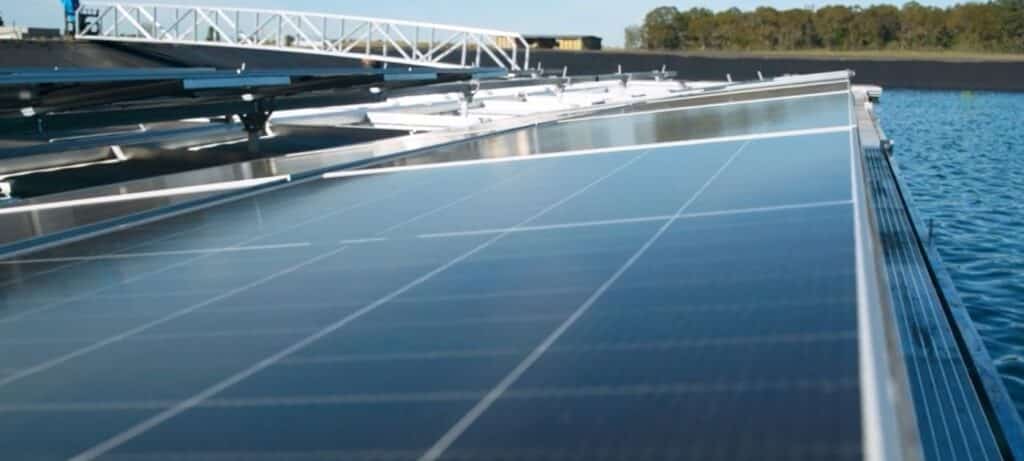
As floating solar projects grow in size and ambition, modular design is becoming one of the industry’s most valuable engineering advantages. Around the world, developers, utilities, municipalities, and industrial operators are expanding floating solar deployments onto reservoirs, treatment ponds, industrial basins, and irrigation canals at a much larger scale than ever before.
As projects grow from a few hundred kilowatts to multi-megawatt installations, one question becomes increasingly important: Can the system scale without sacrificing long-term performance? This is where the conversation around scalable solar design becomes far more interesting.
Many floating solar manufacturers describe their platforms as “modular,” but true modularity should mean more than simply snapping pieces together during installation. An effective floating platform must maintain structural stability, operational efficiency, accessibility, and energy performance as systems expand. While installation speed matters, long-term reliability matters even more.
The future of floating solar depends on systems designed to grow intelligently. This is why developers are increasingly prioritizing a modular solar system that supports long-term asset value, operational flexibility, and durability over decades of exposure to changing environmental conditions.
Why Modular Design Matters in Floating Solar
At first glance, modularity sounds simple, smaller sections connect to create a larger floating array. However, floating solar systems face challenges that traditional ground-mounted systems do not.
Water levels fluctuate. Wind loads shift dynamically across open surfaces. Waves introduce movement and stress. Large project footprints create cumulative anchoring forces that increase significantly as installations expand. Maintenance becomes more complicated as arrays cover larger portions of a waterbody. A poorly designed system may scale physically while creating long-term operational problems for owners.
That is why a successful modular solar system must scale performance and stability alongside deployment size. Developers need confidence that the same platform supporting a smaller project can perform efficiently at utility scale without introducing excessive maintenance costs or structural weaknesses. This is where engineering becomes more important than marketing language.
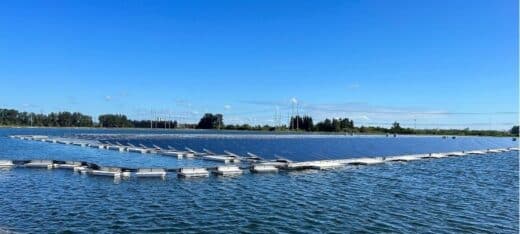
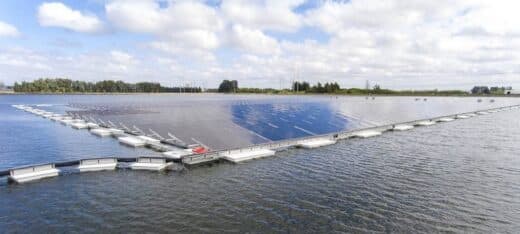
A floating solar platform designed with scalable solar design principles allows developers to expand projects strategically while maintain consistency in buoyancy, anchoring behavior, and energy production. Instead of creating disconnected floating sections that become difficult to manage, smarter modular systems behave as a unified, stable platform.
Modular Solar System Design Must Prioritize More Than Speed
One of the most common selling points in floating solar is rapid deployment. While faster installation provides value, speed alone does not define success. A modular solar system should simplify long-term operations just as much as initial construction.
For example, some floating systems are designed primarily around lightweight assembly, but they may introduce limitations as they scale. Increased movement between sections can create long-term stress on electrical infrastructure and anchoring systems. Over time, these issues increase operational expenses and reduce reliability.
Smarter modular platforms focus on structural consistency across the entire footprint. Strong framing, durable flotation, and engineered anchoring help maintain alignment as installations grow. This stability is vital because floating solar arrays are constantly exposed to environmental forces. A system that performs well at a small scale may not maintain the same behavior when expanded dramatically.
Flexible Tilt Improves Energy Production
One of the biggest advantages of advanced floating solar platforms is the ability to incorporate flexible tilt options within the modular structure itself.
Tilt angle directly impacts solar production. Systems designed with adaptable tilt configurations help maximize annual energy yield and allow for seasonal optimization. A high-quality modular solar system allows owners to optimize panel positioning without compromising platform stability.
Flexible tilt becomes increasingly valuable as projects scale. A larger floating solar installation represents a significant long-term energy asset, meaning even modest efficiency improvements can create meaningful gains in total production over time. Developers are no longer looking solely for systems that float, they are looking for scalable solar design that maximizes ROI.
Scalable Solar Design Requires Adaptable Layouts
No two water bodies are exactly alike. Some reservoirs feature irregular shorelines, while industrial ponds may contain operational restrictions. Canal projects introduce entirely different layout considerations compared to open reservoirs. These site-specific differences make layout adaptability a critical part of scalable solar design.
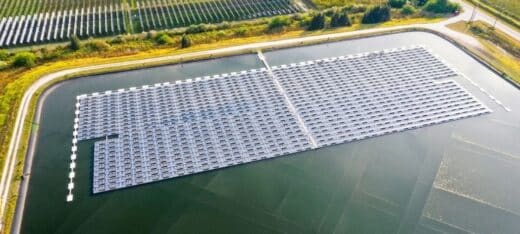
Rigid configurations can limit usable project area and reduce total generation capacity. More flexible modular systems allow developers to customize layouts around shoreline geometry and environmental considerations while maintaining system integrity.
By supporting customizable configurations, a modular solar system helps developers optimize project footprints while maintaining operational access. As the industry grows, adaptable layouts play a major role in ensuring projects are not forced into restrictive, inefficient configurations.
Integrated Walkways Become More Important at Scale
Maintenance accessibility is often overlooked during early project discussions focused on upfront costs. However, accessibility becomes critical as floating solar systems grow. Large-scale arrays require routine inspections, electrical servicing, and cleaning. Systems that rely heavily on boats or unstable access paths can increase long-term service costs and safety risks.
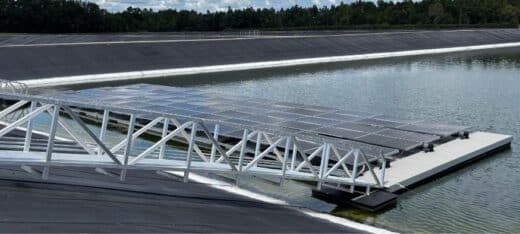
Integrated walkways solve this challenge. Walkways built directly into the modular solar system allow operators to move safely throughout the array. This reduces operational friction and downtime, as technicians can reach equipment more efficiently. As floating solar installations expand into utility-scale applications, the platforms that succeed will be those designed for decades of practical safe operation.
Strong Anchoring Supports Long-Term Stability
As floating solar systems expand, anchoring complexity increases. Larger arrays experience greater cumulative forces from wind and water movement. Without a strong anchoring strategy, excessive movement can impact structural integrity, cable management, and long-term platform performance.
A scalable solar design must maintain stability as the footprint grows. Advanced floating systems use rigid framing that allows for stronger anchoring configurations with fewer total anchor points, simplifying installation while improving structural behavior. The goal is not simply to hold the system in place, but to ensure controlled, predictable movement that protects energy production and long-term asset value.
Developers investing in floating solar want confidence that the system will continue performing reliably through changing weather conditions, fluctuating water levels, and years of operational use. Strong anchoring design plays a major role in delivering that confidence.
Scalable Solar Design Protects Long-Term Asset Value
The most successful floating solar projects are not judged by how effectively they perform over decades, not just how quickly they were deployed. This is why scalable solar design must prioritize durability, accessibility, and structural consistency.
A true modular solar system should grow without creating operational compromises. It should maintain stability, support efficient maintenance, and maximize energy performance as installations expand.
The floating solar industry is entering a phase where long-term performance is paramount. Developers are moving beyond pilot projects toward large-scale infrastructure investments. In this landscape, true modularity is about creating systems that scale intelligently and deliver value long after the installation crews have left the site.
Contact us to learn how AccuSolar’s modular floating solar platforms are designed to support scalable solar design, long-term performance, and reliable energy production across a wide range of water environments.