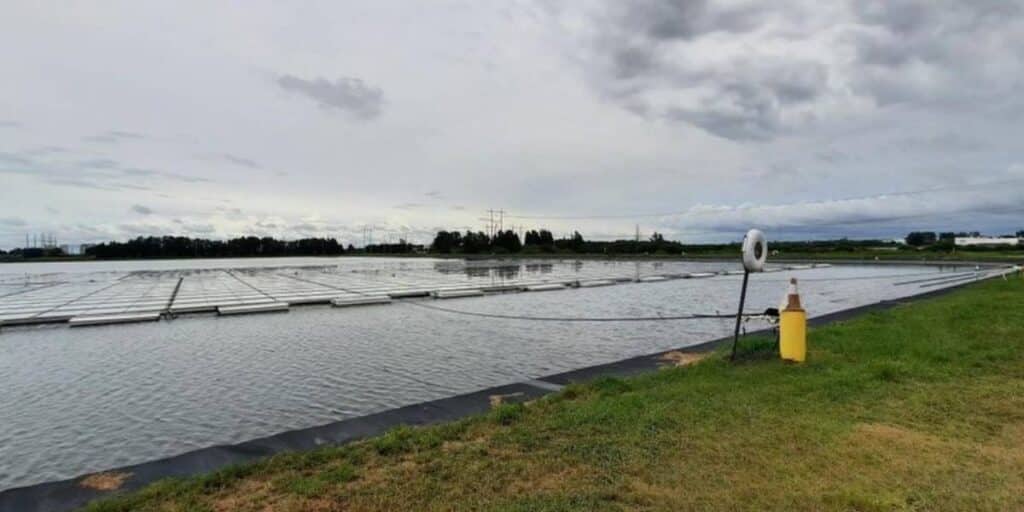
Water doesn’t sit still, and neither should your floating solar system.
Reservoirs are constantly changing environments. Seasonal rainfall, drought cycles, hydroelectric operations, and irrigation demands can cause water levels to rise and fall dramatically. While large fluctuations are common in pump storage facilities or dam-controlled reservoirs, even moderate changes introduce a serious challenge for floating infrastructure.
How do you keep a solar array stable, secure, and fully operational when the surface it sits on is constantly moving? The answer lies in dynamic mooring.
Why Water Level Fluctuations Matter More Than You Think
At first glance, a floating solar array might seem simple. It generates power and moves with the water, but beneath the surface, a complex system is at work keeping everything in place. When water levels fluctuate significantly, several risks emerge:
- Excess tension on anchor lines during low water levels
- Slack and uncontrolled movement during high water levels
- Shifting alignment, which can negatively impact energy production
- Structural stress on frames, walkways, and electrical components
Without a properly designed system, these fluctuations lead to increased wear, operational inefficiencies, and potential system failure over time.
What Is Dynamic Mooring?
Dynamic mooring is a specialized anchoring approach designed to adapt to changing water levels and environmental forces without compromising system stability.
Instead of locking a floating solar array into a rigid position, dynamic systems allow controlled vertical and horizontal movement. Think of it less like tying a boat tightly to a dock and more like giving it the flexibility to rise and fall with the tide while keeping it exactly where it needs to be.
How Dynamic Mooring Works in Real Conditions
In a reservoir with changing water levels, the difference between peak and low water levels dramatically alters the forces acting on a floating solar system. A well-designed dynamic mooring system accounts for:
1. Vertical Movement: As water levels rise, mooring lines must extend smoothly without creating excessive tension. As levels drop, they must retract or maintain proper slack without allowing drift.
2. Horizontal Stability: Wind, currents, and wave action continue to push against the array. The system must resist these lateral forces while maintaining vertical flexibility.
3. Load Distribution: The system distributes forces across multiple anchor points to prevent stress concentration on any single component.
4. Long-Term Durability: Materials are engineered to withstand constant mechanical stress and environmental exposure over decades.
Anchoring Strategies: Shore vs. Bottom Anchoring
Dynamic mooring systems can be designed using different anchoring methods depending on site conditions:
Shore Anchoring: Anchors are secured to the shoreline, making this approach ideal for reservoirs with stable banks and accessible perimeters. It simplifies installation and can reduce underwater work.
Bottom Anchoring: Anchors are installed on the reservoir floor, providing a solution when shoreline access is limited or when the array is positioned farther from land. This approach is often used in deeper or larger bodies of water.
In many projects, a hybrid approach may be used to balance stability, cost, and installation efficiency. The key is selecting the right strategy based on bathymetry, water level variability, and environmental forces.
What Can Go Wrong Without Proper Design
Imagine a floating solar array installed at a high-water mark. Everything is perfectly aligned and the tension is balanced. Months later water levels drop significantly. If the system used fixed or poorly planned anchoring, the mooring lines become overly tight, putting extreme stress on anchor points. Structural components may deform, and electrical connections can be compromised.
Conversely, if the water levels rise rapidly against a static system, lines go slack and the array begins to drift. This shifting alignment reduces energy efficiency and subjects components to unexpected wear. Without dynamic adaptability, the system is constantly fighting environment instead of working with it.
Designing for Movement, Not Against It
The key to success is anticipating movement from day one. A properly engineered dynamic mooring approach includes:
Strategic Anchor Placement: Positioning based on bathymetry, shoreline conditions, and expected water level ranges.
Flexible Line Systems: Sizing lines to handle both maximum tension and necessary slack.
Energy Dissipation: Absorbing and redistributing forces rather than transferring them directly to the structure.
Integrated Engineering: Ensuring the mooring design is harmonized with the floating platform, walkways, and electrical layout.
The AccuSolar Approach to Dynamic Mooring
At AccuSolar, we design floating solar systems with the understanding that anchoring is not just a supporting element, it is a core part of system performance.
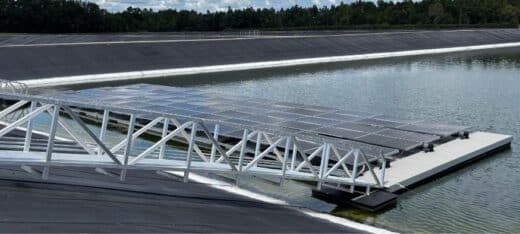
Our rigid frame design, built with marine-grade aluminum and foam-filled floats, is engineered to withstand significantly higher forces from anchoring compared to traditional plastic cube-based systems. This added structural strength allows us to utilize stronger anchoring materials while maintaining system stability.
The result is a more efficient load distribution across the array, which reduces the total number of anchors required for a project.
Fewer anchors deliver measurable advantages:
- Reduced installation time and labor
- Less shoreline and underwater disturbance
- Lower long-term maintenance requirements
- Improved system stability under changing water conditions
By integrating structural design with mooring engineering, we create systems that are built to handle real-world forces, not just ideal conditions.
“Floating solar projects succeed when the mooring system is engineered to move with the reservoir, not fight against it. Our elastic mooring systems are designed to absorb and manage changing loads so arrays stay stable, aligned, and productive over the long term. Through our partnership with AccuSolar, we bring proven elastic mooring experience into structurally robust FPV platforms, helping projects perform reliably across real world water level conditions.”
Doug Evans
Sales Manager, Hazelett Marine
Stability Through Intelligent Design
In floating solar, stability isn’t about resisting movement, it’s about managing it intelligently. Water levels will rise and fall. That is not a problem to avoid, it is a condition to design for. A well-engineered dynamic mooring system ensures your floating solar investment remains secure, efficient, and operational across all conditions.
Ready to design a floating solar system built to handle real-world water conditions? Contact us to explore how mooring systems for reservoirs can keep your project stable, secure, and performing at every water level.