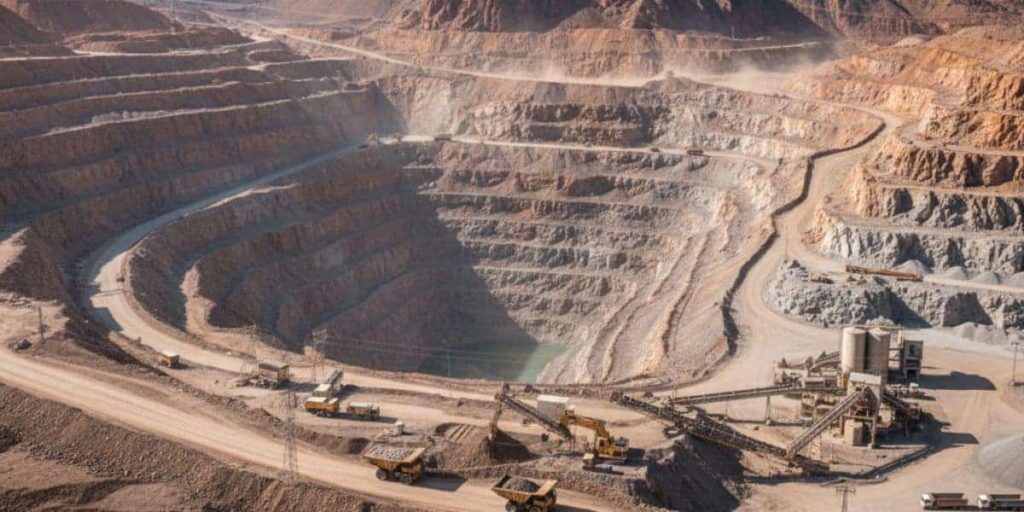
In the world of aggregate and mineral extraction, we are experts at looking at a landscape and seeing the hidden value beneath the dirt. Yet, for decades, the industry has had a “blind spot” when it comes to optimizing industrial site assets. Once the extraction is complete and the pumps stop, we watch our sites turn into flooded pits that sit behind chain-link fences, collecting nothing but rainwater and liability insurance premiums.
When extraction slows or stops, these water-filled pits remain. They are fenced, monitored, and managed for years. While they serve necessary safety and environmental functions, they rarely contribute to the bottom line. In many cases, they quietly drain resources through maintenance, compliance, and long-term oversight.
What if those flooded pits weren’t the end of your site’s story? What if the most profitable phase of your quarry’s life cycle started after the last truck left the pit?
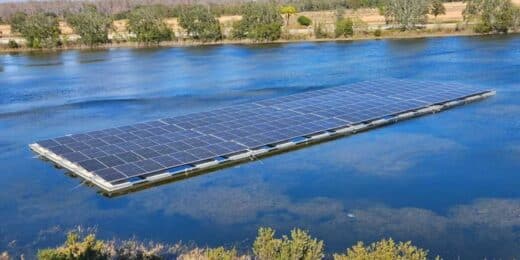
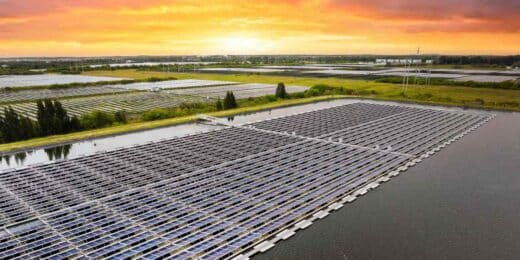
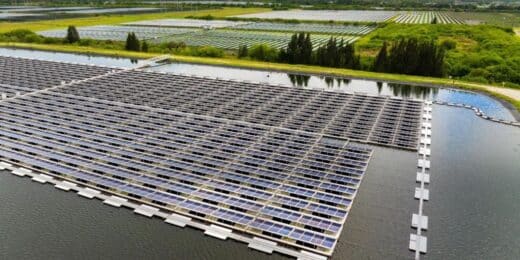
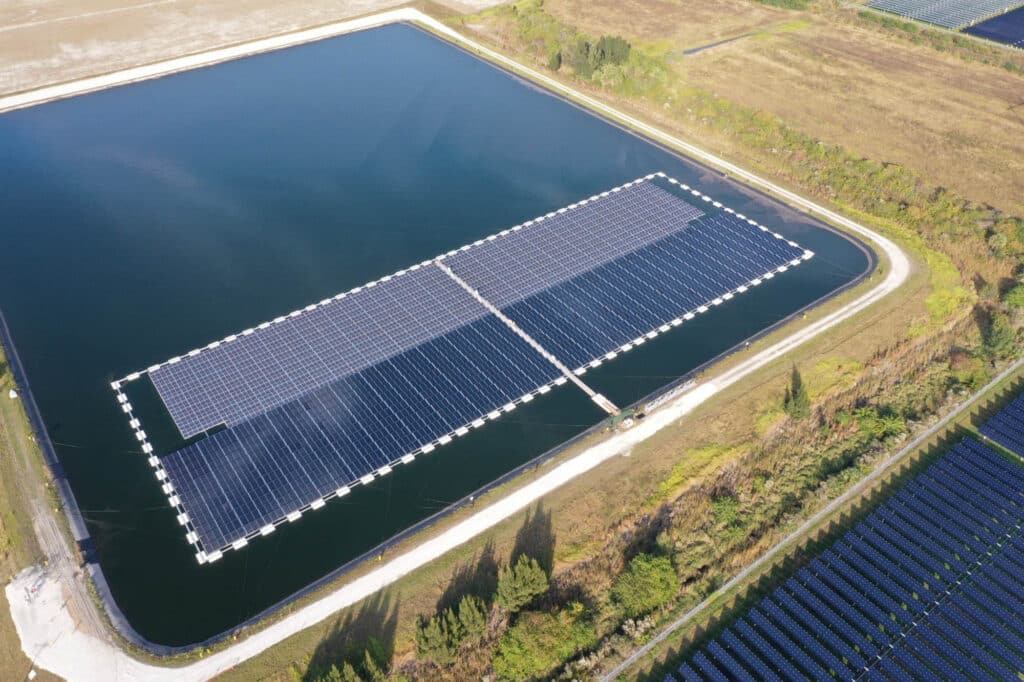
Floating photovoltaic solar is changing how these spaces are viewed. Instead of accepting flooded pits as permanent liabilities, FPV allows operators to convert them into productive assets that generate on-site power and measurable financial returns.
The True Cost of Idle Assets and Quarry Operational Efficiency
Energy is a major operating expense for mining and quarry facilities. Crushing systems, conveyors, pumps, processing plants, lighting, and support buildings all require steady, high-volume power. Meanwhile, operators often manage acres of flooded pits that produce zero revenue.
These pits can represent:
- Stranded Land: Areas that cannot be easily reclaimed or developed.
- Ongoing Overhead: Permanent safety and environmental management costs.
- Opportunity Cost: Missed opportunities for operational efficiency and energy independence.
While ground-mounted solar can offset energy costs, it often competes with land needed for material staging or future expansion. Floating solar panels remove that limitation by utilizing water surfaces that are already off-limits for other uses.
A closer look at ground mounted solar systems compared to floating alternatives shows why flooded pits are often better candidates for FPV than the open land surrounding them.
Why Floating Solar is a Natural Fit for Optimizing Industrial Site Assets
Floating solar systems consist of solar panels mounted on buoyant platforms. These systems are engineered to handle water-level changes, wind loads, and long-term exposure to industrial environments.
Flooded pits are particularly well-suited for FPV because they are:
- Controlled Environments: Man-made bodies of water with predictable conditions.
- Sheltered: Usually protected from the strong wave action found in open lakes or seas.
- Infrastructure-Ready: Often located close to existing electrical grids and high-energy demands.
This proximity is critical. Power generated on-site powers on-site operations, cutting transmission losses and avoiding the cost of new infrastructure. For many operators, this immediate efficiency boost significantly strengthens project economics.
Operators do not need to fully reclaim or permanently close water-filled pits before deploying floating solar. Teams can install FPV systems on active pits and position them safely away from dredging or mining zones. This approach lets operators start producing energy and financial returns right away, shortening project timelines and improving overall site economics without waiting for extraction to end.
Financial Benefits: From Cost Center to Value Driver
The financial return is often one of the first questions operators ask, and it is also one of the easiest to answer. Financial return is often one of the first questions operators ask, and it is also one of the easiest to answer. AccuSolar determines ROI through a Project Readiness Evaluation (PRE) or similar feasibility study. By using basic inputs such as annual kilowatt hour usage and current electricity rates ($/kWh), the team models projected savings, system size, and payback timelines early in the decision process.
The real shift with FPV is not just technical. It is strategic. It frames “leftover” space as a platform for long-term value creation. Once deployed, these floating solar systems support day-to-day operations by powering:
- Processing and crushing equipment
- Dewatering and pumping systems
- Conveyors and sorting operations
- Administrative and support facilities
Operators looking to take this further can explore how industrial energy management strategies built around floating solar translate directly into reduced demand charges and long-term cost stability.
Key Financial Advantages
Reduced Operational Costs: Every kilowatt-hour generated on the water is one less purchased from the grid. This reduces exposure to volatile electricity pricing and demand charges.
Improved Asset Utilization: Pits move from being cost centers to revenue-supporting assets, increasing the total return on land.
Long-Term Energy Stability: Solar provides predictable energy costs over decades, supporting better budgeting and long-term planning.
Incentives and Tax Credits: Depending on the region, FPV installations may qualify for renewable energy incentives that significantly shorten the payback period.
Operational Advantages That Improve Quarry Operational Efficiency
Beyond the balance sheet, FPV offers technical benefits land-based solar cannot match.
Higher Energy Yield: Water naturally cools the solar panels. Cooler panels operate more efficiently, often resulting in higher energy production than land-based arrays in the same climate.
Scalability: Floating solar systems can be designed in phases, allowing capacity to grow as more pits become available.
Water Conservation: By shading the water, FPV reduces evaporation, assisting in broader water management and sustainability goals.
Supporting ESG and Sustainability
Sustainability is no longer optional in the mining and aggregate sector. FPV offers a practical way to reduce emissions without disrupting productivity. By generating clean energy on-site, operators can lower their carbon footprint, reduce reliance on fossil fuels, and strengthen ESG reporting for stakeholders.
For teams working on ESG reporting and stakeholder communication, integrating floating solar into a broader corporate sustainability strategy is one of the more concrete steps an operator can take to show measurable progress.
Turning Water into Power
Mining and quarry operators are experts at extracting value from complex environments. FPV extends that mindset beyond extraction. It transforms an unavoidable byproduct of the industry into infrastructure that lowers costs and improves long-term site value. What was once a cost center can now become a competitive advantage.
Floating solar represents a shift in how mining and quarry operators think about optimizing industrial site assets. By converting unused flooded pits into clean energy assets, floating solar delivers tangible financial returns while supporting quarry operational efficiency and sustainability goals.
In an industry where margins, energy costs, and land use matter more than ever, floating solar offers a practical path forward. All we need to make your water surfaces a profit-maker is a few expired or unused acres of your quarry. Contact us to learn how we can help design and support your high-performing floating solar system.