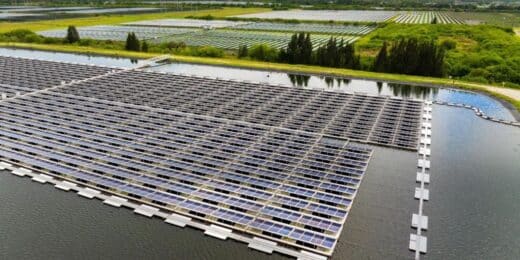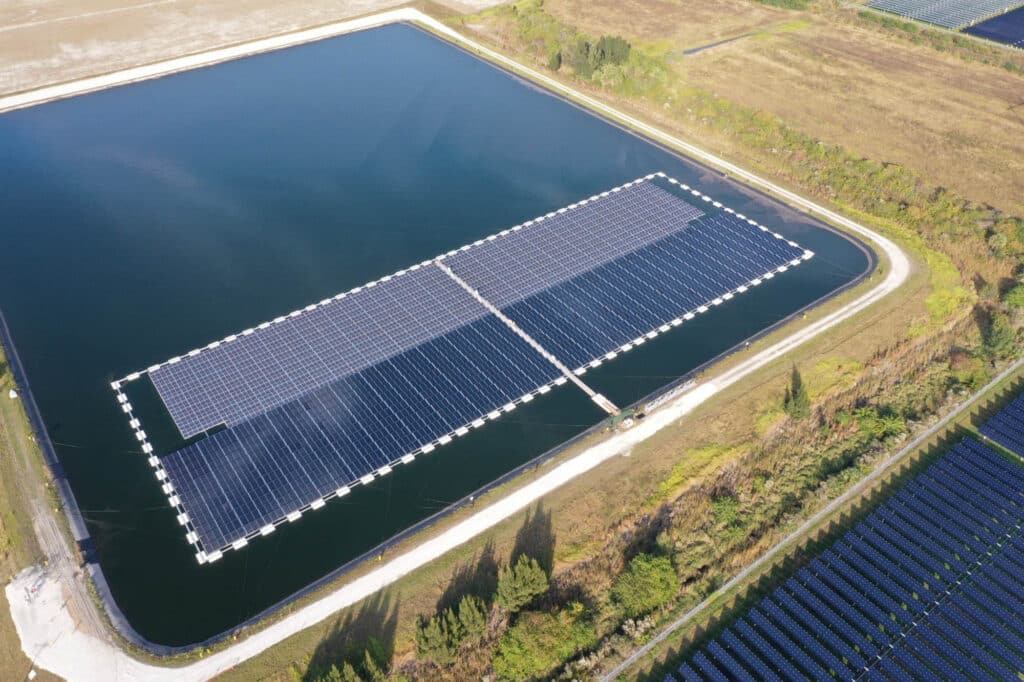
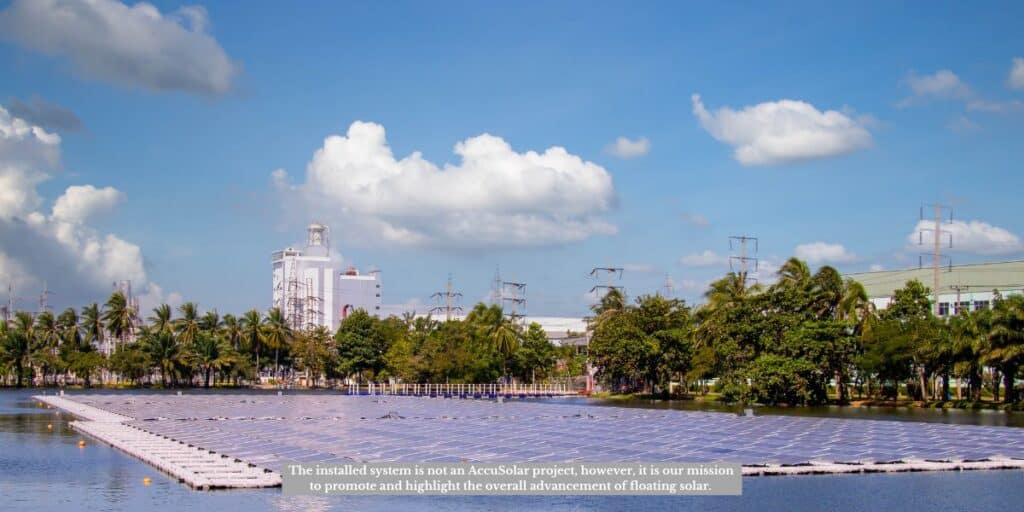
Once considered a niche experiment, floating solar has now become a core component of utility-scale renewable energy planning. With land becoming scarcer and more costly, energy developers and communities are increasingly using water surfaces to deploy high-performance, durable floating solar systems. Floating Solar Farm Design Innovations are reshaping how we think about renewable energy infrastructure.
Today’s floating solar platforms are a major leap from early improvised designs. Modern systems are highly engineered for long-term stability, safety, and optimal energy yield, even in harsh conditions. This blog post explores how innovations in design, materials, and scalability are shaping the future of floating solar—transforming it from a conceptual prototype into mature, vital energy infrastructure for utilities, businesses, and communities pursuing cleaner grids.
Evolution of Floating Solar Technology: From Concept to Core Clean Energy Solution
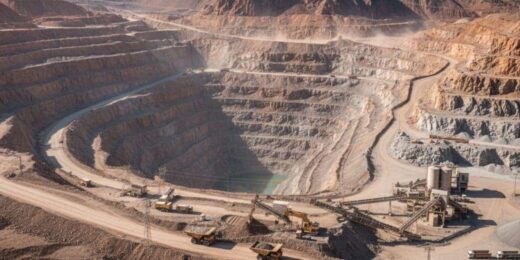
The Evolution of Floating Solar Technology has been remarkable. Floating solar power, initially a response to limited land, is now a crucial pillar supporting ground-mount and rooftop systems. Its main advantage is the ability to deploy on underutilized surfaces such as reservoirs, hydropower lakes, and industrial water bodies. This approach frees up valuable land by avoiding competition with agriculture, housing development, and conservation areas.
While early, simple raft systems proved the technology was viable, they fell short of the durability and engineering precision required for utility-scale longevity. The modern industry has addressed this with a focus on precision-engineered floating docks, modular designs, and robust anchoring solutions built to endure the stresses of environmental factors like waves, wind, and significant water-level changes.
Key Drivers of Adoption:
- Rising land costs near load centers
- Increasing clean energy targets and policy support
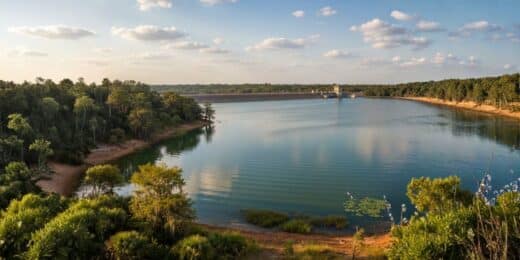
- The need to co-locate generation with existing infrastructure, like reservoirs and treatment plants
With demand rising and engineering sophistication accelerating, innovations in materials are now playing a key role in shaping system reliability and performance.
Materials: The Backbone of Floating Durability
Material selection directly influences whether a floating solar farm will perform for decades or degrade prematurely. Leading-edge systems prioritize corrosion resistance, mechanical resilience, and minimal water absorption to reduce long-term risk.
Floats and Buoyancy Systems
The float is the structural foundation of every floating solar farm, supporting both the panels and the walkways or service paths.
High-Density Polyethylene (HDPE) Floats
- Widely used for their UV resistance, chemical resilience, and strength-to-weight ratio
- Suitable for many freshwater applications where moderate wave and wind conditions exist
- Designed to withstand long-term solar exposure and temperature fluctuations
Foam-Filled Float Structures
- To significantly limit water absorption, some advanced systems (like those from AccuSolar) are engineered with floats filled with closed-cell foam, greatly improving their long-term performance and durability on the water
- Even if the outer shell is compromised, buoyancy remains intact
- This approach increases resilience against puncture and impact, supporting operational continuity
Concrete and Hybrid Platforms
- In more exposed sites, concrete or hybrid platforms may be chosen for increased mass and rigidity
- These options can improve stability where wave loads and wind forces are significant
- Trade-offs include higher weight and more complex installation logistics
Structural Frames and Mounting Hardware
Above the floats, frames and panel supports must maintain angle, spacing, and structural integrity over time.
Marine-Grade Aluminum Frames
- Offer an excellent balance of strength, weight, and corrosion resistance
- Well-suited to environments where exposure to humidity and spray is constant
- Help keep the overall platform light enough to maneuver yet robust enough to sustain high loads
Stainless Steel Connection Hardware
- Used for bolts, clamps, and critical connection points to maintain structural integrity over years of thermal cycling
- Reduces the risk of loosening or failure in joints due to rust or galvanic corrosion
- Supports a long operational life with reduced maintenance
UV-Stabilized Polymers and Coatings
- Employed for cable clips, conduit supports, and protective covers to extend component life
- Mitigate degradation caused by continuous sun, wind, and moisture exposure
- Support safer cable routing and electrical reliability over the system’s lifespan
AccuSolar’s commitment to engineering quality is evident in every component. Our systems are built for extreme resilience, featuring marine grade aluminum frames and corrosive-resistant stainless steel hardware for maximum structural integrity and decades of reliable performance. The foundation of this strength rests on our HDPE floats, manufactured using 100% virgin raw material for superior durability and resistance to cracking or brittleness. Each float is filled with closed-cell foam to maintain buoyancy even if an exterior puncture occurs, preventing water absorption and eliminating the risk of performance failure. This design provides operations teams with confidence against intense UV exposure, extreme temperatures, and long-term environmental wear.
Floating Solar Farm Design Innovations: Layout and Configuration
Floating solar farms must carefully balance energy yield, structural loads, access for maintenance, and local environmental conditions. Modern design tools allow precise layout planning to optimize performance, and understanding complete construction sequences helps developers anticipate site-specific challenges.
Array Geometry and Orientation
The way panels are arranged on the water significantly impacts generation profiles and system resilience.
Optimized Orientation
- Panels are oriented to capture maximum solar radiation
- Site-specific shading, sun path, and reflection factors are evaluated
- Designers account for potential glare considerations
Modular Block Design
- Interlocking floating modules can form rectangular, polygonal, or irregular shapes that follow shorelines and site boundaries
- Modular blocks simplify transport and assembly while allowing flexible expansion or reconfiguration
- Strategic gaps between blocks can help manage water flow and reduce stress from waves or currents
Panel Tilt and Spacing
- Tilt angles are chosen to balance energy yield, wind loads, and shading between rows
- Proper spacing reduces self-shading and allows service personnel to access equipment safely
- In windy regions, slightly lower tilt angles may be preferred to reduce uplift forces
Walkways, Safety, and Access
Maintenance access is critical for long-term operation.
Integrated Walkways
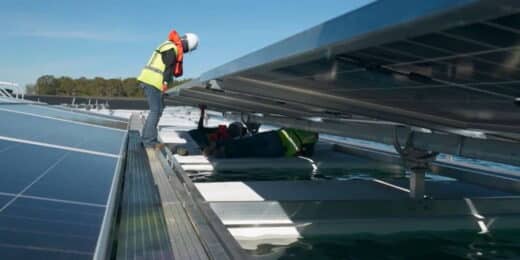
- Many platforms incorporate stable walk paths or service corridors for safe movement across the array
- Walkways are designed to handle the weight of technicians and tools while maintaining buoyancy margins
- Clear routes also support regular inspection of anchors, frames, and electrical components
AccuSolar systems incorporate a dedicated walkway and gangway that securely connect the floating array to the shoreline. This provides stable entry for installation crews and maintenance teams without relying on temporary platforms or boats. Designed to maintain integrity even with fluctuating water levels, the gangway provides safe footing, straightforward equipment movement, and consistent operational access across the system’s lifespan.
Safety Systems
- Handrails, lifelines, and non-slip surfaces may be added where local regulations or site risks require
- Emergency access points and boat docking areas are planned into the layout
- High-visibility markings help operators navigate and work safely in low-light or challenging conditions
Cable Routing and Electrical Zoning
- Electrical design organizes DC and AC cabling into clear pathways, often elevated or protected above the water surface
- String and combiner layouts are optimized to minimize voltage drop and simplify troubleshooting
- Junction boxes, inverters, and transformers are placed to respect site topography, water level variations, and shore access points
Anchoring, Mooring, and Stability
Designing how a floating solar array is held in place is just as critical as what it is made of. Advanced mooring and anchoring solutions prevent drift, rotation, and excessive movement, even in turbulent conditions.
Anchoring Strategies
Anchoring design is tailored to the depth, bed composition, and hydrodynamic behavior of the site, requiring specialized engineering approaches that account for environmental forces.
Bottom Anchoring
- Cables or chains connect the platform to anchors embedded in the lake or reservoir bed
- Effective for moderate depths where anchors can be easily installed and inspected
Shore Anchoring
- Tethers connect the array to anchor points on the shoreline or nearby structures
- Useful where bottom anchoring is technically difficult, such as very deep reservoirs
Hybrid Approaches
- Combinations of shore and bottom anchoring are often used to manage complex wind and current patterns
- Hybrid systems help distribute loads and provide redundancy
Dynamic Mooring and Ballast Optimization
Modern floating solar does not rely solely on static lines; dynamic behavior is increasingly modeled and controlled.
Dynamic Mooring Systems
- Adjustable or elastic elements help absorb energy from waves and wind, reducing stress on the structure
- Designed to accommodate water-level fluctuations without overstressing tethers or anchors
- Allow arrays to move within a controlled envelope, mitigating fatigue on components
Ballast Optimization
- Designers carefully calculate weight distribution so that floats, frames, and walkways remain stable without unnecessary mass
- Right-sizing ballast improves cost efficiency and can reduce installation complexity
- Minimizing added weight also lessens impact on anchors and mooring lines, improving longevity
Scalability: From Pilot Projects to Utility Giants
Historically, floating solar began with small installations aimed at testing concepts and gathering performance data. Today, multi-megawatt arrays spread across reservoirs and industrial ponds demonstrate that the technology can scale efficiently and economically.
Modular Growth and Replicability
Scalability depends on repeatable, standardized building blocks that can be quickly deployed in different geographies.
Standardized Modules
- Using a common float and frame design allows developers to replicate systems across multiple sites with minimal redesign
- Standardization simplifies supply chains, training, and maintenance practices
- It also accelerates permitting and engineering reviews by relying on proven configurations
Phased Installation
- Large projects can be built in stages, allowing early sections to begin generating revenue while later phases are completed
- Phasing supports budget flexibility and risk management
- As performance data accumulates, designs can be fine-tuned for subsequent phases
Adaptability to Varied Water Bodies
- Modular arrays can be adapted to small treatment ponds, medium-sized reservoirs, or expansive hydropower lakes
- The same core components can be arranged in different geometries to match local constraints
- This adaptability underpins the technology’s global scalability
Integration With Existing Infrastructure
Floating solar frequently co-locates with existing assets, turning previously passive water surfaces into revenue-generating infrastructure.
Hydropower Pairing
- On hydropower reservoirs, floating solar can complement generation by providing daytime capacity, preserving water for peak or dry-season use
- Shared grid connections reduce interconnection cost and complexity
Water Utility and Industrial Sites
- Water treatment plants and industrial cooling ponds often have controlled, restricted-access water bodies ideal for secure floating solar deployment
- Co-location maximizes asset use without expanding physical land footprints
- Shading from panels can help reduce evaporation and moderate water temperatures
Grid and Storage Strategies
- Floating solar can be integrated with battery energy storage to smooth variability and improve grid services
- When deployed near consumption centers, it can relieve congestion and support local reliability
Evolution of Floating Solar Technology: Environmental and Operational Advantages
Beyond generating clean energy, the Evolution of Floating Solar Technology has revealed environmental and operational co-benefits when thoughtfully designed.
Reduced Land Use Pressure
- By utilizing water surfaces, projects avoid competing with crops, forests, and housing, making strategic comparisons between deployment options increasingly relevant for land-constrained regions.
- This is especially important in dense or agriculturally valuable regions
Potential Water Benefits
- Panel shade can help limit evaporation on certain reservoirs, contributing to water conservation
- Reduced sunlight on the water surface may help inhibit some types of algal growth, depending on local conditions
Cooling Effects and Efficiency
- Proximity to water can create a cooler microclimate around the panels, helping maintain module efficiency during high-temperature periods
- This contributes to strong performance in hot, sunny regions where traditional ground-mount arrays may experience more significant thermal derating
Operators must balance these benefits with careful environmental assessments, checking that anchoring, shading, and installation practices respect aquatic ecosystems and regulatory requirements.
Why Structural Quality Determines Long-Term Success
Ultimately, structural engineering determines operational longevity. Systems built with proper materials and predictable mechanical durability allow operators to treat floating solar as a dependable 20-30 year asset—not a novelty.
Providers that prioritize marine-grade components, resilient mounting hardware, and buoyancy security allow higher uptime and reduced O&M burdens.
The Future of Floating Solar Farm Design Innovations
Floating Solar Farm Design Innovations will continue to advance as global clean-energy demand accelerates. The Evolution of Floating Solar Technology shows no signs of slowing. Expect advancements in:
- Smart monitoring
- Predictive maintenance
- Aerodynamic optimization
- Automated cleaning
- Integrated storage
- Real-time performance modeling
Floating solar is still early in its global journey, with enormous upside potential.
Elevate Your Floating Solar
Floating solar requires a unique blend of expertise. For developers, asset owners, and communities adopting this technology, success hinges on partnering with someone who truly understands the crucial intersection of water dynamics, material science, and precision engineering.
If you are exploring the potential of floating solar or actively seeking a partner with deep, proven engineering experience, look no further. AccuSolar merges extensive marine-structure expertise with advanced solar design to deliver solutions that last.
Contact us today to start planning a resilient, high-performance floating solar solution for your water asset.
This article has been updated on December 4, 2025 to provide the most accurate and relevant information.