What if the solution to water scarcity and clean energy was floating right in front of us? Floating solar panels are transforming reservoirs, ponds, and industrial basins into efficient, dual-purpose assets. By covering the water surface, these installations deliver a simple yet powerful combination of benefits: they cut water evaporation, inhibit the growth of harmful algae, and generate clean electricity, all without consuming valuable land. This innovative shift turns passive water bodies into active centers for both conservation and power generation. In this blog, we’ll dive into how floating solar technology works, explore its advantages for energy systems and aquatic ecosystems, and show why it’s a practical, sustainable answer for communities worldwide. What is one way people positively affect water resources?
The answer lies on the surface of our reservoirs and water treatment ponds: the adoption of floating solar panels, also known as “floatovoltaics.” This technology offers a powerful, three-part solution that addresses critical needs in water, land, and energy management simultaneously.
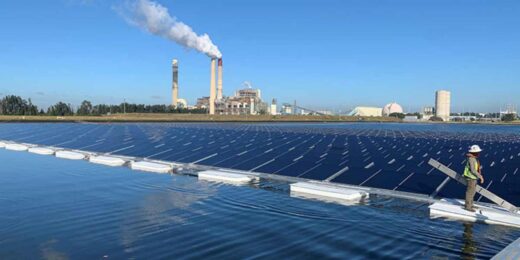
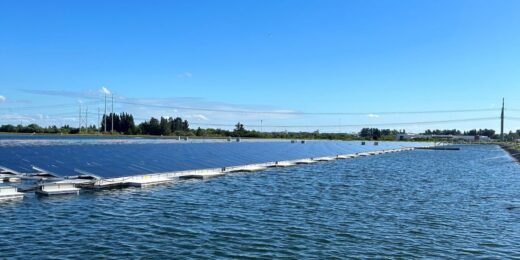
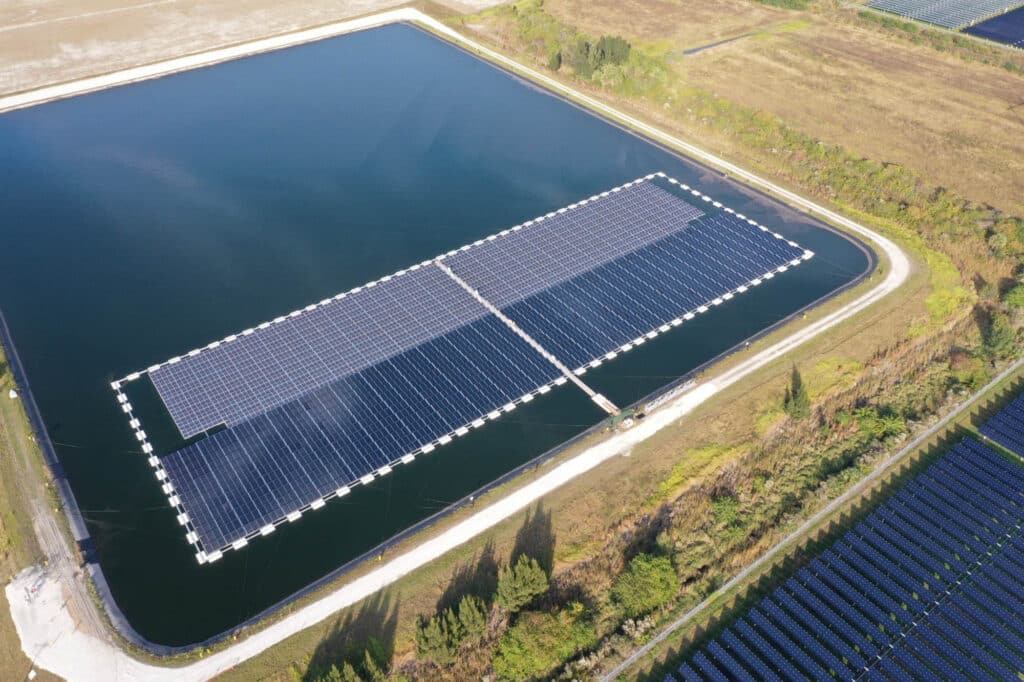
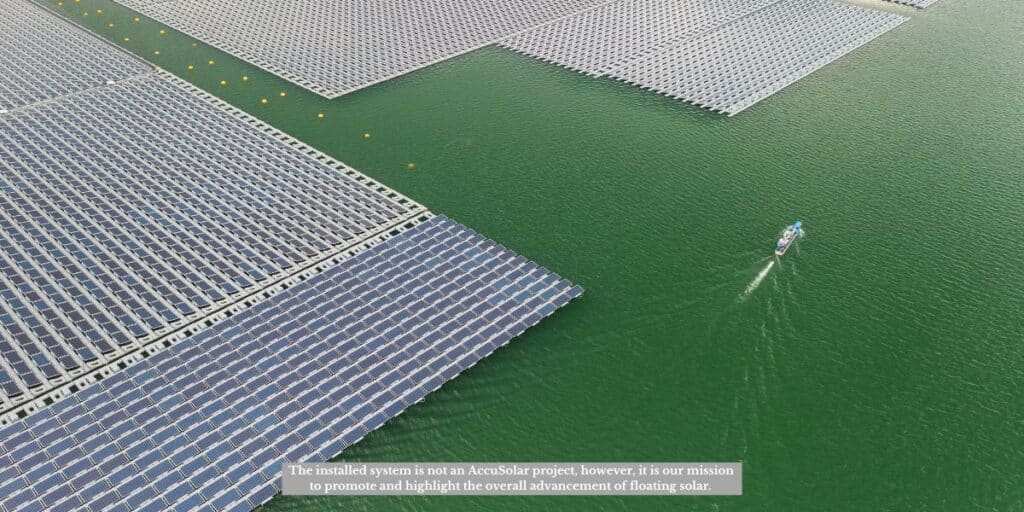
Floating solar arrays sit on specialized pontoons that rest directly on the water’s surface. They require no structural changes to shorelines and no need to drain the water body.
A Powerful Nexus: Water, Land, and Energy
By integrating these solar farms onto existing water infrastructure, communities achieve three significant benefits:
Preserving Water Resources: The panels shade the water, reducing the amount of surface evaporation. This simple act keeps significantly more water in reservoirs for human and ecological use, especially in drought-prone areas.
Improving Water Quality: The reduced sunlight exposure limits the growth of harmful aquatic weeds and algae. This leads to cleaner, higher-quality water that requires less chemical treatment.
Maximizing Land Use: Floatovoltaics avoid the need to use valuable land that could otherwise be reserved for agriculture, housing, or preserving natural habitats. This efficient use of space means the push for renewable energy doesn’t compete with other community needs.
As more communities embrace floatovoltaics, each installation reinforces this virtuous cycle, driving sustainability across the Water-Energy-Farming Nexus and delivering local renewable energy to the grid.
How Floating Solar Works in Simple Terms
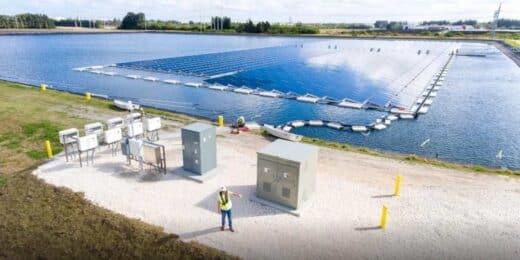
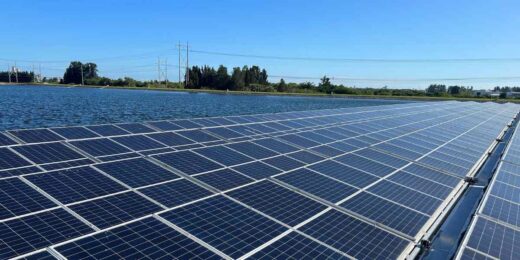
Floating solar farms work almost exactly like regular solar farms, except the panels are mounted on floating platforms anchored in place with mooring lines. The panels convert sunlight into electricity, which is then sent through cables to inverters and into the local power network or on-site facilities such as treatment plants, pumping stations, etc.
The floats are usually made to handle waves, temperature swings, and long-term exposure to sunlight. Because they float, the platforms rise and fall naturally with changing water levels. This makes them well-suited to reservoirs and ponds that vary in depth throughout the year.
Direct Water Benefits: Less Evaporation
One of the clearest benefits is reduced evaporation. When a reservoir or pond sits in direct sun, a surprising amount of water is lost into the air each day, especially in hot, dry regions. Covering even part of that surface with solar panels lowers how much sunlight and wind reach the water, so less water evaporates.
Studies and real-world projects show that floating solar can reduce evaporation over the covered area by large margins, often on the order of 30-50%, and in some cases up to around 70%, depending on coverage and climate. For drinking water reservoirs and irrigation ponds, that means millions of gallons of water per year can remain available for homes, farms, and industry instead of disappearing into the atmosphere.
Everyday Example: Drought-Prone Reservoirs
Consider a drought-prone region where a city depends on a single reservoir. In summer, water levels drop quickly because of both heavy use and intense heat. By installing a floating solar array over part of the reservoir, the city can slow water loss and stretch supplies further into the dry season. This adds a safety buffer for residents and local farmers.
At the same time, the city is producing local renewable energy that can power pumps, treatment plants, or nearby neighborhoods. It reduces reliance on fossil fuels. The project becomes a practical example of water and energy planning working together rather than in competition.
Cleaner Water: Less Algae Growth
A key positive impact is the reduction of algae blooms. Algae thrive in warm, sunny, still water. They degrade water quality by causing green discoloration, lowering oxygen levels, and introducing potential taste, odor, and toxin concerns. By shading the water surface, the floating panels naturally deprive algae of the sunlight they need, contributing to broader water quality protection strategies that utilities can implement.
The resulting clearer water is less costly and resource-intensive to treat. This leads to reduced chemical and energy use. Furthermore, in specialized ponds (wastewater/industrial), reduced algae and stable conditions optimize process efficiency and mitigate sludge and odor problems.
Example: Municipal Treatment Ponds
For municipalities managing sun-exposed sewage or reclaimed-water ponds, recurring algae blooms are a common issue. Floating solar installation solves this with a two-pronged approach: it delivers a new, on-site power source and acts as a water quality improvement measure. By shading the water, the panels mitigate algae growth, reduce unpleasant odors, and stabilize temperature and oxygen. This healthier microbial environment directly translates to smoother utility operations and significant savings on treatment costs.
Saving Land and Protecting Habitats
Traditional ground-mounted solar farms usually require clearing or grading land. This can put pressure on farmland, grasslands, or other sensitive habitats. Floating solar avoids that trade-off because it uses water surfaces that are already in use for storage or treatment, such as reservoirs, irrigation basins, quarries, and industrial ponds.
By staying on the water, these systems leave surrounding fields, forests, and open spaces untouched while supporting ecosystem preservation efforts in regions facing development pressure.
Some projects are sited on man-made or heavily modified water bodies, such as old mining pits. This further reduces the chance of disturbing natural ecosystems.
Everyday Example: Farm Ponds and Land Pressure
Land scarcity is a major barrier to solar adoption. On farms, land is needed for agriculture, making ground-mounted solar impractical. A floating solar array on an irrigation pond solves this by providing power for farm operations (like pumps) and cutting water loss from evaporation, all while keeping the productive acreage available. In dense urban areas, utility-scale floating installations on local reservoirs allow communities to expand renewable energy near the point of consumption. This saves valuable real estate needed for development. This effective balance of energy needs with land and water conservation is why floating solar is viewed as a strategic, responsible energy solution.
Good Energy Solutions: Cooler Panels, More Output
From an energy perspective, panels work best when they stay relatively cool. On hot days, ground-mounted panels can overheat, which lowers their efficiency. On water, there is a natural cooling effect from the air and the water surface. This keeps panel temperatures lower and can boost energy output.
Field data and analyses suggest that floating solar can produce roughly 5-15% more electricity than similar land-based systems because of this cooling effect and sometimes better reflection of light from water. For project owners, that means more kilowatt-hours from the same installed capacity, which helps improve financial returns.
Using Existing Infrastructure More Efficiently
Floating solar often pairs well with existing water and power infrastructure. Many water utilities, for example, already own large reservoirs or treatment ponds and have electrical connections on-site. Adding floating solar turns those facilities into multipurpose assets, and proper anchoring methods ensure long-term stability on varied water bodies.
In some cases, projects are sited on reservoirs that are part of hydropower systems. Floating solar allows the reservoir to produce electricity from sunlight during the day, so less water must be released through turbines just to meet power demand. This leaves more water stored for later. This integrated approach can strengthen both water security and grid reliability.
Real-World Examples
Several projects show how floating solar helps water resources in practice:
- A floating solar installation on a drinking water reservoir can generate a large share of the treatment plant’s electricity while helping reduce evaporation across the covered area.
- City wastewater ponds with floating solar have reported benefits such as reduced algae and improved water quality, alongside on-site renewable power.
- Around the world, irrigation reservoirs and farm ponds are hosting smaller arrays that offset pump electricity use and help stretch limited water supplies in hot seasons.
These examples demonstrate that floating solar is not just a concept. It is already operating at a range of scales, from a few hundred kilowatts to many megawatts.
Minimizing Impacts on Aquatic Life
Concerns often arise about whether floating solar projects harm fish, birds, or other wildlife. When designed and sited carefully, projects can limit negative impacts and even contribute to healthier aquatic conditions through better water quality. Developers typically avoid critical habitats, allow for gaps and corridors between arrays, and design anchoring systems that account for local ecology and water movement. Because panels shade only a portion of the surface and do not usually reach the bottom, light and mixing continue in the surrounding and deeper water. This helps maintain normal ecological processes.
Grid Stability and Local Resilience with Good Energy Solutions
Floating solar also supports more stable energy systems, which indirectly protects water services that rely on electricity. Water treatment, pumping, and distribution all depend on reliable power. By placing solar generation close to these loads on the very reservoirs and ponds that water utilities operate communities can reduce transmission losses and dependence on distant power plants.
Higher local renewable generation can lower the risk of outages or price spikes caused by fuel disruptions or grid congestion. When floating solar is paired with battery storage, excess solar power can be stored during sunny hours and used later. This keeps critical water infrastructure running during grid disturbances or extreme weather.
Economic Benefits Tied to Water
Beyond water conservation and cleaner energy, floating solar creates practical financial benefits for organizations managing water resources. Reduced evaporation and algae mean less money spent replacing lost water and fewer chemicals and operational steps during water treatment.
At the same time, on-site renewable power lowers electricity bills for energy-hungry facilities such as pumping stations, desalination plants, and treatment plants. Over the life of a project, these savings can free up budget for system upgrades, conservation measures, and other improvements that further protect local water resources.
Scalability and Flexibility
Floating solar is highly modular, which means projects can start small and expand over time as budgets and needs grow. The same floating platforms and mooring approaches can be used at many scales, from small farm ponds to large municipal reservoirs.
Given the existing, globally significant technical potential for floating solar on man-made water bodies (many of which are already maintained for supply, flood control, mining, or industry), the sector is poised for growth. As costs decrease and design standards solidify, water managers are increasingly viewing floating solar as a standard, viable option rather than a niche experiment.
Floating Solar and Water Resources: Frequently Asked Questions
What is one way people positively affect water resources?
One effective way is by installing floating solar panels on reservoirs, ponds, and other calm water bodies. These systems help conserve water by reducing evaporation, improving water quality through less algae growth, and generating clean electricity without taking up valuable land that could be used for farming, housing, or natural habitat.
How do floating solar panels help reduce evaporation?
Floating solar panels cover part of the water’s surface and act like a shade structure. They block some sunlight and reduce wind exposure. With less heat and wind directly on the water, evaporation slows down. This keeps more water available for drinking, irrigation, and industry throughout the year.
Do floating solar panels improve water quality?
Yes, by shading the surface, floating solar panels make it harder for algae to grow quickly. Less algae means clearer water, fewer odor issues, and lower treatment costs for cities, utilities, and industries that rely on those ponds and reservoirs.
Are floating solar panels safe for fish and other aquatic life?
When properly designed and sited, floating solar projects are built to protect local ecosystems. Developers avoid sensitive habitats, leave open water corridors around and between arrays, and design mooring systems that respect local water movement. Fish and other species can continue to move and feed as usual.
How are floating solar panels different from traditional, land-based solar farms?
Traditional solar farms are built on land, which may require clearing vegetation or taking farmland out of production. Floating solar uses existing water surfaces instead, so it saves land, reduces evaporation, and often improves panel performance thanks to natural cooling from the water.
Can floating solar systems be installed on existing reservoirs and treatment ponds?
Absolutely. Many of the best floating solar sites are existing drinking water reservoirs, irrigation ponds, quarry lakes, and wastewater or reclaimed-water basins. Because the land and electrical infrastructure are already in place, adding floating solar can be a cost-effective way to upgrade those facilities.
Are floating solar panels more efficient than land-based panels?
Floating solar panels often perform better because the surrounding water helps keep them cooler. Lower temperatures generally mean higher efficiency, so the same installed capacity can generate more electricity over time compared to similar panels on hot ground.
Where does the electricity from floating solar projects go?
The electricity can power nearby facilities like treatment plants, pumping stations, or industrial sites. It can also feed into the local grid. Either way, it offsets fossil fuel use and helps communities meet their clean energy and climate goals.
Are floating solar projects scalable for different community sizes?
Yes. Systems can start small on a single pond and then expand in phases as demand and budgets grow. This flexibility makes floating solar a good fit for small towns, large cities, farms, and industrial facilities alike.
How do floating solar panels support long-term water and energy planning?
Floating solar lets water and energy managers work together instead of competing for land and resources. A single project can protect water supplies, improve water quality, and deliver reliable clean power. This makes it a smart, long-term investment in community resilience.
What Is One Way People Positively Affect Water Resources? Bringing It Back to the Core Idea
It’s a smart concept: Generate clean power and protect our water at the same time by putting solar panels on the surface. This solution minimizes evaporation by blocking sun and wind. It reduces the growth of problem algae by providing shade. It saves us from having to clear land for new solar farms.
Floating solar stands out in conservation because it solves multiple issues: water loss, water quality, and clean energy. It uses a single system on previously unused water surfaces. This approach shows how smart design can transform water storage facilities into a platform for sustainable resource management.
By combining thoughtful site selection, careful engineering, and coordination between water and energy planners, floating solar is emerging as a practical, scalable solution. It’s a clearly visible way for communities to care for both their water and their future. These good energy solutions represent the intersection of innovation and necessity.
Contact us if you’re ready to explore how floating solar could help your community save water, improve water quality, and generate clean energy from underused water surfaces.
This article has been updated on December 10, 2025 to provide the most accurate and relevant information.