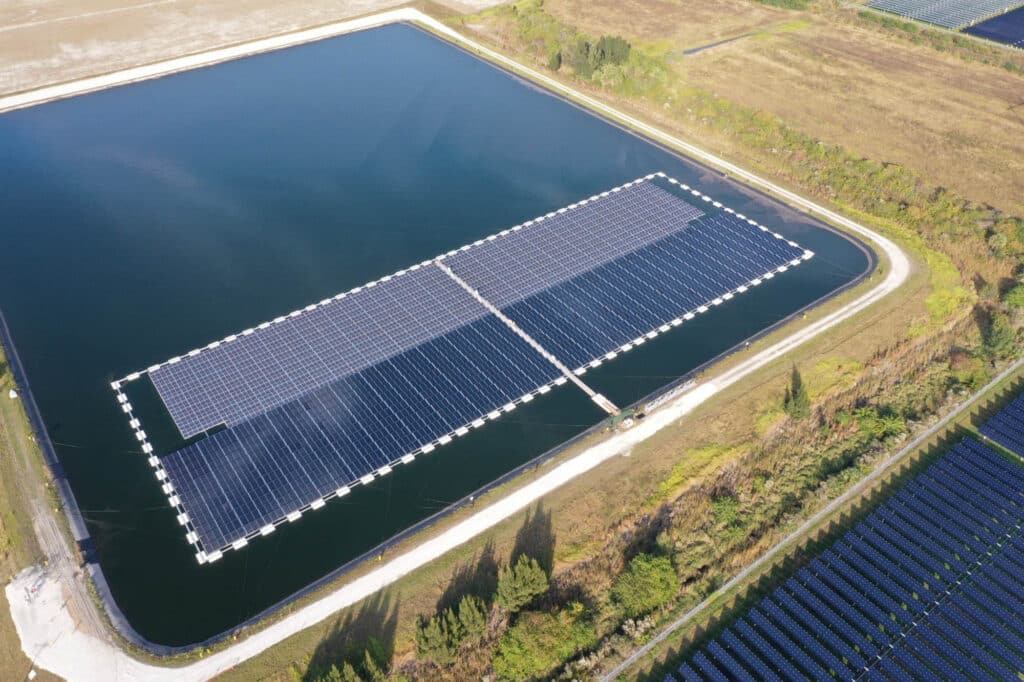
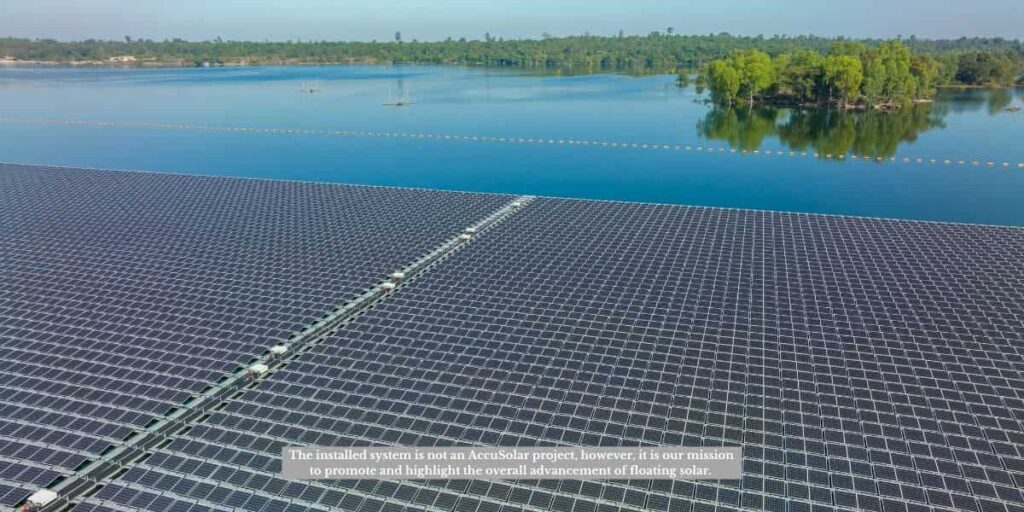
The global shift to clean energy isn’t a question of if, but of how fast. As the world accelerates toward a sustainable future, one of the most innovative and visually striking solutions is emerging from an unexpected place: the surface of our water. Say hello to solar rafts, or floating photovoltaic (FPV) systems. This technology is quietly transforming reservoirs, lakes, and even treatment ponds into powerful new energy hubs.
In an era where every square foot of land is fiercely contested—pitted against urban growth, agriculture, and conservation—the concept of harnessing unused water surfaces represents an immense leap forward. Solar rafts are no longer just a novelty. They are a strategic solution that promises higher efficiency, critical water conservation, and a significant reduction in our reliance on traditional land-based solar farms.
In this blog, we’ll navigate into what solar rafts are, explore their revolutionary advantages, examine inspiring real-world deployments, and outline the strategic steps organizations can take to pioneer this future-forward technology.
What Are Solar Rafts
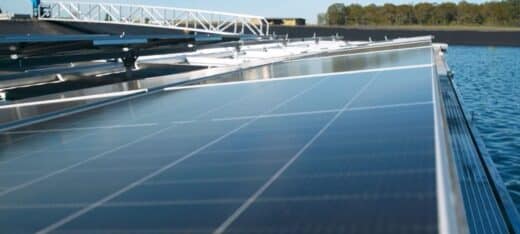
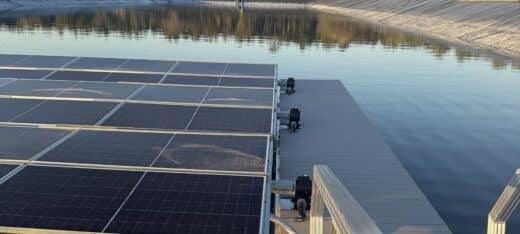
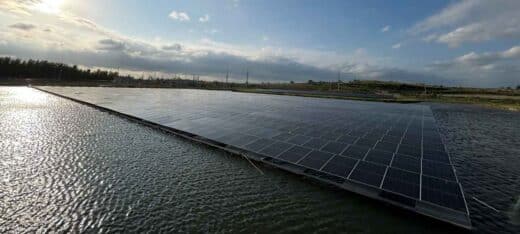
At its core, a solar raft is a durable, buoyant structure designed to support a network of solar photovoltaic panels on a body of water. This can include man-made reservoirs, lakes, or retention ponds. The name itself emphasizes the raft-like, floating nature of the installation. The panels ride on the water as a single, coherent unit, rather than being fixed to a rigid structure above the water.
A typical solar raft system is comprised of three main components:
The Floating Platform: This is the core structure, made of robust, corrosion-resistant materials like high-density polyethylene (HDPE). HDPE is UV-resistant and built for longevity in an aquatic environment. These floats are modular, allowing systems to be scaled up or down easily.
The Solar Array: To boost total energy yield, many modern floating solar designs, such as AccuSolar arrays, utilize bifacial PV panels instead of standard modules. Bifacial panels capture not only direct sunlight but also the light reflected off the water’s surface (albedo).
Anchoring and Mooring Systems: To ensure stability against wind, waves, and changing water levels, specialized anchoring systems secure the rafts either to the shore or to the bottom of the water body. These systems are engineered to withstand extreme weather and must be correctly tensioned. Too loose and the array drifts; too tight and the lines risk snapping.
By utilizing the water surface, solar rafts create clean energy in settings that would otherwise be unproductive. This fundamentally expands the portfolio of viable solar locations.
Why Solar Rafts Represent an Innovative Approach
Solar rafts are not just more of the same solar installations. They bring fresh potential for the renewable energy landscape. Here are several reasons they represent innovation in action:
1. Re-thinking Site Possibilities
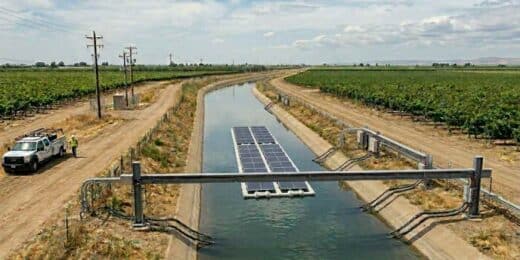
With solar rafts, a site such as a reservoir or retention pond can become a solar energy host. This expands the portfolio of viable locations beyond traditional rooftops or land-based fields. For municipalities, water utilities, or developers, this means new pathways for solar adoption.
When evaluating deployment options, understanding the key differences between ground-mounted and floating solar systems helps organizations make informed decisions about which technology best serves their specific site conditions and energy goals.
2. Optimizing Panel Performance
The floating environment allows solar modules to benefit from unique conditions. Water under the panels can have a cooling effect, which helps maintain higher efficiency of the PV modules. The ambient environment on the water may also reduce dust accumulation compared with land installations. This allows the modules to stay cleaner longer.
3. Synergistic Resource Use
By leveraging water-surface areas that already exist, the installation taps into a dual-purpose infrastructure. Bodies of water that serve other functions can also host solar rafts. The installation becomes part of a broader resource ecosystem rather than a standalone land field.
4. Edge of the Innovation Curve
Solar rafts are still emerging in many markets. That gives forward-looking organizations an opportunity to adopt early, differentiate their energy strategy, and become pioneers in their region. As technology matures, companies involved in floating solar are refining design standards, anchoring technology, floatation modules, and monitoring the performance of solar rafts in real-world conditions.
Real-World Examples Where Solar Rafts Are Being Deployed
To transform the concept into tangible reality, let’s examine three examples. Each one highlights how solar rafts are being used in different geographies and contexts.
Example 1: High-Altitude Pioneering in the Swiss Alps
In the Swiss village of Bourg-Saint-Pierre, at an elevation of 1,810 meters on the reservoir of Lac des Toules, a floating solar installation was placed. This marks what is considered the world’s first high-altitude solar raft project.
The system uses polyethylene floats supporting aluminum frames, and the solar panels are two-sided and made of glass. It covers a small portion of the lake surface (less than 2%) but demonstrates the viability of solar rafts under cold, high-altitude conditions. The cold environment, combined with strong UV light and snow-reflectance (albedo), helped improve panel performance relative to typical land systems.
This project shows that solar rafts are not limited to predictable low-lying sites. They can adapt to more challenging environments, proving flexibility in site choice and opening up possibilities for future projects in unconventional locations.
Example 2: Large-Scale Floating Solar in India
In India, the Ramagundam floating solar power plant on a balancing reservoir of NTPC (National Thermal Power Corporation) has a capacity of approximately 100 MW.
Built over hundreds of acres and divided into multiple floating blocks, each supporting thousands of modules, this installation shows how solar rafts scale up in size and ambition. High-density polyethylene floats were used as the base support structure with large arrays of PV modules mounted on them.
The Ramagundam project underscores how solar rafts can operate at utility-scale. It provides meaningful contributions to grid-connected clean energy portfolios in developing markets.
Example 3: New Jersey Leading the U.S. Floating Solar Movement
While floating solar began gaining momentum in Asia and Europe, the United States is quickly catching up. One standout project showcasing this progress is an 8.9 MW floating solar array in New Jersey. It features more than 16,500 solar panels. This reflects a growing push among U.S. municipalities and private entities to adopt innovative clean-energy solutions that make better use of existing water-based infrastructure.
Example 4: Ohio’s Push Toward Sustainable Innovation
In Ohio, the village of Monroeville is developing what will become a 6 MW floating solar project. It’s expected to begin generating power by early 2026. This installation underscores how floating solar technology is expanding into new regions throughout the country. It’s driven by communities that want to modernize their energy mix while embracing advanced renewable technologies.
These examples show that solar rafts are crossing the Atlantic and being considered by municipalities, utilities, and developers in the U.S. as viable options for clean energy expansion.
How Solar Rafts Are Shaping the Future Clean-Energy Landscape
Solar rafts are more than a niche accessory in the renewable energy toolkit. They represent a growth vector with multiple implications for how we think about solar deployment.
Accelerated Deployment in Water-Rich Assets
Water districts, municipalities, and infrastructure owners are increasingly seeking to monetize or maximize the utility of their existing assets. Solar rafts turn reservoirs, treatment ponds, retention basins, and industrial water surfaces into dual-purpose infrastructure. This infrastructure generates both power and water conservation benefits. This accelerates deployment by eliminating the years typically spent on land acquisition and site preparation.
Reservoirs present particularly strong opportunities for combining energy generation with water conservation strategies, creating dual-benefit infrastructure that addresses both renewable energy targets and resource management challenges.
Enabling Grid-Scale Flexibility
The large-scale installations (like those in India and China) prove that solar rafts can contribute at the utility scale. They’re not just useful in remote or small-scale settings. This opens new pathways for large-scale renewable capacity.
Beyond their individual benefits, solar rafts are an ideal partner for existing hydropower infrastructures. By sharing grid connection points, maintenance teams, and transmission lines, a floating solar-hydropower hybrid system offers a unique way to combine two power sources for more stable, reliable energy output. When water levels are low for hydro, solar can compensate, and vice-versa. This makes the overall energy system more resilient.
Advancing Module and Floatation Technology
The rising demand for floating solar is spurring a wave of innovation across the supply chain. This includes:
Developing modules specifically tailored for floating conditions with enhanced humidity and corrosion resistance.
Creating floatation systems by designing low-profile, ultra-durable, and cost-effective modular floats that simplify installation and allow for phased scaling.
Advancing anchoring methods by introducing dynamic technologies capable of managing significant seasonal water level fluctuations and handling the unique stresses of a water-based environment.
As this ecosystem matures and economies of scale take hold, the overall cost curve for floating solar is expected to decline. This makes it even more competitive with land-based alternatives.
Supporting Corporate and Public-Sector Sustainability Goals
Companies, municipalities, and institutions with sustainability commitments are increasingly looking to innovative solutions. Solar rafts offer a visible, forward-looking investment in renewable energy. This is an investment that sets a tone of innovation.
Potential for Hybrid Systems
Some water bodies already host hydropower or other infrastructure. Solar rafts can dovetail with existing power generation, infrastructure, and grid connections. This makes hybrid water-based systems more compelling. For example, floating solar can complement reservoirs that are already used for hydro generation.
Strategic Tips for Organizations Considering Solar Raft Deployment
Adopting floating solar is a forward-looking decision that requires careful planning. Organizations should approach it with a clear, step-by-step strategy.
1. Understand the Water Site Before Committing
Every successful solar raft project begins with a clear picture of the water body itself. Depth, surface conditions, seasonal water-level changes, and wind exposure all play a role in design and performance. Conducting a feasibility study early helps confirm whether the reservoir or pond can safely and efficiently support a floating solar system.
2. Ask the Right Questions During Planning
Before you move forward, it is essential to define your expectations. Ask things like:
How much surface area will the solar raft cover?What energy capacity will that generate?
Consider the total installation and lifetime operating costs.
Determine which maintenance tasks are required over time.
These initial conversations help align stakeholders and avoid delays or costly adjustments later.
3. Prioritize Strong Design and High-Quality Materials
A durable floating structure depends on the right floatation components, corrosion-resistant hardware, and proven solar modules. Modular float systems make installation faster and allow scaling in phases. Reliable anchoring and mooring designs must account for water movement and extreme weather while keeping the solar raft secure long term.
AccuSolar has been at the forefront of integrating high-quality, marine-grade materials into our solar raft designs. This ensures maximum durability and minimal environmental impact for our partners. Our expertise in resilient anchoring systems ensures our platforms remain stable through seasonal changes and severe weather events.
4. Plan for Maintenance and Accessibility
Floating solar systems require ongoing care. Cleaning access, inspection frequency, panel visibility, and safe walkways or work areas should be considered before construction. A proactive monitoring system helps detect performance changes, debris accumulation, or movement of floats early. This protects both energy output and system health.
Organizations preparing for deployment should review our comprehensive installation guide for floating solar panels, which addresses critical considerations for accessibility, safety protocols, and long-term operational efficiency.
AccuSolar addresses this need directly by building its platforms with integrated floating walkways and aluminum gangways. This ensures technicians have safe and easy access to every module for routine maintenance, cleaning, and inspections.
5. Look Beyond the Installation to Long-Term Performance
A smart investment strategy considers more than the initial price tag. Analyze projections for energy generation over the entire lifecycle, along with warranties on panels, inverters, floatation, and anchoring. Understanding long-term expectations allows organizations to calculate cost-effectiveness, ROI, and payback timelines confidently.
6. Involve the Right Team from the Start
Solar rafts touch multiple areas of responsibility. This includes water operations, electrical infrastructure, and sustainability planning. Bringing the right internal stakeholders together early ensures smoother decision-making, quicker approvals, and a coordinated project rollout.
7. Build a Financial Plan That Anticipates Growth
Upfront investment varies depending on water conditions, project scale, and engineering needs. When modeling costs, include installation, long-term maintenance, monitoring systems, and any grid-connection requirements. This gives decision-makers a transparent view of the energy value the solar raft will deliver over time.
Conclusion
Solar rafts represent a fresh and critical frontier in the clean-energy journey. By defining what they are and showcasing real-world examples, it becomes clear that this approach is far more than a technical curiosity. It is a strategic innovation that enables organizations to harness the sun in powerful new ways. This leverages water-surface assets and fundamentally pushes the envelope of renewable deployment.
In a future where every surface is a potential power source—rooftops, facades, land, and now water—solar rafts are emerging as one of the most exciting tools in the clean energy toolbox. Organizations that adopt this technology early not only meet their sustainability goals but position themselves as true innovators in the transition to a global, green-powered future.
Contact us to see how we can help you harness the power of solar rafts for a cleaner, sustainable future.