For renewable energy developers, project owners, and investors, ITC strategy timing has shifted from “optimizing returns” o “project survival.” Under new federal mandates, the 30% base Investment Tax Credit (ITC) is no longer a guaranteed fixture for the next decade. Getting your ITC strategy timing right means acting well before the July 4, 2026, cutoff, not just being aware of it.
Recent legislative changes have accelerated the expiration of these credits. If a project does not “Begin Construction” by July 4, 2026, or meet strict “Placed in Service” deadlines by the end of 2027, the tax credit drops to 0%. We are no longer just talking about losing a 10% bonus. We are talking about losing the entire federal subsidy.
As a result, many developers are using IRS-recognized safe harbor strategies to lock in ITC eligibility ahead of the deadline. By safe harboring qualifying project components, developers can preserve the ITC even if construction continues after July, provided the project meets applicable size and qualification requirements.
The Window of Opportunity Is Closing
To secure the 30% ITC and the additional 10% Domestic Content Bonus, projects must satisfy IRS “Beginning Construction” requirements before the July cutoff.
Missing this window means serious consequences for any project currently in development:
Total Loss of ITC: The base 30% credit vanishes for projects that do not start before the deadline.
Stranded Assets: Projects modeled on 30-40% tax equity may no longer be financially viable unless alternative incentives or sufficiently high kWh rates are available to offset the loss of federal credits.
Compressed Timelines: Projects starting after July 4 must be fully operational by December 31, 2027, to claim any credit at all. This leaves zero margin for permitting or interconnection delays.
Staying current on government policy shifts affecting renewable energy development is part of managing the regulatory risk that these compressed timelines create.
The stakes extend well beyond individual project economics. Developers who miss the deadline may find themselves renegotiating financing terms, revising power purchase agreements, or abandoning projects entirely. Sound ITC strategy timing is the difference between a project that closes and one that never breaks ground.
Understanding ITC Bonus Requirements for the Domestic Content Bonus
The 10% Domestic Content Bonus does not come automatically alongside the base ITC. It carries its own set of ITC bonus requirements that developers must satisfy to stack the additional credit on top of the base 30%.
To qualify, projects must meet domestic content thresholds for steel, iron, and manufactured products. As of 2026, these thresholds are increasing. A project that qualified under 2024 rules may not qualify under 2026 standards without deliberate supply chain planning.
Key compliance points include:
- Steel and iron components must be produced in the United States.
- Manufactured products must meet a minimum percentage of U.S.-sourced and manufactured content.
- Documentation must be in place to demonstrate compliance at the time of filing.
Developers working with public utilities or treatment facilities should also evaluate Department of Energy grants available for energy-efficient projects, which can stack alongside ITC incentives to further improve project economics.
Working with a supplier that understands these thresholds and can provide the required documentation is not a convenience. It is a prerequisite for capturing the bonus.
How AccuSolar Can Lock In Your Project
Navigating these deadlines requires more than just intent. It requires physical and financial action. AccuSolar is positioned to help developers safe harbor their projects now.
By partnering with AccuSolar, you can satisfy the 5% Safe Harbor Test or the Physical Work Test by procuring specialized floating solar racking and anchoring systems. AccuSolar provides the project-specific documentation, binding contracts, and inventory allocation required by the IRS to prove your project has officially “begun” before the July 4 deadline.
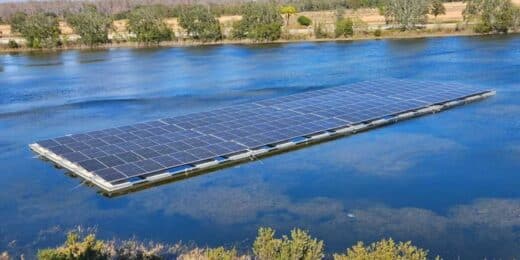
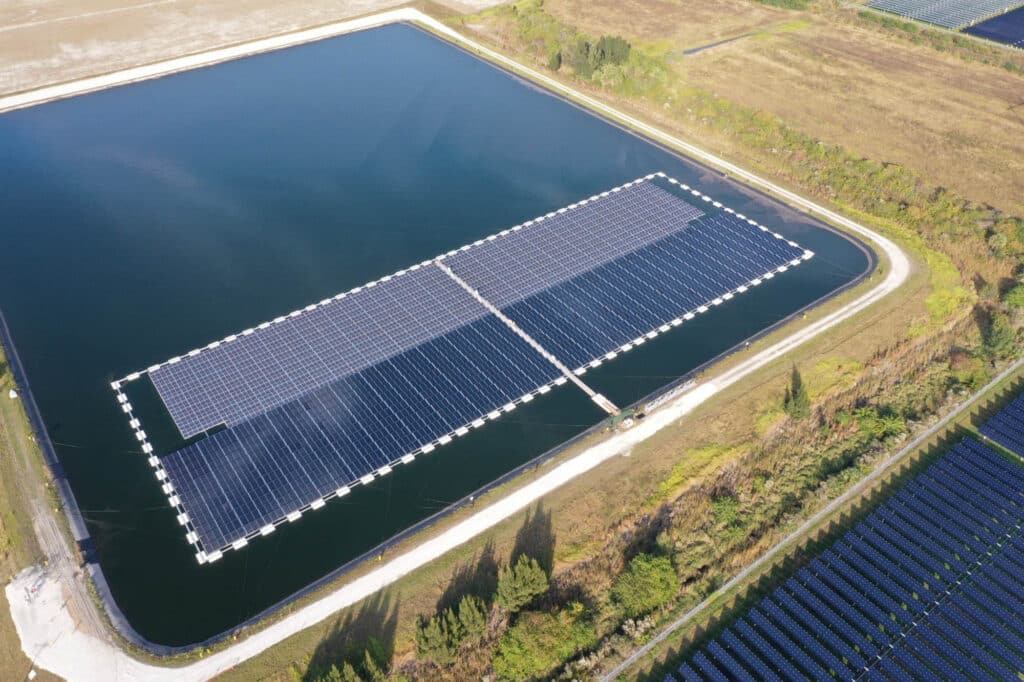
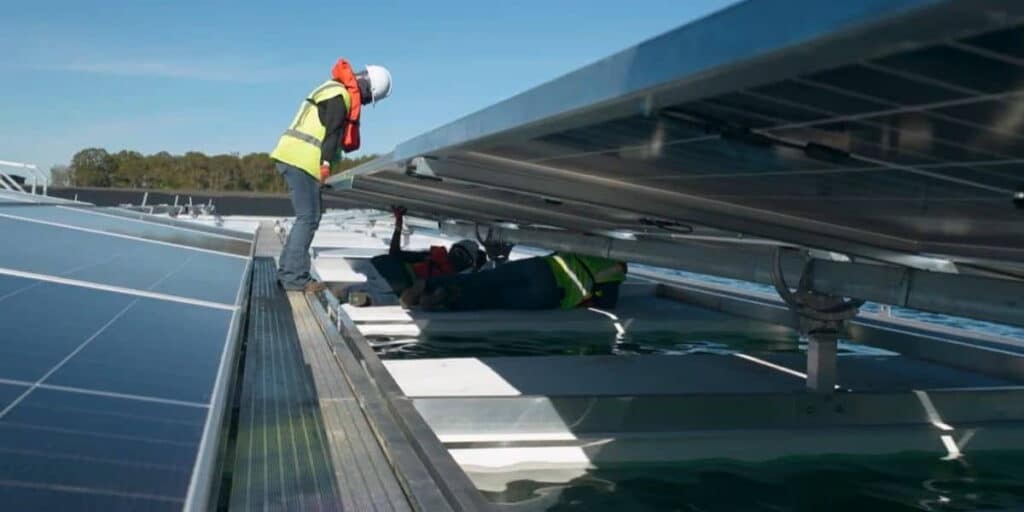
Floating solar projects carry particular complexity because the underlying technology differs significantly from ground-mount systems. Anchoring systems, pontoon structures, and cable management components all factor into both the physical work test and domestic content calculations. AccuSolar’s systems are designed with these considerations in mind, giving your team a clear path to both safe harbor eligibility and full ITC bonus requirements compliance.
A full breakdown of the critical steps involved in solar PV anchoring for floating systems explains why these components carry so much weight in both the physical work test and domestic content calculations.
Understanding the procurement lead times involved is equally important. Floating solar components can require 12 to 20 weeks from order to delivery. That means developers waiting until Q2 2026 to initiate procurement are already running behind.
Floating Solar Requires Immediate Action: A Strategic Action Plan
To preserve the 30% ITC and the 10% Domestic Content Bonus, take these steps as soon as possible:
- Secure Procurement: Execute binding agreements with AccuSolar to satisfy safe harbor expenditures.
- Document Everything: Maintain rigorous logs of “Physical Work” or “Significant Expenditures” initiated before July.
- Verify Sourcing: Confirm your supply chain meets the 2026 domestic content thresholds to stack that extra 10% on top of your 30% base.
Each of these steps feeds directly into both safe harbor eligibility and domestic content compliance. Proper ITC strategy timing means completing these steps now, not after the financing closes or the permits are approved. By that point, the July window may already be gone.
The Bottom Line: ITC Strategy Timing Cannot Wait
If you have not started construction by July 4, your project economics will change overnight. Taking action now to confirm domestic content, initiate procurement, and document early construction activity can preserve millions of dollars in federal incentives and strengthen your project’s financial profile.
Developers who treat the July 4 deadline as a distant event are taking on avoidable risk. Procurement timelines, IRS documentation requirements, and supply chain verification all take time. A project that begins this process in January has a clear path to compliance. A project that waits until May may not.
There is no substitute for early action when it comes to ITC strategy timing. Every week that passes narrows the window to satisfy both the safe harbor tests and the domestic content thresholds required for the bonus.
Contact us to make sure your renewable energy project is positioned to capture the maximum value of the ITC and domestic content bonus.