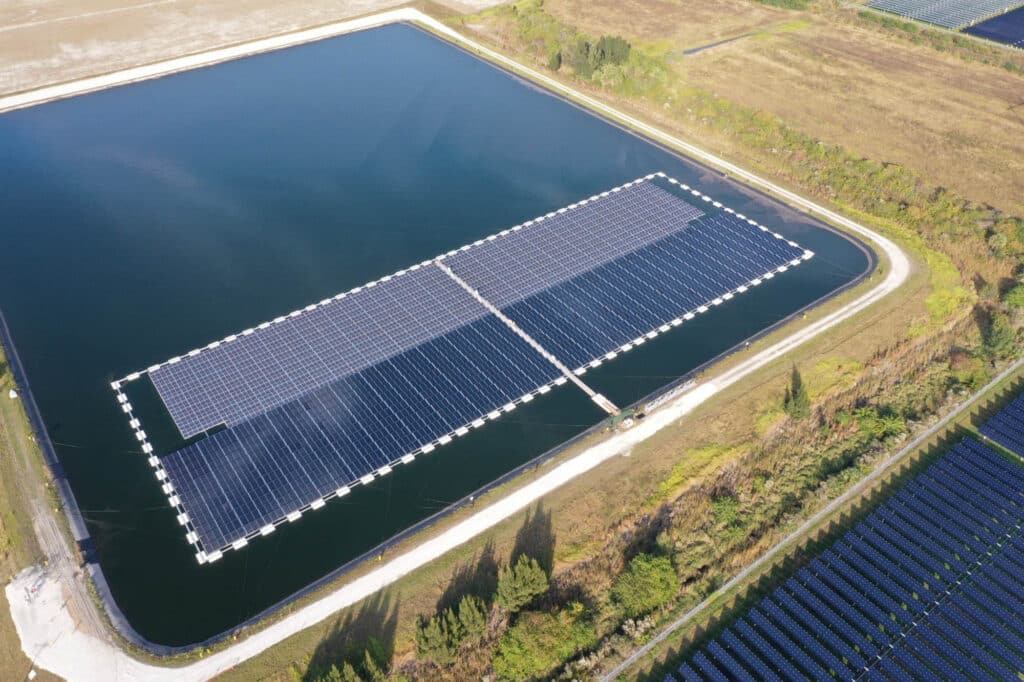

Florida has always been a state of contradictions. We are the “Sunshine State,” yet for decades, we trailed behind rainy states like New Jersey in solar adoption. Peak demand spikes exactly when the sun is blazing and the AC is working overtime. We have some of the most expensive real estate in the country, yet we’re surrounded by millions of acres of so-called “unusable” water. How the state handles that tension will shape whether Florida renewable energy goals become reality.
But as we sit here in 2026, the narrative has shifted. Florida isn’t just participating in the energy transition, it’s rewriting the playbook by looking at its 100,000+ lakes and countless retention ponds as the next frontier for the power grid. If the goal is a fully renewable future by 2050, we can’t keep paving over orange groves and cattle ranches. We have to get creative.
Florida’s Renewable Energy Push is Already Massive
To understand why floating solar matters here, you have to start with the scale Florida is chasing. Florida Power & Light (FPL) set a benchmark years ago with its “30-by-30” plan to install more than 30 million solar panels by 2030. That plan is frequently cited as a utility-scale solar buildout at a pace most states would call aggressive.
That momentum matters because Florida’s path isn’t built around a single statewide renewable mandate. Instead, it is being driven by utility resource plans, customer expectations, economics, and the reality that adding generation and storage is necessary to keep up with demand growth. The buildout is happening, and the limiting factors have become siting and speed.
Understanding how Florida solar incentives layer on top of existing utility commitments gives developers a clearer picture of the financial runway behind this buildout.
Floating solar is not replacing land-based solar in Florida. It is becoming a pressure relief valve that helps projects move forward when land, optics, or timelines get complicated.
Why Floating Solar Fits Florida Renewable Energy Goals
Florida has three characteristics that make floating solar a serious planning tool.
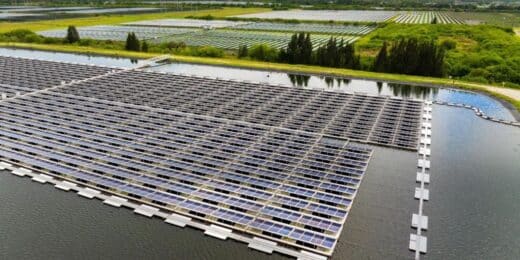
Water is everywhere in the built environment. Stormwater ponds, reservoirs, treatment facilities, cooling ponds, and old industrial pits are common features across the state. Many are already fenced, managed, and monitored.
The “best” land for large solar is often in tension with other priorities. Development is constant, conservation is significant, and agriculture remains a major economic engine. Even when a parcel looks open, aligning stakeholders, zoning, and timelines can be difficult.
Solar growth is happening alongside grid modernization. The state is adding batteries, strengthening transmission, and planning for resilience. Floating solar offers a way to add capacity at sites that already have infrastructure nearby, which simplifies development.
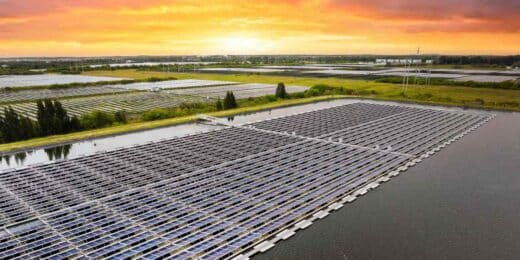
At AccuSolar, we are charging ahead with the deployment of floating solar technology across multiple key locations. We are currently focused on seven strategic sites, with four already in active production. Together, these seven projects represent a total capacity of over 12 MW, marking a major milestone in our mission to turn underutilized water surfaces into hubs of clean, renewable energy.
This isn’t about floating solar being “better” than ground mount. It is about it being easier to place in specific situations that Florida encounters again and again.
Case Studies: From Pilot to Portfolio
A Major Floating Solar Milestone in Orlando
In late 2025, Orlando Utilities Commission opened what was then the largest floating solar array in Florida, a 2 megawatt system with more than 3,400 panels deployed across two floating arrays.
This signaled that the technology is no longer stuck at a “pilot” size. While 2 megawatts is modest compared to massive ground-mount sites, it is large enough to move from “interesting” to “repeatable,” especially for municipal utilities and site owners with multiple ponds. It proved a deployment pathway that fits Florida’s urban and suburban footprint.
Testing Scale at Tampa’s Big Bend Power Station in 2022
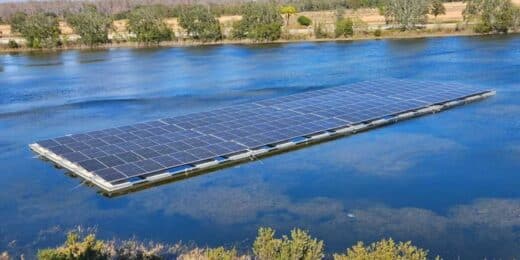
Tampa Electric Company deployed a 1 megawatt floating solar array at its Big Bend Power Station. TECO designed the project as a learning platform, using both traditional and bifacial panels to study performance in Florida’s heat and humidity.
By treating floating solar as a practical research tool within an active power station, TECO gathered the operational data, integration with existing workflows, and storm durability required to move the technology into a broader portfolio.
Looking at the world’s largest floating solar power plants puts Florida’s growing portfolio in a global context and highlights just how much room the technology has to scale.
High-Visibility Proof in Miami-Dade
In 2020, FPL partnered with Miami-Dade County on a floating solar array at Miami International Airport. Though small at 160 kilowatts, its strategic value was significant.
Projects like this normalize the use of water surfaces in high-visibility areas. When an installation is adjacent to major roads and airports, the industry learns quickly how to navigate aesthetics, safety, and community concerns.
How Floating Solar Actually Scales in Florida
In Florida, scaling is less about one giant floating project and more about repeatable deployment across hundreds of suitable water bodies.
Scaling Through Portfolios: Once a municipal utility or industrial operator proves a design and permitting approach for one pond, the next ten sites become significantly easier. Standardize. Repeat. Improve.
Easier Stakeholder Alignment: Land-based solar can trigger land use debates. Floating solar changes the conversation from “we want to build on that parcel,” to “we want to add a new use to an asset you already operate.”
The economic benefits floating solar farms bring to local communities also make it easier to build the public and political will needed to move projects through approvals at scale.
Pairing with Grid Needs: Floating solar opens new nodes on the map. Proximity to existing substations at treatment facilities or industrial sites can be as valuable as the solar resource itself.
Proving Survivability: Florida’s heat, lightning, and hurricanes are the ultimate test. Success here proves that floating solar can be a reliable, long-term asset without maintenance surprises.
The Bottom Line for Florida’s Renewable Energy Goals
Florida’s water is no longer just part of the landscape, it is part of the energy solution. As we look toward 2050, scaling clean energy will require smarter use of the space we already manage. Floating solar is one of the most practical tools available for meeting Florida renewable energy goals at scale. Contact us if your organization is exploring how floating solar fits into Florida’s energy future.