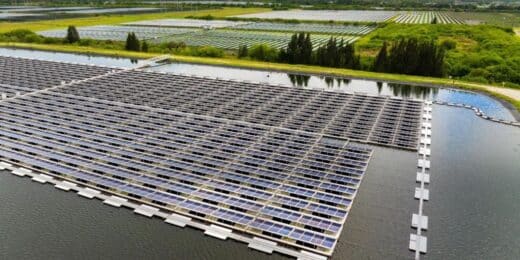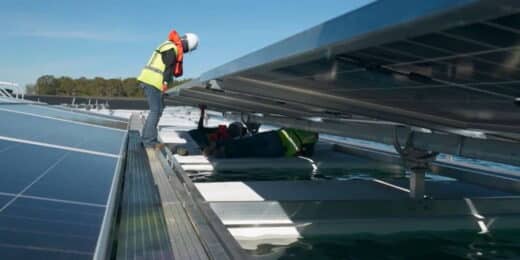
When we talk about meeting today’s energy demands and hitting ambitious sustainability goals, we need more than just good intentions. We need innovation. That’s where floating solar farms come in. These aren’t just high-tech gadgets on water; they are a profound and visible shift in the clean energy transition. For local governments, utilities, and communities, the economic impact floating solar farms create is becoming undeniable. They offer a tangible way for businesses to not only participate in the energy future but to also gain measurable, local benefits that go far beyond just being green.
Floating solar installations are trailblazing a new chapter for regions constrained by land availability. They effectively transform underused reservoirs and water surfaces into productive energy assets that generate clean electricity, create jobs, and stimulate regional investment. Apart from the environmental advantages, these projects inject new momentum into the floating solar farms local economy. They offer substantial opportunities for skilled labor, local manufacturing, engineering services, and long-term maintenance employment. For municipalities, they provide critical pathways to stabilize energy costs, diversify revenue streams, and strengthen resilience against volatile fuel markets.
In this blog, we explore how floating solar farms are transforming not just infrastructure but entire communities. We examine how they deliver tangible economic value, enhance local prosperity, and redefine what sustainable development looks like at the community level.
A New Dimension of Solar Energy: Unlocking Economic Potential
Driven by falling costs, improved efficiency, and the urgent need to cut carbon emissions, solar power has grown dramatically in recent years. However, land availability remains a limiting factor in many regions. Competing uses such as agriculture, conservation, and urban expansion make large-scale solar difficult to deploy without significant trade-offs. That’s where floating solar comes in, offering a solution that is both space-efficient and economically valuable.
Installing solar panels on water bodies such as reservoirs, lakes, and treatment ponds allows communities to leverage non-productive space for energy generation. The adoption of floating systems provides a robust return by conserving valuable land. It offers the critical economic benefit of reduced water evaporation in arid regions. The systems maximize energy output via natural cooling and minimize development costs through easy integration with existing electrical infrastructure. This fosters new growth for the floating solar farms local economy.
When communities strategically adopt floating solar, they unlock significant value across multiple domains. This technology acts as a powerful engine for local development. It enables clean-energy production, strengthens local supply chains, stimulates direct job creation, reduces energy expenditures, enhances municipal revenues, and improves overall grid resilience.
Why Focus on Community-Level Benefits?
Success in floating solar can be easily quantified by megawatts installed and emissions avoided. Yet the genuine value resides in the direct, felt results experienced by local communities.
The most meaningful outcomes are tangible and quantifiable:
Direct and Indirect Job Creation: Spanning specialized construction, manufacturing, and long-term maintenance.
Substantially Lower Utility Costs: For commercial businesses, public entities, and the broader base of utility customers.
New Revenue Streams: Increased tax revenue, lease payments, and avoided energy costs for municipalities.
Strengthening of Local Supply Chains: Supporting local contractors, engineering firms, and service industries.
Enhanced Energy Resilience: Providing stability and protection against volatile global energy markets.
When viewed through this lens, these installations become more than energy projects. They become catalysts for long-term community prosperity and self-sufficiency.
Key Community Benefits of Floating Solar Farms
Job Creation and Workforce Development
Floating solar projects stimulate significant employment across multiple phases: engineering, specialized marine fabrication, logistics, and skilled construction.
The Installation Phase: High-Value, Localized Labor
During construction, these projects rely heavily on local contractors and skilled labor. Specific roles include:
Marine Engineers & Specialists: For site assessment, anchoring design, and water-specific logistics.
Electricians & Technicians: Responsible for the electrical balance of system, wiring, and grid interconnection.
Construction Laborers: Essential for assembling the floating platforms, mooring systems, and installation of the photovoltaic modules.
Logistics & Project Management: Coordinating the movement of materials and managing complex project timelines.
The technical coordination required during installation follows specific protocols detailed in our step-by-step guide to floating solar farm construction, which covers everything from site assessment to final commissioning.
The Operations and Maintenance (O&M) Phase: Stable, Long-Term Employment
Once operational, the need for ongoing O&M provides stable, long-term employment. These are generally higher-skilled positions that strengthen regional technical expertise:
System Technicians: For monitoring output, troubleshooting faults, and general repair.
Specialized Cleaning Crews: For maintaining panel efficiency, often requiring specialized floating platforms or boats.
Structural Inspectors: For regularly checking anchors, mooring lines, and platform integrity over the 25+ year lifespan of the array.
This hands-on experience helps create transferable skills that benefit other renewable and infrastructure projects in the area. It creates a lasting workforce development legacy that outlives the initial construction boom.
Reduced Utility Costs for Businesses and Public Entities
One of the most immediate and critical community benefits is the stabilization and reduction of energy costs. By generating clean power closer to where it’s consumed (a process known as distributed generation), floating solar helps municipalities, utilities, and community co-ops reduce energy expenses and stabilize long-term rates.
Higher Yield, Greater Savings
Systems operating above water can deliver 5–15% higher efficiency than comparable land-based arrays due to the natural cooling effect of the water. This provides a greater energy yield and a faster financial payback period.
For example, a municipality that owns a water treatment plant often has an enormous electricity bill. Installing floating solar on the adjacent reservoir or treatment pond allows them to self-consume the power directly. This offsets nearly all of their daytime energy usage. This direct offset is financially superior to simply selling power back to the grid. The money saved—potentially hundreds of thousands of dollars annually—can be:
Reinvested into essential public services (e.g., funding for road repairs, public facilities, and safety services).
Used to maintain or lower water and sewer rates for commercial and household customers, offering direct rate relief to all who use the service.
Utilized to fund energy efficiency upgrades across other municipal buildings, creating a cascading savings effect.
Predictable energy costs attract new businesses. These businesses view stable utility rates as a key factor in long-term operational planning, further stimulating local commercial growth.
Increased Municipal Revenue and Asset Value
Implementing floating solar on reservoirs or utility ponds can create new revenue streams through various mechanisms:
Lease Payments: The developer or utility pays the municipality a long-term lease for the use of the water surface. These payments provide a steady, predictable source of non-tax revenue for decades.
Shared Savings Agreements: The utility and the host entity (often the local government) agree to split the cost savings realized from the project. This provides continuous budgetary relief.
Property and Equipment Taxes: Local governments benefit from property and equipment taxes tied to the valuable renewable energy assets installed. This represents an expansion of the tax base without requiring new infrastructure or services from the community.
Beyond financial returns, these installations deliver measurable environmental benefits that strengthen community resilience and create additional value through improved water quality and ecosystem protection.
These new revenue streams transform a previously non-revenue-generating water surface into a sustainable asset.
How the Economic Impact Floating Solar Farms Create Transforms Communities
The global scale of this opportunity is evident when examining the world’s largest floating solar installations, which demonstrate how utility-scale projects create thousands of jobs and generate significant regional investment across multiple continents.
AccuSolar’s Contribution to Floating Solar Development
As one of the few U.S. based manufacturers specializing exclusively in floating photovoltaic systems, AccuSolar is helping communities and utilities capture both the technical advantages and the economic impact floating solar farms deliver to their regions.
AccuSolar’s floating solar systems are engineered for longevity, performance, and community value. Every platform is designed for durability and efficient assembly. This enables faster installation, lower maintenance, and long-term stability for the end user.
Our floating solar platforms feature:
Marine-Grade Aluminum Framing and Stainless-Steel Hardware: Designed for superior corrosion resistance and a long service life of 25+ years. This ensures sustained utility for the community.
High-Albedo HDPE Floats: These enhance panel performance by reflecting additional light onto the modules. This boosts energy yield and the resulting financial savings.
Modular, Stackable Designs: These configurations significantly reduce shipping costs and simplify onsite installation logistics. This translates to lower project costs for local developers and utilities.
Walkway-Accessible Configurations: This critical feature makes operations and maintenance safer and more efficient. It reduces O&M costs and ensures project uptime.
AccuSolar sources all materials from U.S. suppliers. This demonstrates our commitment to domestic manufacturing and full compliance with federal incentives like the Inflation Reduction Act. This strategy guarantees reliability and quality control while actively strengthening the U.S. clean-energy supply chain. It ensures project investment supports local economies.
By combining two decades of marine-engineering expertise with advanced solar technology, AccuSolar designs platforms built to conquer harsh environments. We minimize installation time and lifecycle costs. This empowers utilities, developers, and municipalities to deploy reliable, renewable infrastructure that drives real community-level value.
Floating Solar’s Community Impacts: Real-World Examples
To bring these benefits into sharper focus, let’s explore several real-world examples. These show where floating solar has delivered community-level benefits from job creation to cost reduction to local uplift.
U.S.A. – Sweetwater Authority, California
Located in San Diego County, California, the Sweetwater Authority has studied a floating solar project on its reservoir as a means to reduce energy costs and support disadvantaged communities. This project serves as a model for how public utilities can directly translate energy savings into community rate relief.
Community Benefits:
Quantifiable Cost Savings: The project, sized at roughly 3.7 MW over 9.5 acres of reservoir surface, aims to offset about 66% of the Authority’s electricity costs. This yields potential annual savings of around $500,000.
Targeted Rate Relief: Much of the service area is designated “disadvantaged” (with 65% in such communities). These cost savings translate directly into rate relief for residents and businesses who tend to be more vulnerable to energy-price shocks.
Optimized Public Asset Use: By repurposing a reservoir surface rather than acquiring new land, the project avoids displacing agriculture or housing. This makes efficient use of existing public assets and maximizes their return.
U.S.A. – TECO Floating Solar, Big Bend Power Station, Apollo Beach, Florida
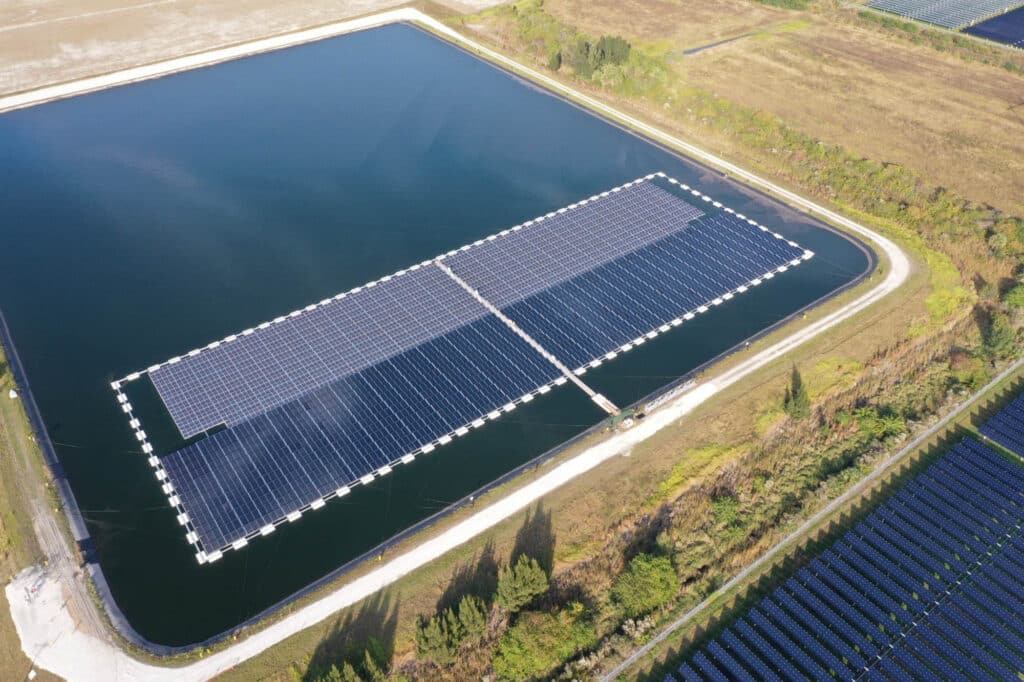
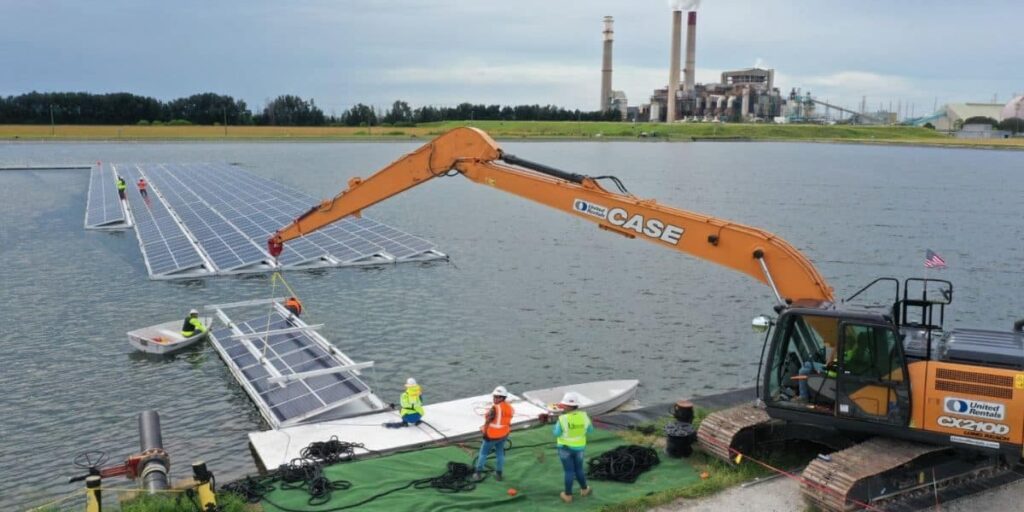
Located at TECO’s Apollo Beach facility, this project utilizes AccuSolar floating solar platforms. It stands as one of Florida’s initial floating solar installations and serves an important function as a research and demonstration site.
Project Highlights & Community Benefits:
Innovative Land Use: TECO installed 3,452 solar panels on a retention pond near its Big Bend power station. The immediate benefit is the use of existing water infrastructure rather than requiring additional land. This minimizes displacement of alternative land opportunities and promotes more efficient local resource use.
Long-Term Cost Stabilization: While a pilot project, it feeds into TECO’s broader solar portfolio. TECO reports that solar investments help reduce long-term exposure to volatile fossil fuel costs. This builds a more predictable electricity cost base for all Tampa Bay customers, which is vital for business investment and household budgeting.
Regional Leadership in Innovation: Being among the first in Florida to deploy floating solar builds local brand for renewable energy. This attracts future green technology investment and skilled talent to the region.
Philippines – Aquatic Reservoir Floating Solar
A 10 kWp floating solar system installed on Lake Mainit in the Philippines showcases how even small-scale projects can generate meaningful local benefits. This is particularly true in the developing world where energy costs can cripple small enterprises.
Community Implications:
Strong Financial Performance: The system achieved a payback period of just 4.8 years. It delivered a net present value of roughly $13,250 USD and a return on investment of 227.5%. This demonstrates that floating solar can be highly profitable and accessible for smaller, local community investments.
Harmonization with Existing Economy: The system is located in an area where fishing and aquaculture drive the local situation. The floating solar array introduced a new source of clean energy and revenue without disrupting existing livelihoods or water use. This proves that green energy can coexist with established activities.
Local Skill Building: The project created opportunities for the local workforce through installation, maintenance, and ongoing monitoring. This builds technical skills and community participation in renewable energy. The small, successful scale proves that floating solar can be a practical and profitable solution for smaller communities. It helps them meet local energy demands while promoting sustainable growth.
Policy, Sustainability, and Long-Term Value
The advantages of floating solar are further enhanced by favorable policy and the long-term asset value they provide.
Water Management as an Asset
In regions prone to drought, the water savings alone can justify the investment. Floating solar arrays can reduce evaporation by 70–90% due to the shading effect. This conserved water has direct value, particularly for:
Agriculture: Providing a more reliable supply of water for high-value crops. This mitigates drought risk and stabilizes the regional agricultural situation.
Municipal Water Supply: Reducing the cost and energy associated with pumping or treating alternative water sources. This ensures long-term supply stability for the population.
The Value of Resilience and Stability
Floating solar strengthens local energy independence by reducing reliance on distant fossil-fuel plants, which are subject to global price volatility. Distributed systems located near demand centers minimize transmission losses, improve grid reliability, and help communities recover faster from outages or storms. This is a key resilience factor. Over time, these projects diversify local situations and provide more predictable energy costs. This is a critical factor in long-term planning and attracting investment.
Key Takeaways for Community Decision-Makers
For local government officials, development agencies, utilities, and community stakeholders considering floating solar farms, here are the key takeaways:
Treat floating solar as local infrastructure: By focusing the planning process on jobs, local business linkages, cost savings, and revenue streams, the community can gain maximum value beyond just clean energy.
Ensure the cost savings translate to community benefit: Establish clear mechanisms for cost savings. These can come through lower utility bills for municipalities (as seen at Sweetwater Authority), or through clearly defined reinvested lease or tax revenues.
Use real-world data and case studies to demonstrate viability: Focus on measurable outcomes like rapid payback periods, job yields, and specific local savings. These numbers are essential to build political and community support among stakeholders.
Think Long-Term (20–30 Years): Floating solar assets often have multi-decade lifetimes. That means sustained local benefit: stable jobs, predictable cost savings, and reliable revenue streams that secure a community’s financial future for a generation.
Conclusion
Understanding the economic impact floating solar farms create means recognizing they represent more than just megawatts—they represent opportunity for people. Every installation acts as a multiplier creating high-value jobs, slashing essential energy costs, and keeping capital circulating within the floating solar farms local economy. For cities, utilities, and communities ready to pioneer renewable innovation, floating solar is the blueprint for resilient, inclusive growth. Ready to bring both environmental value and measurable returns to your region? Contact us to learn more.