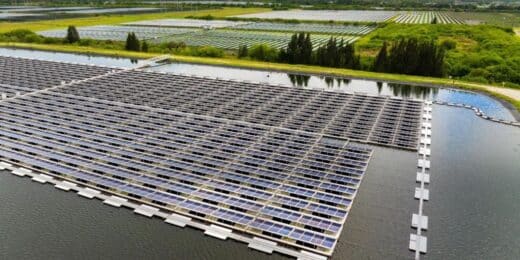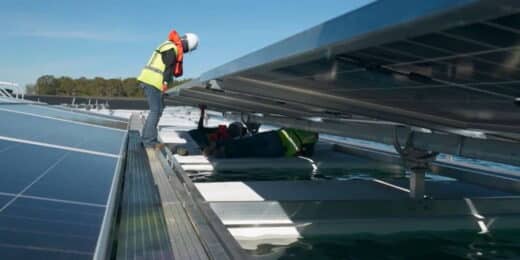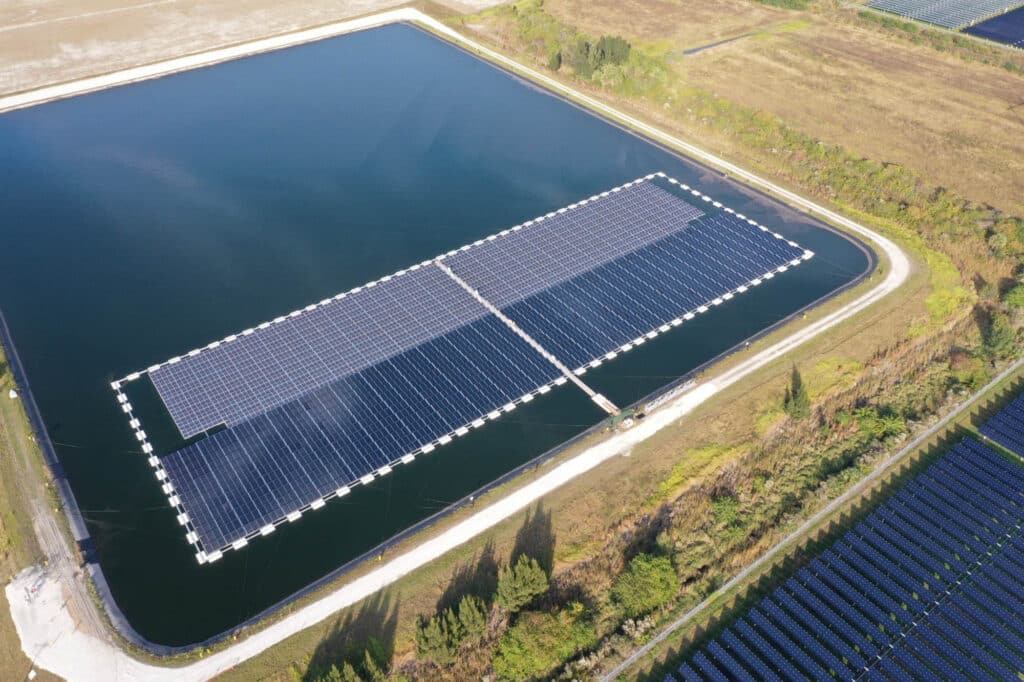
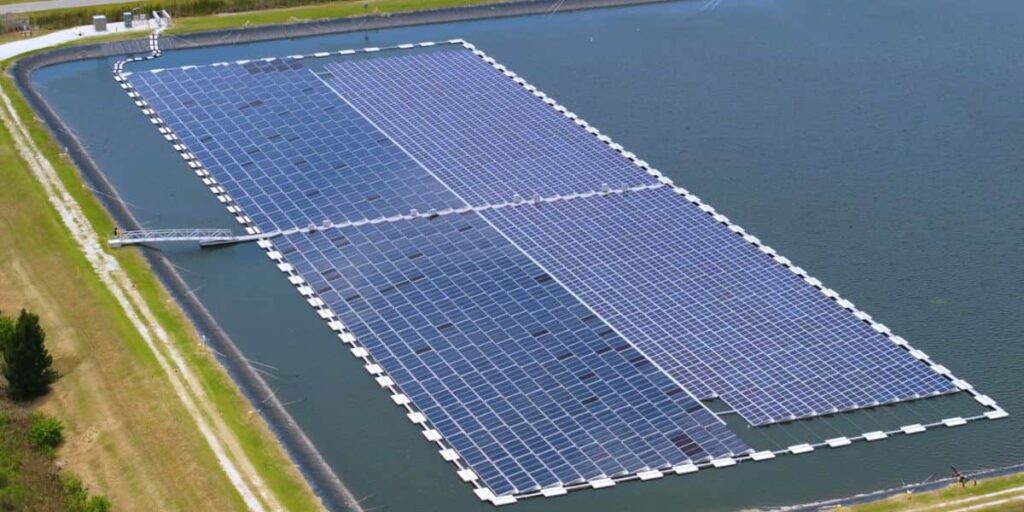
Getting the most out of your floating solar system requires consistent, strategic maintenance of solar panels. The unique aquatic environment, while offering advantages, also introduces specific challenges that demand proactive care. That’s why, at AccuSolar, we’ve compiled these comprehensive solar panel maintenance tips to help you protect your investment, maintain peak efficiency, and ensure long-term performance of your floating solar array.
10 Essential Solar Panel Maintenance Tips
1. Regular Visual Inspections of Floats and Structure
Just like a land-based array needs a stable foundation, the integrity of a floating system depends on its floats. Regularly check that all floats remain in their original, designed locations.
Look for any signs of dipping or listing, as these can indicate an issue with buoyancy or connections. AccuSolar recommends an annual visual inspection to catch these issues early and ensure continued system stability.
2. Inspect for Debris and Keep Surfaces Clear
Floating debris can accumulate around your array, potentially hindering performance or creating hazards. Always clear any floating debris before beginning work to ensure safety.
Beyond that, keep the top surface of the plastic floats free of unwanted items, with bi-annual visual inspections suggested to maintain optimal conditions.
3. Verify Hardware Connections for Floats
Loose hardware can compromise the stability of the entire floating array.
Periodically verify that all hardware holding the floats to the aluminum base frame haven’t come loose. This requires a physical check every 5 years as part of your maintenance of solar panels routine.
4. Check Aluminum Base Frame Integrity
The structural aluminum framing is vital for system stability and durability.
Visually inspect all main structural members of the aluminum base frames annually to ensure they aren’t twisted or bent. Also, check the corner vertical connection angles for any signs of twisting or bending.
5. Ensure Grounding Connections are Intact
Proper grounding is paramount for electrical safety.
Annually verify that all grounding connections are intact on each aluminum frame as part of your essential maintenance of solar panels protocol.
6. Monitor Rubber Bushings and Bolt Connections
AccuSolar’s design prioritizes durability and longevity, utilizing stainless steel and rubber bushing connections throughout its assembly, purposefully avoiding plastic components. These robust connections are vital for maintaining long-term performance and reliability of your solar panels.
To ensure their continued integrity, we recommend a consistent maintenance schedule. Every six years, or at the system’s half-life, visually inspect the rubber bushings for signs of wear or cracking.
Check all hardware for looseness biannually, and test torque values every five years. Replace rubber bushings as needed, or proactively every twelve years, to maintain optimal functionality.
7. Inspect Mounts for Fixed or Axis Tracking
If your AccuSolar system uses mounts for fixed tilt or axis tracking, ensure their hardware connections to the aluminum base are secure.
Each year, verify the mount is free of twisting or bending and maintains a level surface for racking.
Test torque values every 5 years to ensure everything remains securely in place.
8. Check Longitudinal/Torque Tube for Integrity
For systems with axis tracking, the longitudinal or torque tube is a key component for racking attachment.
Annually verify that this tube is free of twisting or bending.
9. Maintain Bearings and Drives
Bearings and drives are necessary for smooth rotational movement of axis-tracking systems. To ensure optimal performance, visually inspect bearings every three months, checking they’re free of debris and obstructions.
For single-axis seasonal tracking systems that are south-facing, physically test the drives monthly by lowering the system to a safe stow position and then returning it to its desired tilt angle.
This regular maintenance helps confirm proper function and extends system lifespan.
10. Adhere to Electrical Safety Protocols
Electrical components need careful handling to avoid serious injury. Always de-energize all electrical circuits before starting any installation or maintenance work. To prevent accidental re-energization, use lockout/tagout (LOTO) procedures.
If you must work on live systems, use insulated tools and follow proper electrical safety standards. Regularly inspect cables for damage and verify that all electrical connections are rated for outdoor use and have watertight fittings.
Conclusion
By following these solar panel maintenance tips, you can significantly contribute to the long-term performance, safety, and efficiency of your floating solar system. Proper maintenance of solar panels not only protects your investment but also maximizes energy production and system lifespan. Contact us for more information about maintaining your floating solar array.